Русский
 Français
 بالعربية
 Español
Architectural Specifications: Designing Energy-Efficient Commercial Pool Lighting Systems
Achieving optimal illumination in large-scale aquatic facilities requires a delicate balance between strict energy codes and the performance demands of high-traffic environments. As a professional Led Pool Light manufacturer, we focus on engineering Engineering Standards Commercial Aquatic Pool systems that deliver consistent visibility while minimizing long-term maintenance overhead. This guide outlines the technical requirements for architects and MEP engineers tasked with delivering energy-efficient lighting solutions.
The Engineering Paradox: Balancing High-Lumen Aquatic Visibility with Energy Efficiency Codes
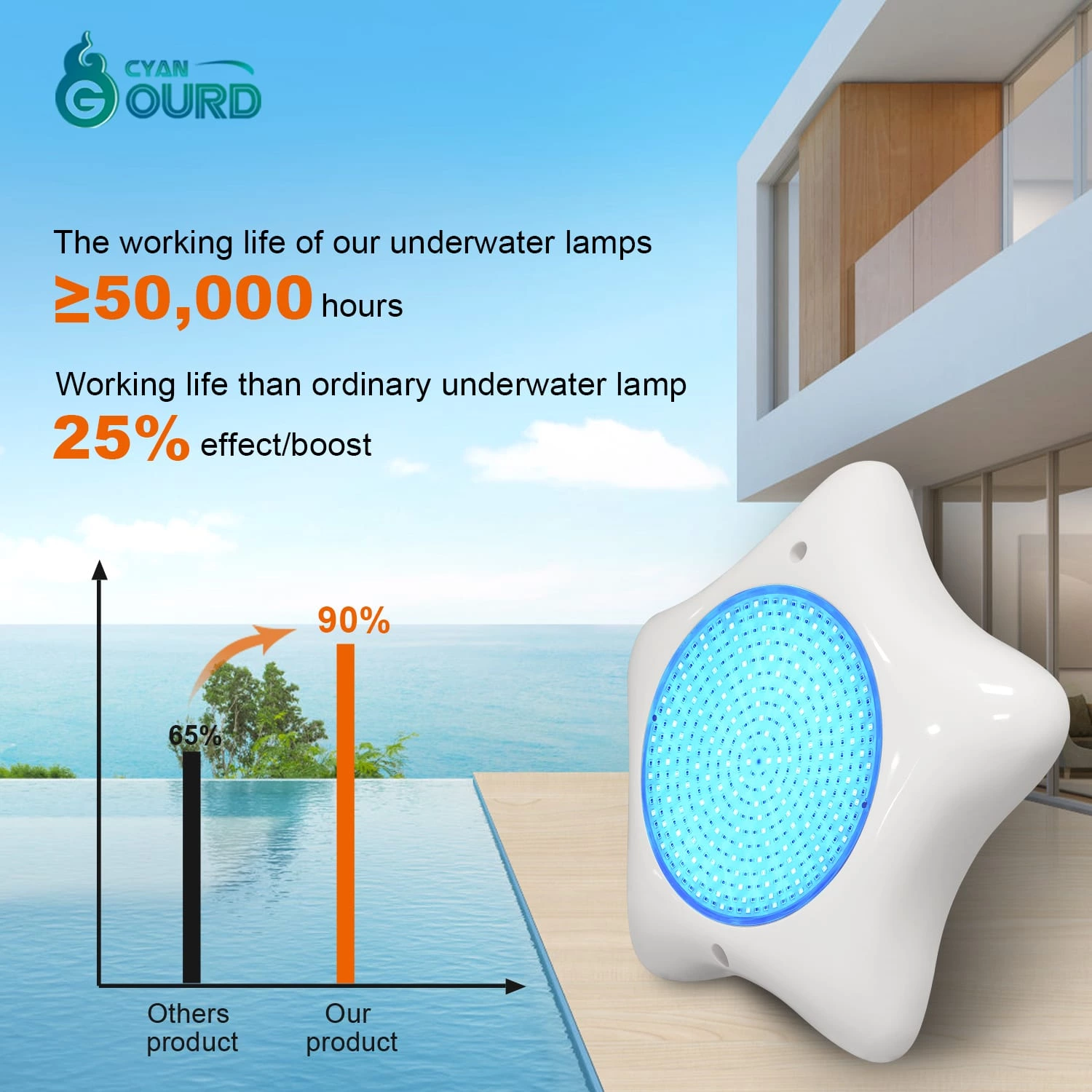
Large aquatic centers face a dual challenge: high lumen requirements for safety and competitive visibility, and the stringent energy power density limits defined by modern building codes. In our production line, we prioritize optical efficiency over sheer raw power, utilizing advanced secondary optics to direct light where it is needed most. By focusing on lumen maintenance decay curves (L90), we ensure that luminaires maintain peak output for over 50,000 hours, preventing the need for over-specifying light fixtures to account for early-stage lumen depreciation.
Decoding ASHRAE 90.1 Compliance for Underwater and Perimeter Pool Lighting
Meeting ASHRAE 90.1 standards involves calculating the Lighting Power Density (LPD) across the aquatic hall. For underwater and perimeter lighting, energy efficiency is achieved through intelligent driver control and high-efficacy LED chip selection. We ensure that our Stainless Steel Pool Light series supports DALI/0-10V dimming, allowing facility managers to scale energy usage during non-operational hours, effectively lowering the annual kW/h footprint of the pool facility.
Material Science in Aquatic Environments: Why 316L Stainless Steel Outperforms Niche Polymers
Material choice dictates the lifespan of underwater hardware. Our comparative data confirms that 316L stainless steel provides superior resistance to chlorine and salt-induced pitting compared to standard pool-grade polymers. While polymers may degrade under constant chemical exposure, 316L maintains structural integrity, protecting the internal electronics. We verify all housings through rigorous corrosion testing in simulated seawater environments, ensuring high-grade durability for municipal projects.
| Metric | 316L Stainless Steel | High-Grade Polymer |
|---|---|---|
| Corrosion Resistance | Excellent in saline/chlorinated | Moderate; prone to UV/chemical decay |
| Thermal Dissipation | High (Assists heat sink) | Poor (Insulative) |
| Impact Resistance | Very High (IK10+) | Variable |
Thermal Management & Driver Longevity: The Impact of Dimming Protocols on LED Lifespan
Heat is the primary enemy of LED diodes and drivers. Our proprietary heat-sink geometry ensures that internal temperatures remain below the critical thermal threshold, even during sustained dimming operations. During Thermal Management Commercial Led Pool audits, we have identified that standard flicker-free drivers often fail due to thermal fatigue in the driver housing. Our solution utilizes an integrated driver-cooling system that isolates the driver heat from the LED array, extending the MTBF (Mean Time Between Failures) significantly.
Advanced Optics: Achieving Uniform Distribution and Minimizing Surface Glare
Uniformity in competitive pools is critical for safety and timing accuracy. We employ specialized TIR (Total Internal Reflection) lenses to achieve a uniform light distribution across the pool floor, preventing "hot spots" that can distract swimmers. By optimizing the beam angle, we maintain high visibility while reducing the number of fixtures required, further aiding energy code compliance.
Testing Protocols: Beyond IP68 – Ensuring Vibration and Impact Resistance in High-Traffic Pools
Our luminaires undergo rigorous testing according to IEC 60598-2-18, the international benchmark for swimming pool luminaires. We don't just test for 1 meter of depth; our dual-seal technology is pressure-tested at depths exceeding 3 meters to simulate the hydrostatic pressure of deep commercial vessels. Every production batch undergoes vibration testing to ensure that the modular components remain secure despite the constant turbulence of an active aquatic facility.
Calculating Total Cost of Ownership (TCO) for Commercial Aquatic Projects
TCO is not merely the purchase price but the sum of energy, maintenance, and replacement costs over a 10-year period. Our modular design allows facility managers to replace drivers without draining the pool or replacing the primary housing. Case studies from a 50m commercial pool retrofit demonstrated an energy usage reduction of 40% (kW/h) post-installation, while the modular design led to a 30% reduction in annual maintenance labor costs compared to standard sealed-unit alternatives.
Q: How does voltage drop affect long-distance pool lighting installations?
A: Voltage drop over long cable runs causes inconsistent brightness and potential premature driver failure. We provide standardized gauge tables to ensure wire sizing matches the run length, maintaining stable input voltage for every fixture.
Q: What is the L90 life rating for these luminaires?
A: Our internal factory stress testing confirms an L90 life rating exceeding 50,000 hours, meaning the light output remains at 90% of its initial brightness even after long-term continuous operation.
Q: Are these lights compatible with building management systems (BMS)?
A: Yes, all our commercial-grade drivers are compatible with industry-standard 0-10V and DALI control protocols, allowing for full integration into modern building management systems for automated scheduling.
Q: How does your modular driver design save costs?
A: By isolating the driver module from the main housing, you can perform necessary electronic maintenance without the high cost of specialized labor or pool-side disruption associated with replacing entire lighting units.
Q: Do these fixtures require special chemical considerations for the water?
A: While 316L stainless steel is highly resistant, we specify that pH levels should be maintained between 7.2 and 7.8, and chlorine concentrations must not exceed 4ppm for optimal material longevity.