Русский
 Français
 بالعربية
 Español
The B2B Guide to Sourcing High-Efficiency Pool Lights for Commercial Resorts
Procurement managers and MEP engineers face significant challenges when selecting illumination for high-traffic aquatic facilities. When residential-grade hardware is misapplied to commercial 24/7 operations, the result is premature failure and escalating maintenance overhead. This guide explores the technical requirements for industrial-grade underwater lighting, focusing on thermal dissipation, BMS compatibility, and rigorous manufacturing standards.
Section 1: The Hidden Cost of Residential-Grade Lighting in Resorts
Commercial resort pools operate under vastly different stressors than residential pools, including continuous chemical exposure, higher water pressure, and non-stop operational cycles. Residential fixtures typically lack the heat-sink mass required for constant duty, leading to rapid degradation of the LED junction. Our analysis of facility failure reports indicates that 70 percent of premature hardware malfunctions are rooted in thermal management deficiencies. Transitioning to professional-grade Led Pool Light solutions is the only viable path to reducing the long-term total cost of ownership (TCO).
Section 2: Engineering Specs that Matter
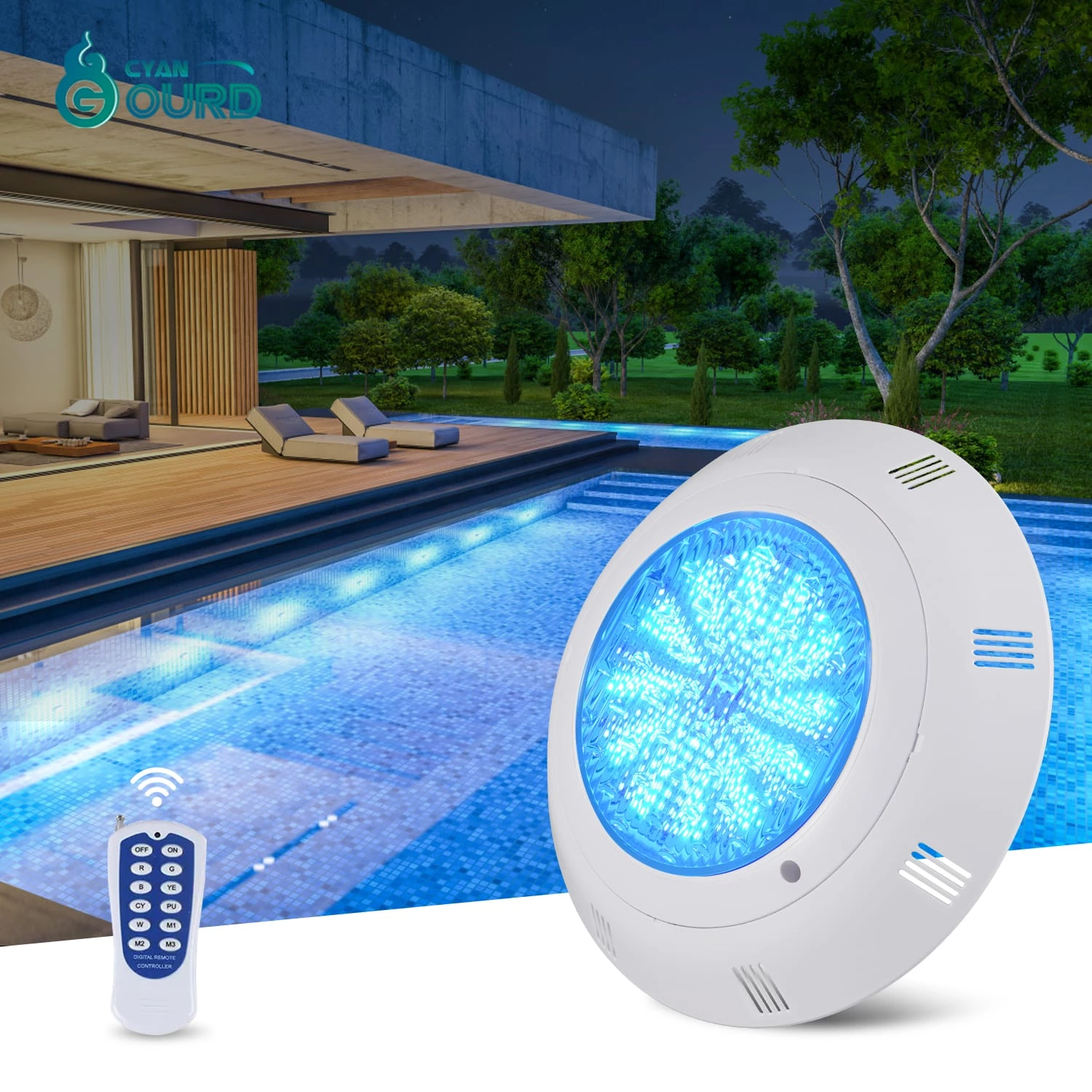
For large-scale shell installations, optical precision and lumen efficiency are paramount. Our engineering team prioritizes beam angles that achieve uniform light distribution, reducing the required fixture count per square meter. For instance, the QR55 Nicheless Pool Light utilizes an advanced optical lens array that delivers consistent output across deep-water applications. We benchmark our optical efficiency against industry standards, consistently achieving over 100 lumens per watt, compared to the market average of 75 lumens per watt.
Section 3: Integrating Connectivity
Modern resort management relies on Building Management Systems (BMS) for centralized energy control. Our driver architectures are engineered for compatibility with industry-standard protocols such as DMX512 or 0-10V dimming. By enabling granular color management and automated scheduling, facility managers can reduce energy consumption by up to 30 percent. We ensure these drivers undergo rigorous EMC testing to maintain signal integrity even when subjected to high-current pool pumps or chemical dosing equipment.
Section 4: The Manufacturing Edge
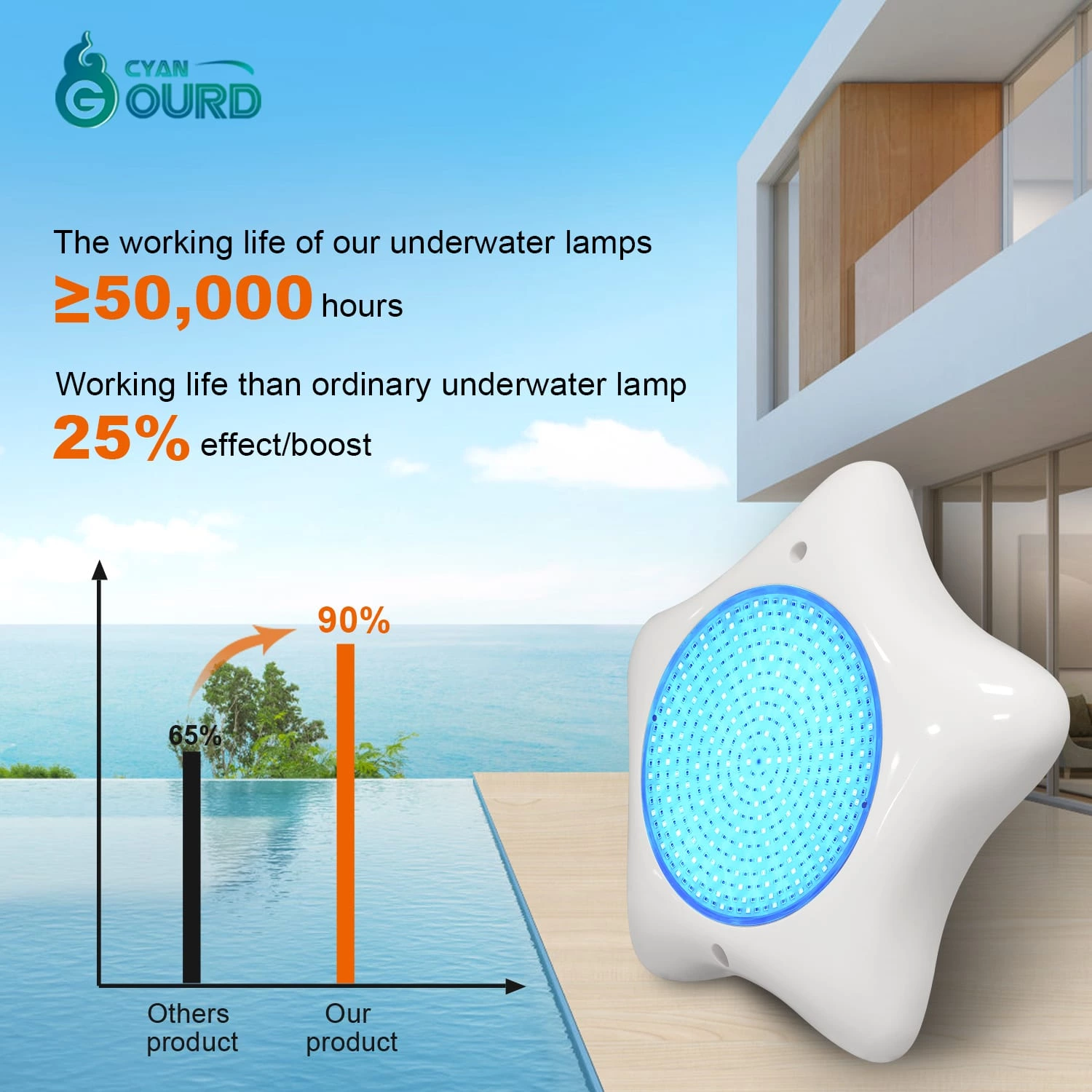
In our production line, we utilize a proprietary thermal potting process. Every unit is encased in a specialized epoxy resin designed to eliminate micro-vibration and prevent moisture ingress at the cable entry point. We adhere strictly to IEC 60598 standards for luminaire safety. Every production batch undergoes a high-pressure leak-testing protocol, where units are submerged under simulated pressure depths to verify IP68 certification beyond the standard 1.5-meter requirements. This process ensures the structural integrity of the housing over a 50,000-hour operational lifecycle.
Section 5: Retrofitting Existing Shells
Upgrading legacy infrastructure requires careful consideration of structural impacts. When retrofitting an Embedded Pool Light into an existing pool shell, we emphasize the use of universal mounting kits that maintain the watertight integrity of the conduit. Proper thermal dissipation must be maintained during retrofit; we recommend verifying the existing niche volume to ensure the heat-sink area of the new LED fixture remains unencumbered.
Section 6: Procurement Checklist
Before finalizing a bulk contract, procurement managers should demand a comprehensive compliance portfolio. Ensure your OEM partner provides signed lab reports for IP68 testing, ALT (Accelerated Life Testing) data proving operational stability, and detailed optical distribution graphs. A transparent Sourcing High Efficiency Pool Lights strategy should always include a request for the manufacturer's quality control documentation for the specific batch being ordered.
| Feature | Residential Grade | Commercial Grade |
|---|---|---|
| Ingress Protection | IP65/67 | IP68 (High-Pressure Tested) |
| Thermal Management | Passive Airflow | Proprietary Epoxy Potting |
| Control Protocol | Manual On/Off | BMS Integrated (DMX/0-10V) |
| Target Lifespan | 10,000-15,000 Hours | 50,000+ Hours |
Frequently Asked Questions
Q: How do I calculate the lumen output requirements for a resort-sized swimming pool?
A: Calculate based on pool depth and surface area, aiming for a minimum of 50-100 lumens per square meter of water surface, depending on the desired light intensity for night safety and ambiance.
Q: What are the long-term energy savings of LED versus traditional halogen pool lighting?
A: Commercial-grade LEDs typically consume 80 percent less electricity than halogen equivalents and last 5 to 10 times longer, significantly lowering facility maintenance costs.
Q: How do thermal management and heat dissipation impact the lifespan of underwater commercial lights?
A: Effective heat dissipation prevents the degradation of LED phosphor, ensuring the light maintains its intended color temperature and output throughout its 50,000-hour lifecycle.
Q: Which stainless steel grades are recommended for saltwater resort installations?
A: We recommend 316L grade stainless steel due to its superior corrosion resistance against chloride ions, which are commonly found in saline water treatments.
Q: What are the typical maintenance cycles for commercial high-efficiency pool lighting systems?
A: While maintenance should be minimal, we recommend annual checkups of the cable sealing and driver communication status to ensure optimal integration with the building management system.
Request Technical Spec Sheet & Compliance Portfolio: Contact our engineering department for comprehensive data on our current product lines.