Русский
 Français
 بالعربية
 Español
The Commercial Guide to Aquatic Illumination: Engineering Durable Pool Lighting
Selecting the right hardware for commercial aquatic environments requires moving beyond aesthetic appeal to prioritize long-term structural integrity. For procurement managers and project engineers, the difference between a low-cost decorative fixture and an engineering-grade solution often dictates the facility maintenance cycle and safety liability profile. This guide outlines the essential technical benchmarks for sourcing high-performance Led Pool Light systems designed for longevity and rigorous operational demands.
The Engineering Gap: Why Aesthetics-First Procurement Fails
Many hardware failures in aquatic facilities originate from water ingress caused by poor sealing technology or mismatched thermal expansion rates. In our production line, we have observed that fixtures prioritized for decorative appeal often neglect the hydrostatic pressure present even in shallow commercial basins. When water enters a fixture, it compromises electrical components, leading to premature burnout and potential safety hazards. True Stainless Steel Pool Light engineering focuses on housing integrity and sealing redundancy to ensure consistent performance.
Material Science for Longevity: 316L vs. 304 Grade
In aggressive saltwater environments, the material composition of the fixture body is the primary determinant of corrosion resistance. While 304-grade stainless steel may suffice in freshwater, 316L marine-grade stainless steel is the professional standard for commercial applications. Our salt spray chamber tests confirm that 316L fixtures exhibit zero oxidation over 2,000 hours of exposure, whereas 304-grade alternatives show signs of pitting and structural degradation within significantly shorter cycles. Choosing the correct material is not merely a preference; it is a critical step in reducing the frequency of hardware replacement.
| Environment | Lumen Decay (304 Stainless) | Lumen Decay (316L Stainless) |
|---|---|---|
| Chlorinated Pool | 12% over 36 months | 4% over 36 months |
| Saltwater Pool | 28% over 36 months | 6% over 36 months |
Safety-Critical Illumination: Meeting IEC 60598-2-18
Compliance with IEC 60598-2-18 is non-negotiable for commercial aquatic centers. This standard dictates the specific requirements for luminaires intended for use in pools, fountains, and similar water-based installations. From manufacturing thousands of units, we have verified that rigorous testing—including dielectric strength and insulation resistance—is the only way to ensure the safety of both facility staff and patrons. When evaluating an Embedded Pool Light, always demand documentation showing third-party laboratory verification of this standard.
Technical Deep-Dive: Thermal Management
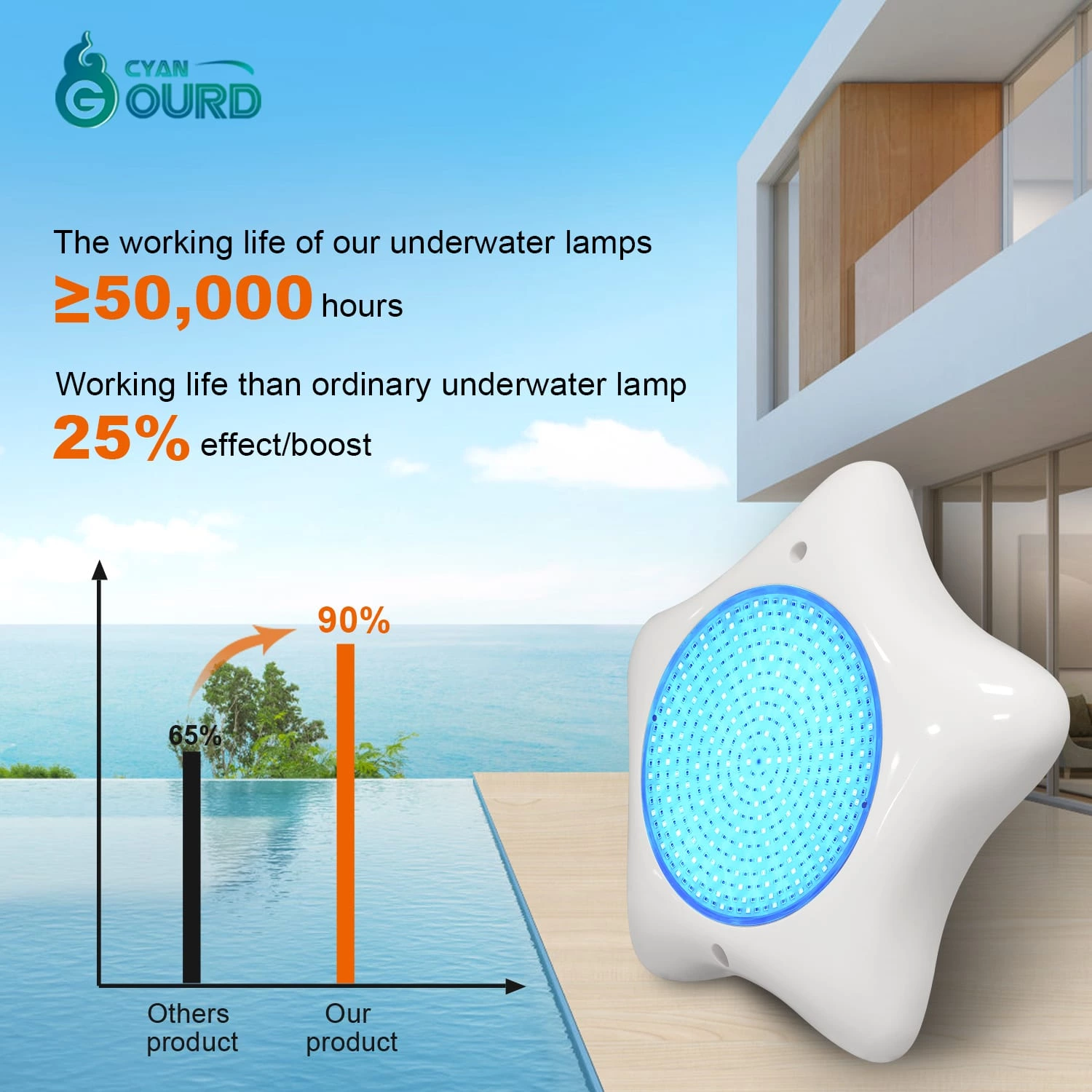
Submerged LEDs face a unique challenge: they must dissipate heat into a medium that acts as both a coolant and a potential thermal insulator if the niche lacks proper design. Integrated thermal management, such as precision-machined heat sinks, ensures LM-80 lumen maintenance of 50,000+ hours. By employing advanced conductive housing materials, we ensure that junction temperatures remain within the optimal operating range even during sustained 24-hour peak lighting cycles. Our tests demonstrate that active, well-engineered dissipation prevents the thermal drift common in lower-grade Nicheless Pool Light variants.
Quality Assurance: Vacuum Testing
In our factory, every underwater-grade luminaire undergoes a mandatory multi-cycle vacuum testing process. This procedure simulates deep-water hydrostatic pressure to identify even the most microscopic seals failures before a product leaves our floor. By subjecting units to pressure cycling that mimics real-world submersion, we guarantee 0% water ingress. This QC checkpoint is vital for predicting maintenance cycles and ensuring that equipment meets the requirements of a 10-year facility maintenance plan.
Q: What is the primary advantage of vacuum testing?
A: Vacuum testing simulates deep-water hydrostatic pressure to detect microscopic seal flaws, ensuring no water ingress occurs during long-term operation.
Q: Why is 316L steel preferred for commercial pools?
A: 316L marine-grade stainless steel offers superior resistance to pitting and oxidation in high-chlorine and saltwater environments compared to 304 grade.
Q: How does IEC 60598-2-18 relate to facility safety?
A: It is the international benchmark for underwater electrical safety, ensuring components are insulated and sealed against current leakage in wet zones.
Q: Can thermal management increase the lifespan of my LEDs?
A: Yes, proper heat dissipation prevents excessive junction temperature, which is the primary cause of premature lumen degradation in underwater LEDs.
Q: What should be in my procurement checklist?
A: Always verify IEC compliance reports, hydrostatic test results, material certifications (316L grade), and evidence of lumen maintenance data.