Русский
 Français
 بالعربية
 Español
Commercial Lighted Outdoor Fountains: Engineering Safe and Reliable High-Voltage Underwater Electrical Systems
Specifying high-voltage lighting for large-scale municipal and commercial water features requires a paradigm shift from aesthetic selection to mechanical engineering. Project engineers and MEP consultants must prioritize electrical isolation, structural integrity, and long-term corrosion resistance to avoid the high maintenance costs and liability risks inherent in complex aquatic environments.
The Engineering Paradox of Underwater High-Voltage: Moving Beyond Aesthetic Concerns
In high-end commercial projects, the primary challenge is not the light output but the persistence of the electrical seal under constant hydrostatic pressure. From our manufacturing experience, we have found that standard waterproofing methods fail because they do not account for thermal cycling, which causes expansion and contraction that inevitably breaks silicone-based seals. High-voltage systems demand a robust approach where every connection point acts as a redundant barrier against water ingress.
Decoding Submerged Reliability: Dielectric Strength and Thermal Management
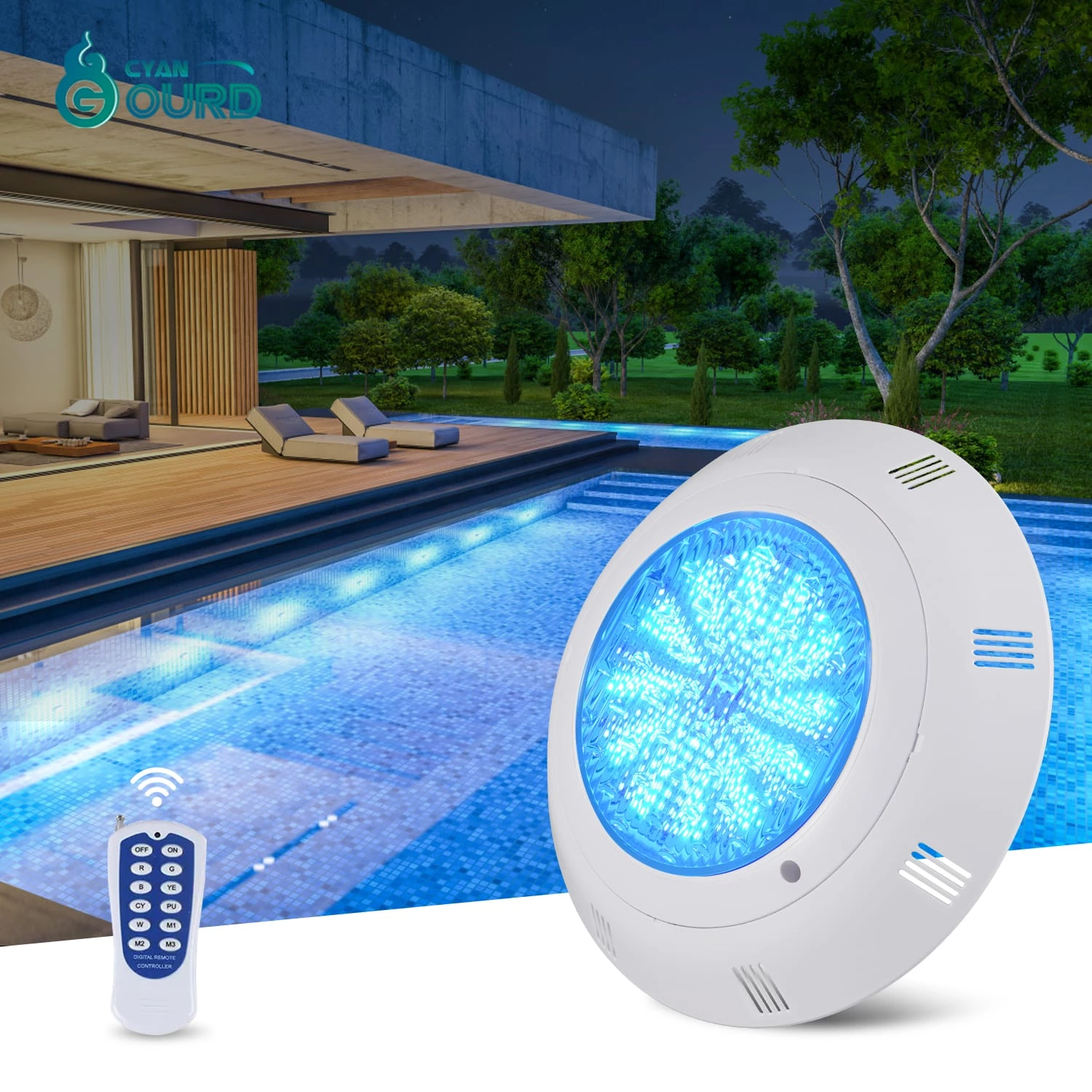
Underwater luminaires rely on high dielectric strength materials to prevent arcing. When specifying components, ensure the encapsulation compound provides a dielectric strength of at least 20 kV/mm. Furthermore, submerged luminaire thermal management is critical; without adequate heat dissipation paths, heat accumulation degrades the internal circuitry. Our Resin Filled Pool Light series utilizes thermally conductive resins to move heat away from the LED junction into the surrounding water, ensuring longevity even in high-ambient-temperature climates.
Structural Sealing: Comparing Dry-Niche vs. Wet-Niche Housing Specs for Commercial Projects
| Feature | Dry-Niche Mechanics | Wet-Niche Mechanics |
|---|---|---|
| Housing Intent | Air-tight enclosure behind a viewing window | Direct exposure to water for thermal transfer |
| Sealing Focus | Gasket compression and wall integrity | Internal potting and dual-stage gland seals |
Electrical Safety Architecture: Complying with NFPA 70 Article 680 and UL 676
Compliance is non-negotiable. NFPA 70 Article 680 mandates strict requirements for circuit separation and Ground Fault Circuit Interrupter (GFCI) protection for all fountain luminaires. According to Ensuring Electrical Safety Commercial Pool protocols, all high-voltage submerged luminaires must carry a UL 676 safety standard certificate. This ensures the fixture is evaluated specifically for the risks of electric shock and water ingress in public water features.
Advanced Prevention: Managing Galvanic Corrosion and Cable Gland Integrity
Galvanic corrosion is the primary cause of premature fixture failure in chemically treated municipal water. We integrate custom cathodic protection—specifically, sacrificial zinc or magnesium anodes—into our Stainless Steel Pool Light housings. Furthermore, our dual-stage vacuum-sealing cable gland technology eliminates capillary action, which is the process where water travels through the cable core via pressure differences, a common point of failure for lesser-rated equipment.
Quality Assurance Workflow: Why Vacuum-Potting and Pressure Testing Matter to MEP Engineers
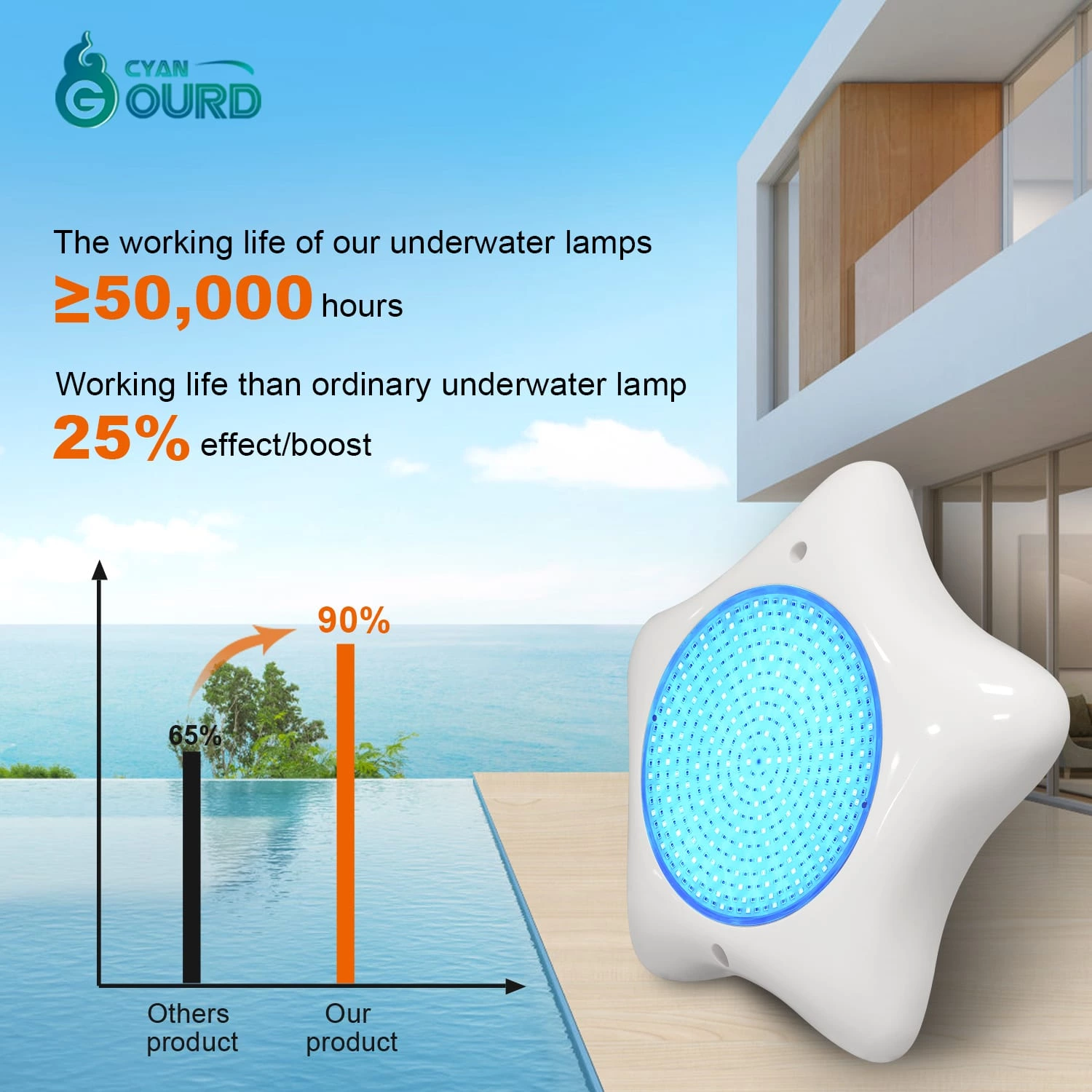
On our factory floor, every production batch undergoes mandatory 100% submersion testing in pressurized tanks. We simulate a 5-meter depth to verify the integrity of the resin-potting process. This empirical validation process ensures that the MTTF (Mean Time To Failure) for our luminaires exceeds 50,000 hours in municipal deployments. For detailed insights on these benchmarks, refer to our Engineering Grade Standards Commercial Pool guide.
Integrating Lighting Control Panels with Hydraulic Fountain Pumping Systems
Seamless operation requires that lighting control signals are electrically isolated from the high-current demands of pump motors. Using industrial-grade Engineering High Performance Dmx Pool protocols helps prevent electromagnetic interference (EMI) that can cause flickering or controller failure in complex fountain setups.
Conclusion: Specifying for Longevity and Liability Mitigation
The reliability of underwater electrical systems is determined at the specification stage. By choosing components that adhere to stringent UL 676 standards, utilize vacuum-potted sealing, and feature integrated cathodic protection, MEP consultants can effectively reduce service intervals and mitigate long-term liability. We invite you to download our engineering spec sheet for comprehensive documentation.
Frequently Asked Questions
Q: What is the importance of vacuum-potting over manual sealing?
A: Vacuum-potting removes microscopic air pockets that cause insulation breakdown, ensuring a solid dielectric barrier that standard silicone or manual injection cannot provide.
Q: How does cable gland integrity impact long-term reliability?
A: Poor cable glands allow water to wick through the wire insulation into the fixture body via capillary action, leading to internal corrosion regardless of external IP ratings.
Q: Are these fixtures maintenance-free?
A: No equipment is maintenance-free. Our products are engineered for reduced service intervals, meaning they require significantly less frequent intervention than standard commercial offerings.
Q: How should local code variations be addressed?
A: Always consult with a local licensed electrical engineer. National codes like NFPA 70 provide a baseline, but local amendments regarding GFCI and grounding must be strictly followed.
Q: Why is cathodic protection necessary for stainless steel?
A: Even high-grade stainless steel can suffer from crevice corrosion in treated water; sacrificial anodes provide a preferential target for oxidation, protecting the fixture integrity.
Download our Engineering Spec Sheet & Compliance Guide for Commercial Water Features.