Русский
 Français
 بالعربية
 Español
Commercial Pool Lighting Installation Cost Analysis: Optimizing TCO for Large-Scale Aquatic Infrastructure
Commercial pool lighting installation cost analysis: Moving beyond initial procurement prices requires a focus on Total Cost of Ownership (TCO), specifically factoring in installation labor and long-term maintenance cycles. By utilizing modular fixture designs and advanced thermal management, facility managers can significantly reduce labor hours during routine servicing and prevent premature module failures in high-traffic aquatic environments.
The Total Cost of Ownership (TCO) Model for Commercial Aquatics
In large-scale aquatic facilities, the initial unit price of a luminaire often accounts for less than 20% of the long-term project cost. Procurement managers must pivot toward a TCO model that incorporates installation labor, equipment downtime, and facility drainage costs. For instance, a non-modular fixture requiring pool drainage for a module replacement can cost a resort upwards of thousands of dollars in lost revenue and labor per incident.
Engineering for Installation Efficiency
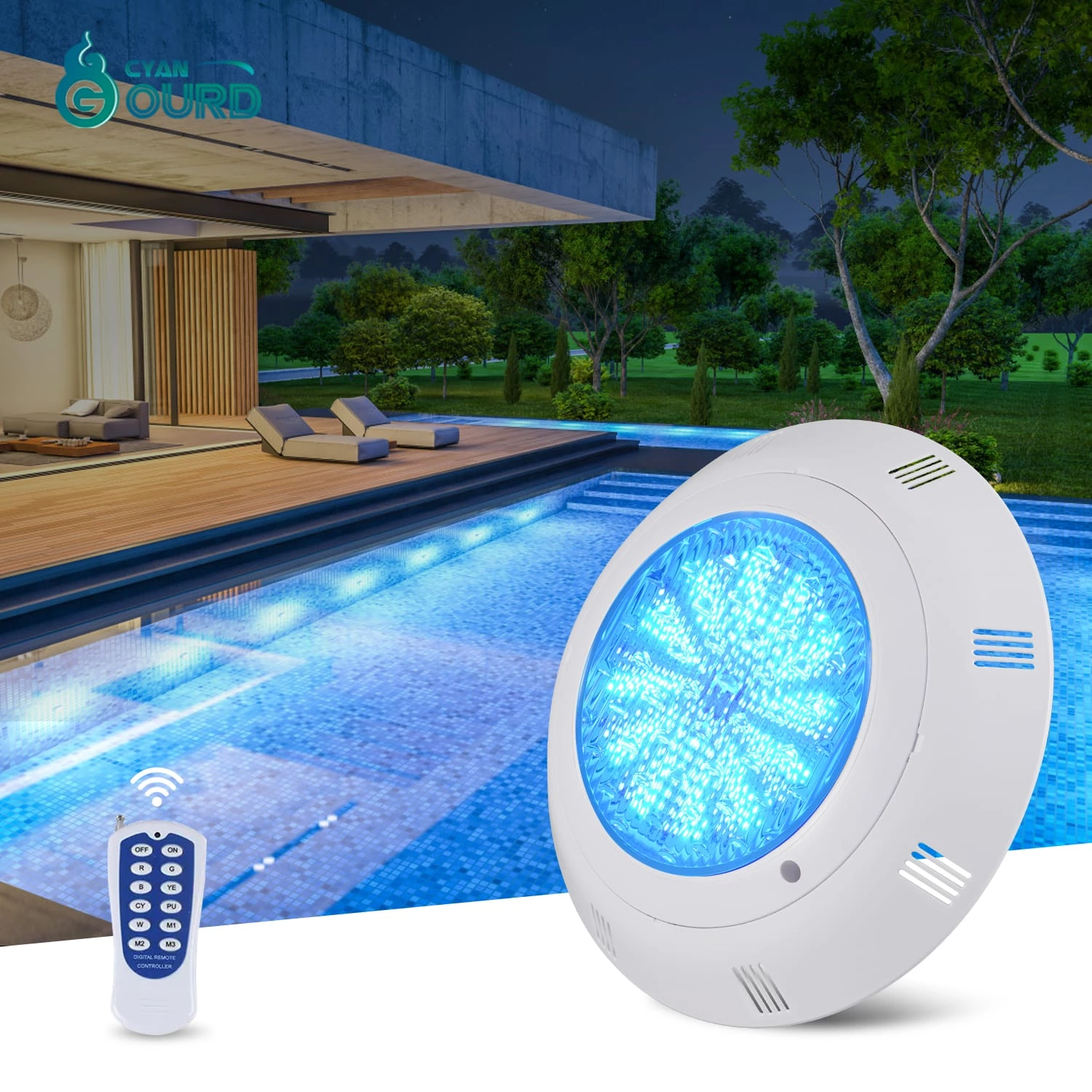
Installation efficiency is driven by hardware architecture. Our Nicheless Pool Light (Model QR-55) exemplifies this with a compact Φ55*H110mm footprint, significantly reducing the labor required for retrofitting surface-mount applications. By implementing modular housings that allow for front-access maintenance, contractors can bypass the need for divers or expensive water displacement, cutting labor cycles by approximately 60% compared to traditional recessed fixtures.
Managing Environmental Stress
High-chlorine resort environments demand superior material integrity. Our Stainless Steel Pool Light line utilizes 316L grade steel to prevent galvanic corrosion. In our production line, we subject every housing to factory-verified seal integrity testing, confirming IP68 compliance. Advanced thermal dissipation is integrated directly into the housing design to ensure the SMD 3535 light source operates within optimal temperature parameters, preventing internal moisture condensation—a common failure point in poorly vented commercial units.
Technical Deep-Dive: Power and Voltage Drops
Olympic-sized facilities often span distances that induce significant voltage drops, affecting luminosity consistency. Before installation, MEP contractors must conduct site-specific load calculations based on cable run lengths. It is vital to consult with a local licensed engineer to ensure the Led Pool Light array receives the correct operating voltage, as under-voltage conditions can lead to driver stress and accelerated LED degradation.
Custom Geometry Solutions
Non-standard pool geometries require more than off-the-shelf components. By utilizing standardized housing cores, we offer bespoke bracket solutions that ensure consistent beam spreads for deep-water coverage. This balance of standardized manufacturing and custom mounting reduces overall project lead times and capital expenditure while maintaining photometric performance across all pool zones.
Compliance and Verification
Adherence to global safety benchmarks is non-negotiable for public liability. All Embedded Pool Light models must comply with IEC 60598-2-18, the international standard for luminaires used in swimming pools. Our factory audits verify these standards through rigorous ingress protection testing, ensuring that electrical components remain isolated from the corrosive aquatic environment, thereby protecting the facility from potential insurance liability.
Future-Proofing Procurement
Before the RFP stage, procurement teams should request comprehensive photometric testing reports and factory stress-test logs. Evaluating these documents allows for an objective comparison of fixture durability. Avoid relying on marketing claims; instead, focus on documented test durations and IP68 certification data that prove the manufacturer's long-term production quality control.
| Metric | Modular Design | Non-Modular Design |
|---|---|---|
| Maintenance Labor Hours | Low (Front-Access) | High (Drainage Required) |
| Thermal Management | Integrated Heat-Sink | Limited/None |
| Material Grade | 316L Stainless Steel | Standard ABS/Brass |
Optimize Your Project Budget
Download our Commercial Lighting TCO Calculator and Spec Sheet to analyze potential lifecycle savings for your facility.
Download Spec SheetFrequently Asked Questions
Q: How does pool volume and depth impact lighting costs?
A: Larger, deeper pools require luminaires with higher lumen output and specific beam optics to ensure uniform coverage. This increases the total fixture count and requires more robust wiring infrastructure to manage the higher electrical load safely.
Q: What are the maintenance cost differences between LED and halogen lighting?
A: LED systems, while having a higher initial cost, provide significantly lower lifecycle costs due to drastically reduced energy consumption and extended service intervals. Halogen fixtures fail more frequently and require frequent bulb replacements.
Q: Why is IP68 rating critical for commercial pool lights?
A: The IP68 rating ensures the luminaire can withstand continuous immersion under high pressure. In commercial pools with high chemical concentrations, this seal integrity is essential to prevent internal corrosion and short circuits.
Q: Are electrical load calculations necessary for all pool lighting?
A: Yes. For large-scale facilities, site-specific load calculations are mandatory to mitigate voltage drop over long cable runs, ensuring consistent performance and preventing electrical damage to the LED drivers.
Q: Does local electrical code dictate installation methods?
A: Yes, local codes (such as NEC or CEC) dictate specific grounding, bonding, and wiring requirements for submerged lighting. Always consult a local licensed engineer to ensure compliance and project safety.