Русский
 Français
 بالعربية
 Español
Commercial Pool Lighting Procurement Guide: Engineering for Longevity and Compliance
For MEP engineers and commercial project managers, selecting Led Pool Light systems is less about aesthetics and more about mitigating long-term operational risk. High-occupancy aquatic facilities demand luminaires capable of resisting chemical degradation, thermal stress, and water ingress while maintaining strict structural integrity. This guide provides an engineering-focused overview to support robust procurement decisions.
The Engineering Cost of Pool Lighting: Beyond Initial Procurement
The total cost of ownership for underwater lighting is driven by the frequency of maintenance cycles and the complexity of replacement. In our factory, we have observed that failing to account for wall-type compatibility during the procurement phase often leads to expensive post-installation structural repairs. Our approach to manufacturing involves prioritizing modular components that simplify serviceability, ensuring that even our Embedded Pool Light series allows for efficient maintenance access without necessitating pool drainage.
Mechanical Tradeoffs: Surface-Mounted vs. Recessed Installations
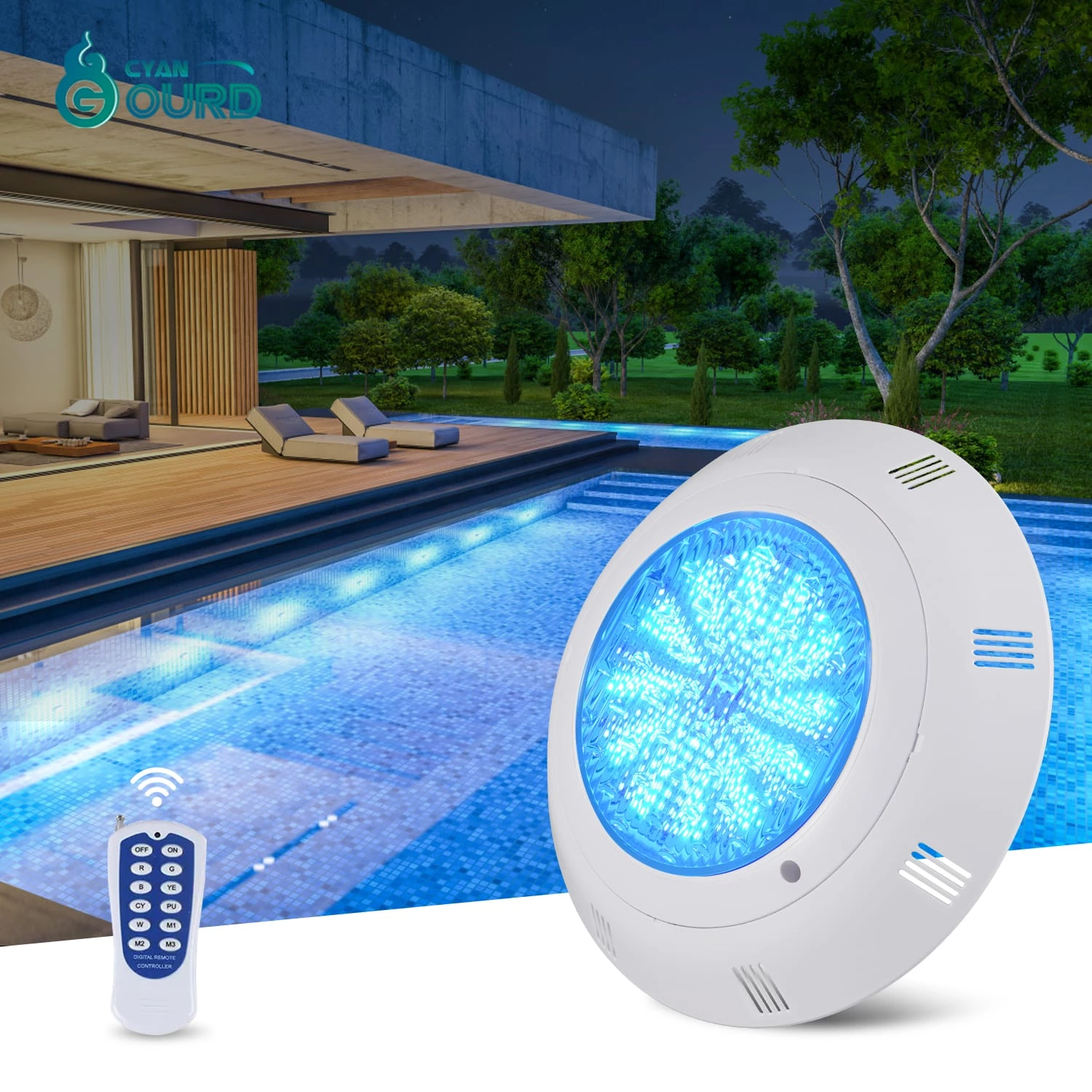
Recessed Nicheless Pool Light units require precise mechanical tolerance for concrete and shotcrete wall integration. During manufacturing, we maintain a strict tolerance range of plus or minus 2mm for housing dimensions to ensure a secure fit within standard commercial niches. Surface-mounted options, by contrast, offer easier retrofitting but require careful management of conduit entry points to prevent point-load stress on the pool shell.
Environmental Hardening: Saltwater vs. Chlorine Compatibility
Aggressive chemical environments mandate the use of high-grade materials. Our Stainless Steel Pool Light models, such as the YC-Series, utilize 316L stainless steel to resist chloride-induced stress corrosion. ASTM B117 salt spray tests confirm that our 316L housings maintain structural stability over 2000 hours of continuous exposure, significantly outperforming polymer housings which often suffer from embrittlement in high-salinity pools.
Thermal Management and Electronics Longevity
High-lumen output in submerged applications requires efficient thermal dissipation to prevent junction temperature degradation of LEDs. In our production line, we employ heat-sink designs that leverage the thermal conductivity of the surrounding pool water. Our QR290-A embedded unit demonstrates this with a specialized aluminum internal chassis that keeps electronic components below critical temperature thresholds during peak operation, ensuring consistent performance without early failures.
Compliance and Safety: Navigating IEC 60598-2-18 and IP68
Compliance with IEC 60598-2-18 is mandatory for all industrial-grade luminaires to ensure electrical safety in underwater environments. Our testing protocols include IP68 certification for continuous submersion at depths exceeding 2 meters, validated by external laboratory testing. Procurement teams must verify that all luminaire housing materials are tested for long-term dielectric strength to prevent leakage current, which is a major safety risk in public aquatic facilities.
| Model | Installation | Best Use Case |
|---|---|---|
| QR290-A | Embedded | High-end concrete pools |
| QR-55 | Nicheless | Retrofit and compact installations |
| YC105/165/205-SP | Surface/Embed | Saltwater corrosive environments |
Procurement Checklist
To minimize liability and downtime, procurement officers should request the following: 1) Certified IEC 60598-2-18 documentation, 2) ASTM B117 salt spray test reports for housing metals, 3) Detailed 3D mechanical CAD files for conduit interface, and 4) IP68 test results specific to the installation depth required for the facility.
Q: Why is IEC 60598-2-18 significant for procurement?
A: It is the specific international standard governing the safety and construction of underwater luminaires. Adherence confirms the product meets stringent electrical safety requirements for public pools.
Q: What is the benefit of 316L stainless steel over polymer?
A: 316L provides superior resistance to chloride-induced corrosion, essential for high-occupancy commercial pools using saltwater chlorination systems.
Q: How do I manage conduit alignment in recessed installations?
A: Always review the manufacturer's conduit interface drawings to ensure your wall conduit matches the luminaire's tolerance, typically within a 2mm range.
Q: Does thermal management affect light output?
A: Yes, efficient thermal dissipation prevents LED junction heat, which maintains constant lumen output and prevents premature failure of the electronic driver.
Q: Are nicheless pool lights suitable for new commercial concrete pours?
A: They are highly efficient for reducing labor costs, provided the structural conduit is placed to accommodate the fixture diameter.
Request Technical Spec Sheet & Material Compliance Data: contact our team for project-specific engineering documentation.