Русский
 Français
 بالعربية
 Español
Common Pool Light Replacement Scenarios in Commercial and Hotel Projects
Common Pool Light Replacement Scenarios in Commercial and Hotel Projects
In the hospitality and commercial aquatic sectors, maintaining operational excellence is critical. Swimming pool lighting plays a pivotal role in guest safety, aesthetic appeal, and facility compliance. However, commercial environments subject underwater fixtures to rigorous usage, chemical exposure, and extended operating hours. Recognizing the specific scenarios that necessitate pool light replacement allows facility managers and contractors to plan upgrades effectively, minimizing downtime and ensuring long-term reliability. As a manufacturer of professional LED swimming pool lights, Cyangourd Lighting provides robust solutions tailored for these demanding retrofit applications.
1. Addressing Water Intrusion and Corrosion Failures
One of the most frequent reasons for replacement in commercial pools is water ingress. Traditional fixtures often rely on rubber gaskets and mechanical seals, which degrade over time due to chlorine exposure and thermal expansion cycles. Once the seal is compromised, water enters the housing, causing short circuits and permanent failure. In coastal hotels or saltwater pools, corrosion of 304 stainless steel or plastic components accelerates this process. Replacing these failing units with fully resin-filled LED lights, which eliminate internal air voids and mechanical seals, offers a permanent solution to water intrusion issues.
2. Upgrading from Halogen to Energy-Efficient LED Systems
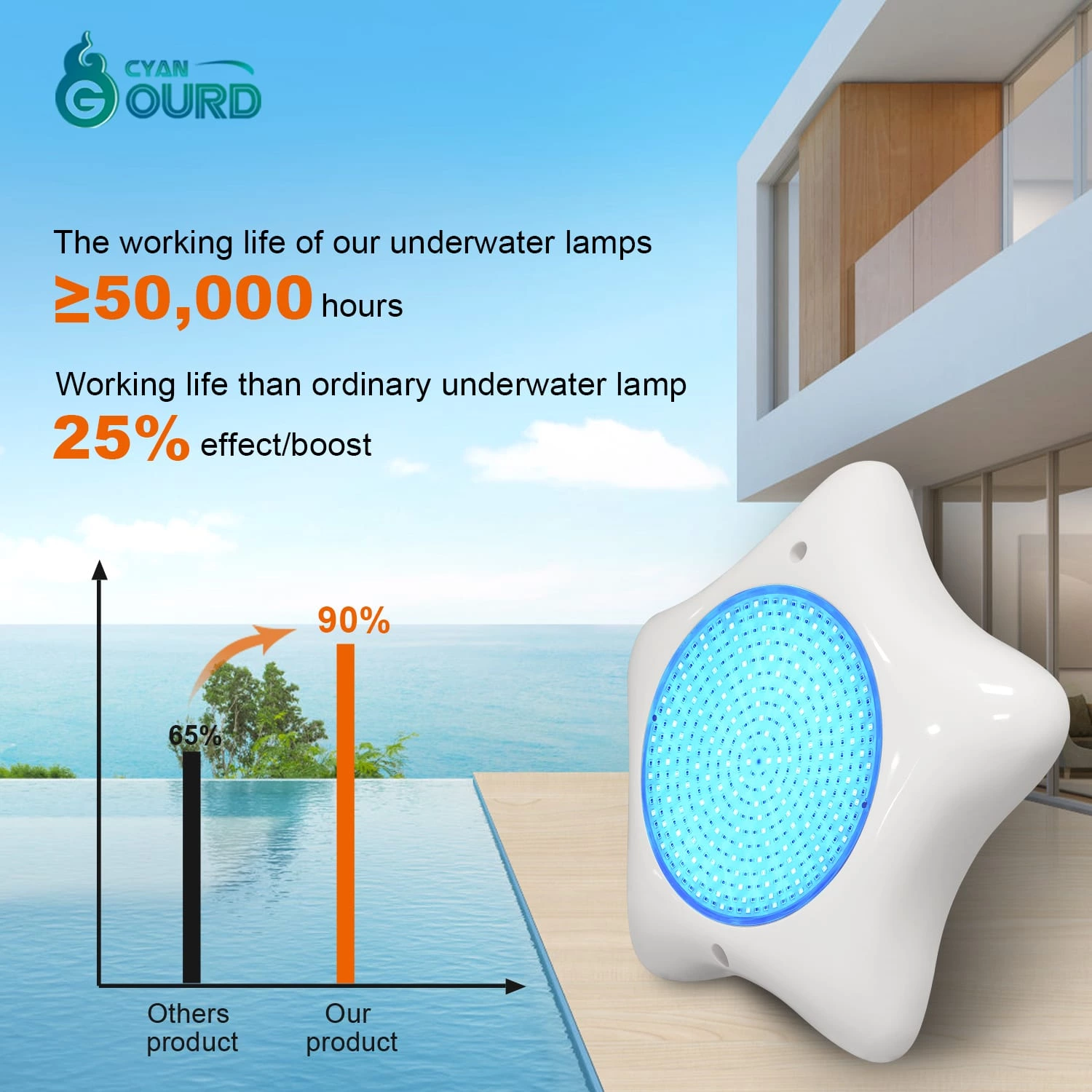
Many older hotels still utilize high-wattage halogen or incandescent bulbs. These fixtures consume significant electricity and generate excessive heat, leading to frequent bulb burnouts and higher operational costs. A common replacement scenario involves retrofitting these outdated systems with energy-efficient LED alternatives. Switching to LEDs not only reduces energy consumption by up to 80% but also extends the lifespan of the lighting system to over 50,000 hours. This drastic reduction in maintenance frequency is a primary driver for commercial renovation projects seeking better ROI.
3. Enhancing Guest Experience with RGB Color Synchronization
Modern hospitality trends demand dynamic visual experiences. Commercial properties often replace static white lights to introduce RGB or RGBW color-changing capabilities. This scenario is driven by the need to host events, match branding colors, or create specific ambiances for evening guests. However, upgrading requires ensuring that the new LED lights are compatible with advanced control systems, such as DMX512 or synchronized remote controls. Manufacturers must provide lights that maintain signal integrity across large commercial pools to ensure uniform color transitions without latency.
4. Resolving Voltage Drops and Safety Compliance Issues
Safety regulations for commercial pools are stringent, typically mandating low-voltage (AC/DC 12V or 24V) systems to prevent electrical shock hazards. Older installations may suffer from voltage drop issues due to long cable runs common in large hotel complexes, resulting in dim or flickering lights. Replacement projects in this category often involve not just the fixture, but an assessment of the transformer and cabling. Upgrading to wide-voltage LED drivers or ensuring proper wire gauge usage during the retrofit is essential to maintain consistent brightness and strict adherence to safety standards like CE and ETL.
5. Structural Damage and Niche Compatibility Challenges
Physical damage to the pool wall or the lighting niche itself can necessitate replacement. In some cases, the original niche is obsolete, making it difficult to find a direct fit. This scenario requires versatile replacement solutions, such as ultra-thin surface-mounted lights or universal PAR56 retrofits that can adapt to various existing niche dimensions. For commercial contractors, the ability to install replacements without draining the pool or performing extensive masonry work is a significant advantage, reducing facility downtime.
Comparison of Lighting Technologies for Commercial Retrofits
| Feature | Traditional Halogen | Standard LED (Gasket Sealed) | Resin-Filled LED (Commercial Grade) |
|---|---|---|---|
| Waterproof Rating | IP68 (Temporary) | IP68 (Risk of seal failure) | IP68 (Permanent Bond) |
| Maintenance Frequency | High (Bulb changes) | Medium | Low (Zero maintenance) |
| Heat Dissipation | Poor (High heat) | Air convection | Excellent (PCB conduction) |
| Material Durability | Plastic/Glass | Plastic/304 SS | 316L SS + Anti-UV PC |
| Energy Efficiency | Low | High | Very High |
Frequently Asked Questions
1. How do I know if a hotel pool light needs replacement or just a bulb change?
If the fixture is an older halogen model, frequent burnouts often indicate water ingress or socket corrosion. In commercial settings, it is more cost-effective to replace the entire unit with a sealed LED fixture to prevent recurring labor costs and downtime associated with simple bulb changes.
2. Can we retrofit LED lights into existing niches without draining the pool?
Yes, many commercial LED replacements, particularly PAR56 lamps and specific surface-mounted models, are designed for retrofitting into standard niches. If the cable length is sufficient to pull the fixture to the deck, replacement can often be performed without draining the water.
3. What is the advantage of resin-filled lights for commercial projects?
Resin-filled technology completely encapsulates the LED components and PCB, eliminating air voids inside the light. This ensures 100% waterproofing (IP68) and superior heat dissipation, making them highly resistant to leaks and thermal stress, which is crucial for the heavy usage seen in hotels.
4. Do I need to change the transformer when upgrading to LED?
It depends on the existing transformer's condition and voltage output. While LEDs consume less power, they require a stable 12V or 24V supply. Old magnetic transformers may output higher voltages that can damage sensitive LED electronics. We recommend checking compatibility or installing dedicated LED drivers.
5. What materials are best for saltwater commercial pools?
For saltwater environments, 316L stainless steel is the preferred material due to its high resistance to chloride corrosion. Plastic (ABS+PC) housings are also effective but may lack the premium aesthetic required by high-end hotels. Avoid 304 stainless steel in saltwater to prevent rusting.