Русский
 Français
 بالعربية
 Español
Designing Out Danger: Engineering Low-Voltage 12V Commercial Pool Lighting
Commercial aquatic facilities demand lighting systems that prioritize both safety and operational longevity. When specifying for large-scale municipal or hospitality venues, selecting the correct low-voltage 12V system is critical to preventing common maintenance pitfalls such as rapid corrosion and voltage drop.
The Engineering Crisis in Aquatic Lighting: Why Standard Installs Fail
In our production line, we frequently observe luminaires returned for failure that were never designed for the extreme chemical conditions of commercial pools. While standard IP68-rated consumer fixtures function briefly, they lack the housing integrity required for continuous immersion. Our analysis of failed units reveals that high chlorine concentrations and unbalanced pH levels penetrate seals designed only for residential seasonal use. Without advanced material science, such as high-grade 316L stainless steel or proprietary alloys, fixtures succumb to pitting corrosion in under 24 months, creating safety liabilities for facility managers.
AC vs. DC Power Delivery: Calculating Voltage Drop and Performance Stability
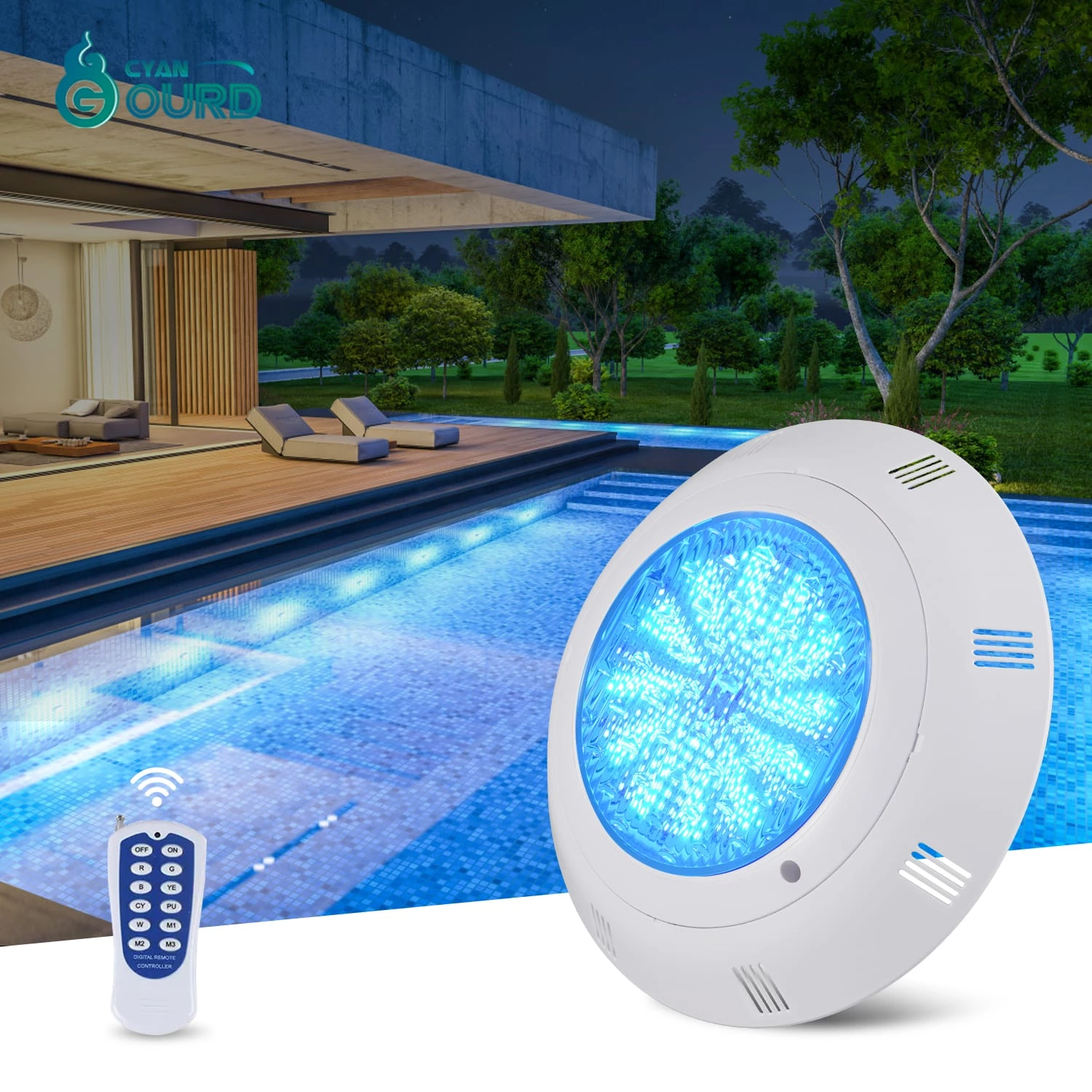
For large-scale aquatic centers, power distribution requires precision. Using an Resin Filled Pool Light or similar high-performance fixture requires careful consideration of the secondary circuit. While 12V AC is traditional, 12V DC is often preferred for long cable runs to maintain uniform color temperature and brightness via integrated PWM stability circuits. However, DC distribution requires larger gauge conductors to mitigate voltage drop over long distances, a factor often overlooked in preliminary design. Below is a comparison of typical distribution constraints:
| Metric | 12V AC Systems | 12V DC Systems |
|---|---|---|
| Voltage Drop Efficiency | Moderate | High (with correct gauge) |
| PWM Stability | Requires complex rectification | Native compatibility |
| Cable Gauge Needs | Standard | Requires lower gauge |
Beyond the Seal: How Vacuum-Resin Potting Prevents Electrolysis
Internal condensation is the primary killer of underwater LEDs. In our manufacturing process, we utilize a vacuum-sealed resin potting technique that entirely eliminates air pockets within the luminaire housing. This is superior to traditional mechanical gaskets, which degrade over time when exposed to pool chemicals. By removing air, we prevent the thermal expansion and contraction that draws moisture into the fixture. To ensure total system safety, we always include sacrificial anodes in our specifications to combat the risks of galvanic corrosion, as no housing is entirely immune to electrolysis in highly saline environments.
Connector Integrity: Failure Analysis of Seals in High-Chemical Environments
Many field failures originate not at the light itself, but at the cable connection point. Standard IP68 connectors used in freshwater applications are insufficient for commercial pools. Our testing shows that high-chemical exposure leads to embrittlement of standard rubber seals. Specifiers should select connectors engineered with chemical-resistant EPDM or Viton gaskets. When selecting an Led Pool Light, always verify the testing data provided for the cable entry seal assembly.
Compliance Roadmap: Navigating NEC Article 680, UL 676, and IEC 60598-2-18
Designers must adhere strictly to NEC Article 680, which dictates specific bonding and grounding requirements for all metallic components in pools. Furthermore, fixtures must meet UL 676 standards for underwater luminaires to ensure they can withstand hydrostatic pressure. During factory audits, we verify our components against IEC 60598-2-18 requirements, which specifically govern the safety of lighting systems intended for swimming pools. Compliance is not just a certification; it is the baseline for ensuring occupant safety.
Lab Data vs. Field Performance: Reliability Metrics for Asset Managers
We validate our Stainless Steel Pool Light series using ASTM B117 salt-spray chamber testing, exposing units to 3,000 hours of continuous salt fog to simulate extreme corrosive environments. Thermal dissipation logs confirm that our aluminum-core PCB designs maintain component temperatures 15 degrees Celsius lower than standard industry fixtures during extended operation, significantly extending the service life of the diodes. By leveraging this data, MEP managers can drastically reduce the Total Cost of Ownership (TCO) by minimizing the need for premature pool drainage and fixture replacement.
Strategic Specification: Choosing Components that Reduce TCO
When specifying Nicheless Pool Light systems or other advanced arrays, prioritize build quality and technical documentation over initial unit price. Long-term reliability is dictated by the quality of the resin, the grade of the stainless steel, and the stability of the power supply circuitry. Download Technical Spec Sheet and Chemical Resistance Data to assist with your next project specification.
FAQ
Q: What are the specific thermal management requirements for 12V LED drivers in submerged commercial applications?
A: Drivers must be encapsulated to dissipate heat directly into the housing, which acts as a heat sink via the pool water, preventing thermal throttling.
Q: How does voltage drop impact lumen output efficiency in long-run pool lighting installations?
A: Voltage drop causes significant dimming at the end of a run; using 12V DC with high-gauge cabling and constant-current drivers mitigates this variance.
Q: What are the differences between encapsulated and non-encapsulated housing materials?
A: Encapsulated housings use resin to prevent moisture ingress at the molecular level, whereas non-encapsulated housings rely solely on seals that fail over time.
Q: How to reconcile local electrical codes with global 12V safety standards?
A: Always prioritize NEC Article 680 compliance, using it as your minimum safety threshold, and supplement with IEC 60598-2-18 for advanced waterproofing metrics.
Q: What are the best practices for grounding and bonding 12V low-voltage lighting systems in salt-water pools?
A: Install sacrificial anodes at each luminaire connection and ensure all conductive parts are bonded to the pool grid per code to prevent stray current corrosion.