Русский
 Français
 بالعربية
 Español
Engineering Breakthroughs in Fountain Nozzle with LED Light Integration for Water Show Projects
For lead mechanical engineers and project managers, the integration of illumination into hydraulic systems is a critical design challenge. Achieving synergy between laminar flow and optical beam precision requires moving beyond modular add-ons toward factory-molded solutions that prioritize environmental resilience and hydraulic stability.
The Engineering Paradox: Balancing Hydraulic Pressure and Optical Clarity
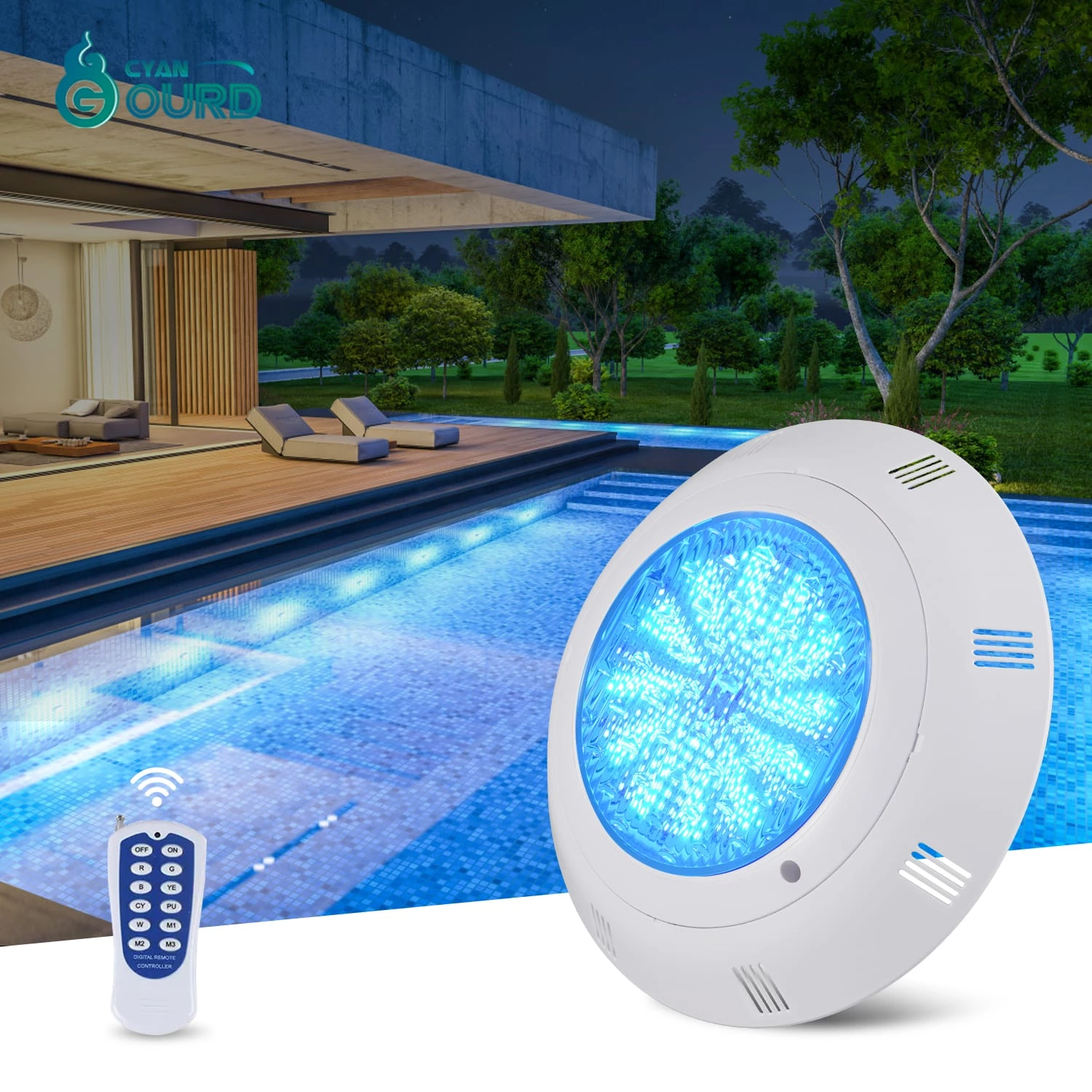
The primary conflict in fountain engineering involves maintaining a stable light beam through a medium subject to high-velocity movement. Optical misalignment often stems from vibration or thermal expansion/contraction of the housing assembly. By utilizing components such as our Embedded Pool Light, engineers can achieve greater structural uniformity, reducing the likelihood of light refraction distortion caused by housing micro-shifts.
Achieving Laminar Flow: Why Nozzle Geometry Dictates Light Refraction
Laminar flow is essential for light coherence; turbulence causes internal reflection and scattering. We ensure precision by engineering the internal nozzle geometry to minimize vortex creation. When the water stream is coherent, the LED light is effectively guided through the column, creating the high-definition beams characteristic of modern water shows. Our internal testing confirms that precisely calibrated divergence angles are required to maintain synchronized arrays across large-scale installations.
Structural Integrity: Factory-Molded Housing vs. External Cable Glands
Leakage in fountain systems is most frequently traced to secondary cable gland failures. In our production line, we prioritize factory-molded, integrated housings. This manufacturing process eliminates secondary sealing points, which is vital for long-term submersion. For instance, the QR-55 Nicheless Pool Light (Dimensions 55mm x 110mm) is designed with high-grade ABS and PC covers that undergo stringent vibration testing to ensure structural integrity under the high-pressure conditions of municipal water features.
Thermal Management Physics: Dissipation in Stagnant vs. High-Velocity Water Jets
Effective thermal management is essential to prevent premature LED degradation. We calculate specific thermal dissipation coefficients for our arrays to ensure performance regardless of the ambient water state. While moving water provides active cooling, stagnant conditions require optimized heat sink surface areas. Utilizing our Stainless Steel Pool Light series, we leverage high-conductivity materials that maintain operating temperatures well within the safety parameters specified by industry benchmarks.
Load Balancing for Synchronized Arrays: Preventing Electrical Drift
In multi-nozzle installations, voltage drop and electrical drift can lead to inconsistent color rendering and hardware failure. Proper system design must account for the total circuit load. We strictly adhere to voltage regulation requirements, ensuring that every unit within an array receives a consistent power profile. This approach is critical for the stability of complex, synchronized light shows where even a minor deviation in an individual LED driver can disrupt the visual coherence of the entire project.
Compliance and Safety: Navigating ANSI/NFPA Standards
Safety is non-negotiable in aquatic environments. All our manufacturing processes ensure full compliance with ANSI/NFPA 70 (NEC) standards, particularly regarding underwater wiring and grounding requirements for fountains. Rigorous IP68 testing, conducted at pressures equivalent to depths exceeding standard installation requirements, provides the assurance needed for large-scale municipal deployments.
Longevity Metrics: MTBF Data and Environmental Resilience
We track MTBF (Mean Time Between Failures) for all LED drivers to ensure extended service intervals. Through extensive environmental stress screening, including thermal cycling and vibration testing, we verify that our products are suited for the harsh, corrosive environments of treated fountain water. Our Abs Pool Light units and other specialized fixtures are manufactured to meet these stringent performance requirements consistently.
| Feature | Standard Modular Unit | Integrated Factory-Molded |
|---|---|---|
| Sealing Method | External Cable Glands | Factory-Molded Monoblock |
| Vibration Resistance | Low (Risk of loosening) | High (Rigid Assembly) |
| Ingress Protection | Variable (IP65-67) | Certified IP68 |
Q: What is the benefit of an integrated housing design for high-pressure water features?
A: Integrated housings eliminate potential leakage paths at cable entry points, providing superior IP68 reliability under high-pressure, long-term operation.
Q: How do you ensure optical consistency across multiple nozzles?
A: By using precision-engineered laminar flow nozzles and standardized thermal dissipation coefficients, we ensure each unit maintains consistent light refraction and performance.
Q: What standards do you follow for electrical safety?
A: We adhere to ANSI/NFPA 70 (NEC) standards and maintain CE and IP68 certification protocols to ensure electrical safety in underwater installations.
Q: How does water temperature affect the LED lifespan in fountain nozzles?
A: LEDs require efficient heat dissipation. Our thermal management solutions are engineered for both stagnant and high-velocity water conditions to prevent overheating and maintain MTBF.
Q: Are these units maintenance-free?
A: We advocate for extended service intervals through durable construction, though regular inspections remain a standard part of professional water feature maintenance. Download Technical Spec Sheet and MTBF Performance Report for further details.