Русский
 Français
 بالعربية
 Español
Engineering Reliable Commercial LED Swimming Pool Lighting Systems
Commercial LED swimming pool lighting systems: Selecting professional-grade luminaires requires prioritizing IP68-rated hermetic sealing, advanced thermal management, and strict adherence to IEC 60598-2-18 standards. For large-scale facility retrofits, engineering-focused solutions must move beyond residential components to prevent premature failure caused by condensation and thermal stress.
The Commercial Challenge: Reliability in Olympic Facilities
In municipal and Olympic-sized aquatic centers, pool lighting operates under significantly higher stress than residential environments. Constant high-traffic use, higher chemical concentration for sanitation, and extended run-times accelerate the degradation of components. Consumer-grade led pool light fixtures often rely on O-ring seals, which are prone to microscopic failure under thermal expansion. When water or condensation ingresses, the electronic drivers fail almost immediately. For large-scale facility managers, the high labor cost of draining a pool for repairs makes the initial investment in project-grade illumination essential.
The Physics of Reliability: Potting vs. Air-Filled Chambers
The primary point of failure in most underwater fixtures is internal condensation. In our production line, we utilize automated potting procedures to fill the internal cavity with high-thermal-conductivity epoxy resin. This process eliminates the air-filled chamber entirely, ensuring the LED board is physically isolated from potential moisture. By contrast, air-filled chambers rely on mechanical seals that frequently fail due to pressure differentials. Our Resin Filled Pool Light series undergoes secondary vacuum testing to confirm the absence of voids, ensuring a truly hermetic seal that exceeds industry expectations for commercial longevity.
Thermal Engineering: Maintaining CCT Stability
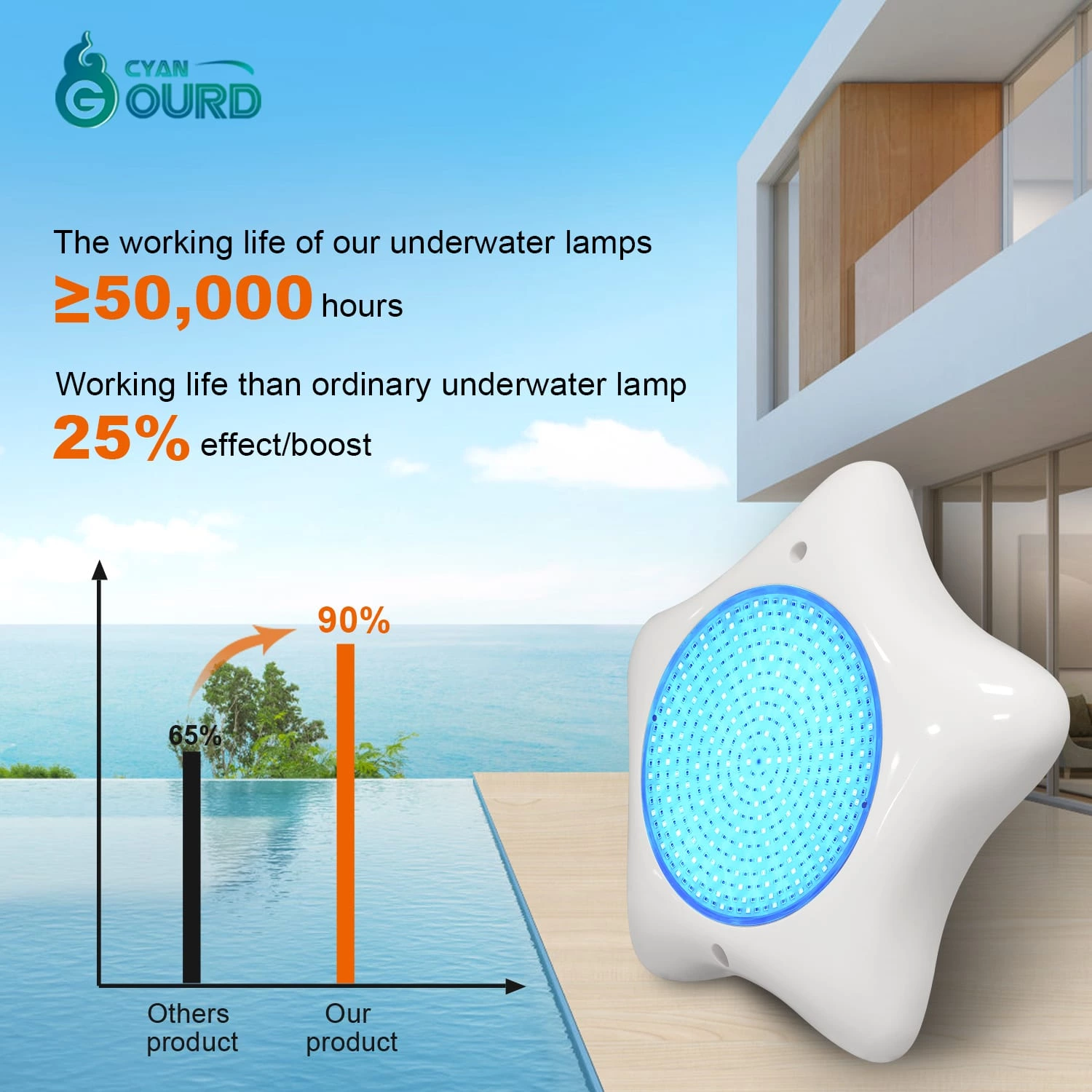
LED binning consistency is heavily dependent on thermal management. Without effective heat dissipation, the Correlated Color Temperature (CCT) will shift significantly over time, resulting in a "patchy" look across the pool wall. We integrate extruded aluminum heat sinks into our luminaires to conduct heat away from the PCB. For instance, our Stainless Steel Pool Light models utilize high-grade housings that act as a secondary heat exchanger, maintaining junction temperatures well within optimal limits to ensure L70 lumen maintenance beyond 50,000 hours of operation.
Navigating IEC 60598-2-18 Compliance
Procurement specifications must mandate adherence to the IEC 60598-2-18 standard, which specifically dictates the safety requirements for underwater luminaires. This includes mandatory low-voltage operation (typically 12V or 24V DC), specific impact resistance testing for lenses, and rigorous ingress protection ratings. Our fixtures are manufactured to meet these global benchmarks, ensuring that procurement officers receive products verified for electrical safety and structural integrity.
Testing Protocols: Saltwater and Vacuum-Sealing
Trust in industrial equipment is built through third-party validation. Our IP68 ingress protection is not a theoretical rating; it is supported by testing where units are submerged under pressurized conditions for extended durations. Furthermore, we subject our materials to saltwater immersion testing to simulate electrolysis conditions in saltwater-treated pools. By testing the corrosion resistance of our Abs Pool Light housings and stainless steel components against chlorinated and saline solutions, we guarantee durability in harsh commercial environments.
Product Profiles: Technical Deep Dive
Our catalog includes specialized solutions for diverse architectural requirements:
- QR-55 Series: A Nicheless Pool Light featuring ultra-slim dimensions of φ55*H110mm. It uses 3W / 6W / 9W configurations with SMD 3535 LEDs, perfect for retrofitting existing facilities without major wall modifications.
- YC105/165/205-SP Series: Our heavy-duty Stainless Steel Pool Light range, engineered for Olympic environments where robust material integrity is non-negotiable.
| Feature | Standard Fixture | Project-Grade (Our System) |
|---|---|---|
| Sealing Method | O-Ring Air Seal | Automated Epoxy Potting |
| Housing Material | Standard Plastic | Reinforced Stainless Steel / UV-Stabilized PC |
| Thermal Control | Passive Air | Aluminum Heat Sink Integration |
Need a Custom Project Quotation?
Our engineering team is ready to review your blueprints and provide a full technical specification for your facility retrofit.
Request Project QuotationSelecting the Right Lumen Output for Large-Volume Pools
Lumen density is critical for professional swimming environments. For Olympic pools, uniformity is more important than raw intensity. We recommend a balanced approach using a higher number of lower-wattage luminaires rather than a few high-output floods. This reduces glare, improves swimmer comfort, and creates a more even distribution of light, which is essential for lifeguards and competition officials.
Conclusion & Technical Support for B2B Project Planning
Choosing the right commercial LED lighting system is a decision that impacts maintenance budgets for years to come. By focusing on thermal engineering, hermetic sealing, and professional-grade construction, you ensure that your facility remains safe, vibrant, and efficient. Contact our technical support team to discuss your project requirements or to request a full set of third-party compliance documentation for your RFP/RFQ process.
Frequently Asked Questions
Q: Why is epoxy-resin potting superior for commercial pool lights?
A: Epoxy-resin potting replaces the internal air gap in a light fixture with a solid, moisture-proof compound. This eliminates the possibility of internal condensation, which is the leading cause of short circuits in underwater lighting systems.
Q: How does thermal management affect the lifespan of a pool light?
A: Proper heat dissipation through aluminum heat sinks keeps the LED junction temperature low. This prevents CCT (color) shift and premature hardware failure, allowing the light to maintain its rated lumen output over a longer duration.
Q: Are these lights compliant with international safety standards?
A: Yes, our luminaires are designed to meet IEC 60598-2-18 standards, which govern safety, ingress protection, and construction for underwater installations.
Q: Can I use these lights for a retrofit on an existing pool?
A: Yes, our nicheless and compact designs like the QR-55 are specifically engineered for retrofitting existing facilities without the need for complex, recessed housing installations.
Q: What is the typical ingress protection level of your products?
A: All our commercial units are IP68 rated, meaning they are fully protected against continuous immersion in water under conditions specified by the manufacturer.
Download Technical Spec Sheet
Access our complete library of photometric data, IES files, and certification documents for your next project.
Download Resources