Русский
 Français
 بالعربية
 Español
Evaluating Luminous Efficacy: A Distributor's Guide to High-Output LED Pool Lights
For procurement managers and MEP consultants, the transition to high-output LED lighting in aquatic facilities is often hindered by a misunderstanding of efficacy metrics. When sourcing Led Pool Light systems, the industry trend is to compare raw LED-die specifications, which frequently leads to inflated expectations of performance. Real-world ROI depends on system-level efficacy, not theoretical maximums.
The Efficacy Trap – Why Raw LED Specs Mislead Procurement Decisions
In our production line, we frequently observe that raw diode specifications ignore the impact of driver efficiency, heat dissipation, and secondary optical losses. Distributors often default to chip-level lumen ratings, but this fails to account for the actual light output at the fixture face. Relying on raw data can lead to premature failure and significant lumen drift. A Strategic Sourcing Framework Commercial Pool project requires looking beyond the component datasheet toward comprehensive, independent test results.
Photometrics in Liquid Media – Accounting for Refractive Index and Light Absorption
Light behavior in water is fundamentally different from air-based environments. Water introduces light absorption and backscatter, which vary based on water turbidity. When engineers specify an Embedded Pool Light, they must calculate the refractive index losses that reduce total fixture flux. Proper photometric modeling must use IES LM-79 reports conducted in submerged conditions, ensuring the effective lumens reach the pool floor without excessive absorption losses.
The Thermal Paradox – Why High-Output Diodes Need Specialized Water-Cooling Engineering
High-output LEDs generate intense localized heat. In a dry environment, heat sinks manage this naturally; however, in a pressurized pool environment, the thermal conductivity of the housing becomes critical. During factory audits, we have found that improper heat-sink geometry in an Stainless Steel Pool Light results in significant junction temperature spikes. Our proprietary thermal dissipation architecture ensures that heat is drawn away efficiently, preventing the accelerated lumen depreciation common in low-grade fixtures.
Standardization and Compliance – Navigating IES LM-79 and IEC 60598-2-18
Regulatory compliance is non-negotiable for large-scale aquatic facility lighting. IEC 60598-2-18 establishes the safety requirements for swimming pool luminaires, mandating strict waterproofing and electrical isolation. We perform internal IP68 submersion pressure tests, verifying the seal integrity at depths exceeding standard requirements. For a technical analysis on testing, see our Comprehensive Guide To Testing Pool products to understand these rigorous protocols.
Quality Assurance – Our Factory Binning and Thermal Mapping Process
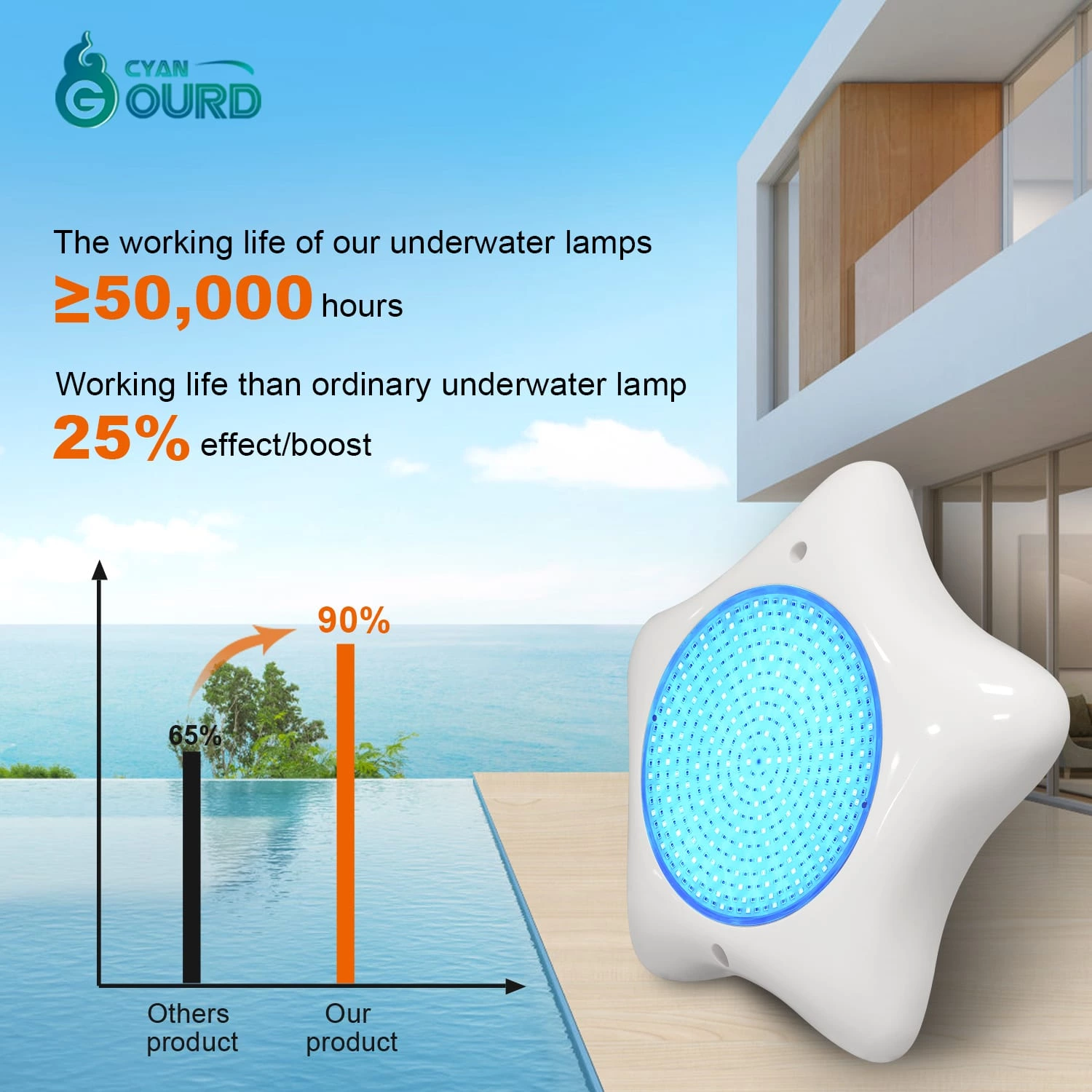
Consistency is the hallmark of professional-grade manufacturing. We implement strict binning protocols to maintain color uniformity across bulk orders. By using thermal mapping images during full-load testing, we confirm that our heat-sink performance maintains operating temperatures within safe limits. This focus prevents lumen drift and ensures our Resin Filled Pool Light solutions meet their L70 > 50,000 hours rating. Our production process specifically accounts for the environmental stress caused by chlorine, utilizing materials that prevent electrolytic corrosion.
| Feature | Standard Grade | Commercial High-Output |
|---|---|---|
| Thermal Management | Passive Air-Cooled | Submerged Optimized Heat-Sink |
| Efficacy Metric | Raw Diode Flux | LM-79 System Flux |
| Binning | Standard 5-Step MacAdam | 3-Step MacAdam Ellipse |
| Safety Certification | Basic CE | IEC 60598-2-18 Compliant |
Procurement Checklist – Verifying Data Before Large-Scale Site Deployment
Q: How does thermal management affect lumen maintenance?
A: Excessive heat damages the phosphorus layer in LEDs, causing rapid lumen degradation. Effective heat-sinking extends the life to L70 > 50,000 hours.
Q: Why differentiate raw LED-die efficacy from system efficacy?
A: Raw specs don't account for driver loss or optical transmission. System efficacy measures the actual usable light output.
Q: How does water affect perceived brightness?
A: Water absorption and light refraction reduce the effective throw distance, requiring higher system output compared to air-based fixtures.
Q: What is the purpose of strict binning protocols?
A: Binning ensures that every fixture in a large installation maintains identical chromaticity, preventing visible color variance across the pool wall.
Q: Which safety standard is critical for underwater lighting?
A: IEC 60598-2-18 is the primary standard ensuring safety and electrical integrity for submerged luminaires.
Download the Technical Spec Sheet & Thermal Test Summary to finalize your project requirements.