Русский
 Français
 بالعربية
 Español
How Pool Light Fixture Design Impacts Safety and Longevity in Commercial Swimming Pools
How Pool Light Fixture Design Impacts Safety and Longevity in Commercial Swimming Pools
In the realm of commercial aquatic facilities, the reliability of underwater lighting is not merely an aesthetic concern but a critical operational requirement. For hotels, municipal centers, and resort pools, the design architecture of LED pool lights directly dictates the safety of swimmers and the long-term maintenance budget of the facility. As a dedicated manufacturer, Cyangourd Lighting emphasizes that superior fixture design—ranging from waterproofing methodologies to thermal management—is the primary defense against electrical hazards and premature failure in harsh, chlorinated environments.
1. The Critical Role of Waterproofing Structure in Electrical Safety
The most significant threat to pool light safety is water ingress. Traditional fixtures often rely on rubber gaskets and mechanical seals (O-rings) to keep water out. However, in commercial pools where lights operate for extended hours, thermal expansion and contraction can degrade these seals over time, leading to leakage and potential short circuits. Modern design prioritizes fully resin-filled structures. By encapsulating the LED PCB board and internal components entirely in transparent epoxy resin, the fixture achieves a solid-state IP68 rating. This design eliminates air voids where condensation could form, ensuring that even if the outer casing is compromised, the electrical components remain isolated from water, drastically reducing shock risks.
2. Material Selection: Combating Corrosion in Chlorinated Environments
Commercial pools maintain higher chemical concentrations than residential pools to ensure sanitation. Consequently, the material composition of the light fixture is a determinant of its longevity. Fixtures designed with standard 304 stainless steel or lower-grade plastics often succumb to pitting and corrosion within months. Superior design utilizes Marine Grade 316L stainless steel or high-impact ABS+UV resistant PC materials. 316L stainless steel contains molybdenum, which provides exceptional resistance to chlorides found in salt and chlorine pools. Proper material selection prevents structural degradation that could lead to sharp edges or water leakage points.
3. Thermal Management Systems and LED Lifespan
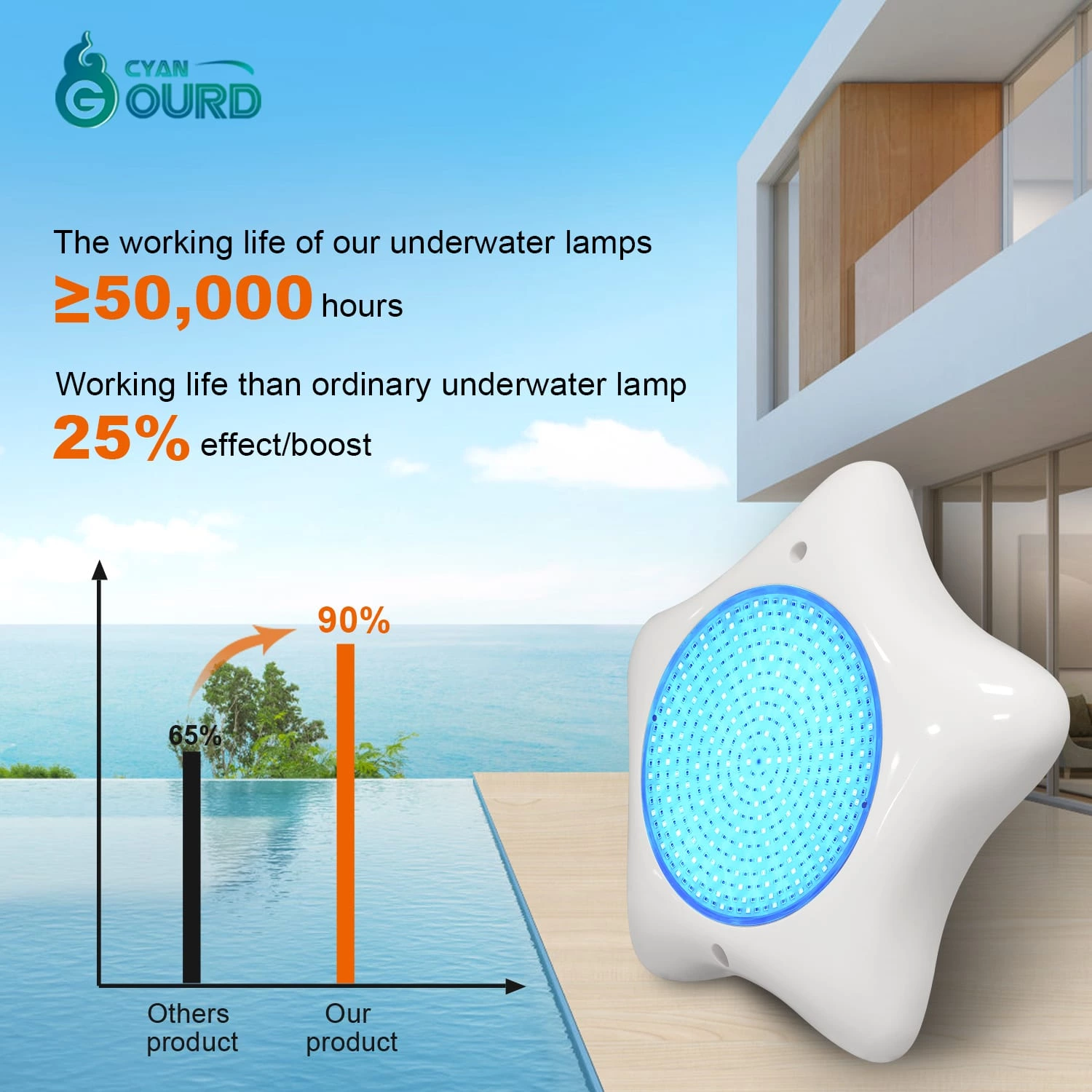
Heat is the enemy of LED efficiency and longevity. Although LEDs run cooler than halogens, high-power commercial units still generate significant heat at the junction point. If a fixture design lacks an efficient heat dissipation pathway, the LEDs will overheat, leading to lumen depreciation and color shifting. Advanced fixture designs incorporate integrated heat sinks or utilize the water itself for cooling. By designing the housing to maximize surface area contact with the pool water, manufacturers ensure that the operating temperature remains within the optimal range, thereby extending the rated lifespan of the diodes to 50,000 hours or more.
4. Low-Voltage Architecture for Swimmer Protection
Safety standards for commercial pools mandate low-voltage lighting systems. The design of the fixture must strictly adhere to AC/DC 12V or 24V inputs. High-voltage lighting underwater presents an unacceptable risk of electrocution. A robust design includes internal drivers that stabilize voltage fluctuations and ensure compatibility with safety isolation transformers. Furthermore, the internal circuitry should be designed to handle voltage drops over long cable runs, which are common in large commercial installations, ensuring consistent brightness without compromising the low-voltage safety barrier.
5. Cable Entry Integrity and Leakage Prevention
The point where the power cable enters the light fixture is a notorious weak point in poorly designed units. Capillary action can draw water up through the cable jacket into the light or even back to the junction box. High-quality commercial fixtures utilize VDE-certified rubber cables designed for permanent underwater submersion. The design should feature a dedicated cable gland or a resin-sealed entry point that physically bonds the cable to the housing. This prevents water migration and ensures the integrity of the electrical connection remains intact despite the pressure variations found in deep diving pools.
Comparison of Structural Designs for Commercial Applications
| Design Feature | Resin-Filled Structure (Modern) | O-Ring/Gasket Seal (Traditional) |
|---|---|---|
| Waterproof Rating | IP68 (Solid State) | IP68 (Dependent on Seal Pressure) |
| Leakage Risk | Near Zero (No internal air gap) | Moderate (Seal degrades over time) |
| Thermal Management | Resin conducts heat to housing | Air gaps insulate heat (Risk of overheating) |
| Maintenance Cycle | Long-term (Fit and forget) | Frequent (Gasket replacement required) |
| Impact Resistance | High (Internal components protected) | Low (Internal components loose) |
Frequently Asked Questions
Q1: Why is 316L stainless steel preferred over 304 for commercial pool lights?316L stainless steel contains molybdenum, which significantly enhances resistance to pitting and crevice corrosion caused by chlorides. In commercial pools with high chlorine levels or saltwater systems, 304 steel can rust quickly, whereas 316L maintains structural integrity and aesthetics for years.
Q2: How does resin-filled technology improve safety?Resin-filled technology completely encases the electrical components in a non-conductive epoxy. This prevents water from ever touching live circuits, even if the outer lens cracks, effectively eliminating the risk of electrical shock and short circuits.
Q3: Can poor thermal design affect the color of the LED light?Yes. If an LED fixture cannot dissipate heat effectively, the phosphor coating on the diodes can degrade. This often results in a color shift, typically turning cool white light into a blue or purple hue, and significantly reduces the brightness output.
Q4: Why are VDE-certified cables important for pool light longevity?VDE certification ensures the cable is tested for rigorous safety and durability standards. In a pool environment, cables must resist water penetration and chemical degradation. A compromised cable jacket can wick water into the fixture, causing failure regardless of the light's internal waterproofing.
Q5: What voltage is safest for commercial pool lighting design?AC/DC 12V or 24V is the industry standard for safety. These low voltages are insufficient to cause fatal electric shock to swimmers. Commercial designs must strictly utilize low-voltage transformers to step down mains power before it reaches the water.