Русский
 Français
 بالعربية
 Español
How Pool Light Structure Impacts Maintenance Frequency and Replacement Costs
How Pool Light Structure Impacts Maintenance Frequency and Replacement Costs
For distributors, contractors, and pool engineers, the initial procurement cost of LED swimming pool lights is only one component of the total financial equation. A critical, often overlooked factor is the structural design of the lighting fixture. The physical architecture—ranging from sealing methods to material composition—directly dictates the frequency of maintenance interventions and the long-term costs associated with replacements. Understanding the correlation between structural integrity and operational longevity is essential for minimizing warranty claims and maximizing client satisfaction in commercial and residential projects.
1. Waterproof Sealing: Resin-Filled vs. Gasket Designs
The most significant structural factor influencing maintenance frequency is the waterproofing method. Traditional designs often rely on rubber gaskets and O-rings to seal the internal components from water. While these allow for component-level repairs (such as changing a bulb), they are prone to degradation over time due to pool chemicals and thermal expansion. This leads to water ingress, requiring frequent maintenance checks and seal replacements.
In contrast, modern fully resin-filled LED pool lights encapsulate the PCB and LEDs in a solid block of transparent epoxy or resin. This structure eliminates air voids and potential leak paths. While a resin-filled unit typically requires full replacement upon failure, the frequency of failure due to water leakage is drastically reduced. For B2B buyers, the trade-off favors resin-filled structures, as the labor cost of frequent service calls for gasket failures often outweighs the cost of a durable, sealed unit.
2. Material Durability: Stainless Steel 316L vs. Plastic
The housing material is a structural element that defines resistance to environmental stressors. In saltwater pools or environments with high chemical concentrations, standard 304 stainless steel or low-grade plastics can suffer from corrosion or cracking. Structural corrosion compromises the watertight seal, leading to premature failure.
High-quality fixtures utilizing 316L stainless steel offer superior corrosion resistance, significantly lowering replacement costs over the facility's lifespan. Although the upfront manufacturing cost is higher, the structural resilience prevents the oxidation that causes lights to detach or leak. For budget-conscious projects, high-grade ABS+PC plastics are viable, provided they are UV-stabilized to prevent brittleness, which can lead to structural cracks and subsequent water damage.
3. Heat Dissipation Structures and LED Lifespan
Heat is the enemy of LED longevity. The internal structure of a pool light must effectively conduct heat away from the diodes. Poorly designed fixtures with inadequate heat sinks or trapped air pockets cause LEDs to overheat, resulting in dimming or total burnout. This necessitates early replacement, driving up costs.
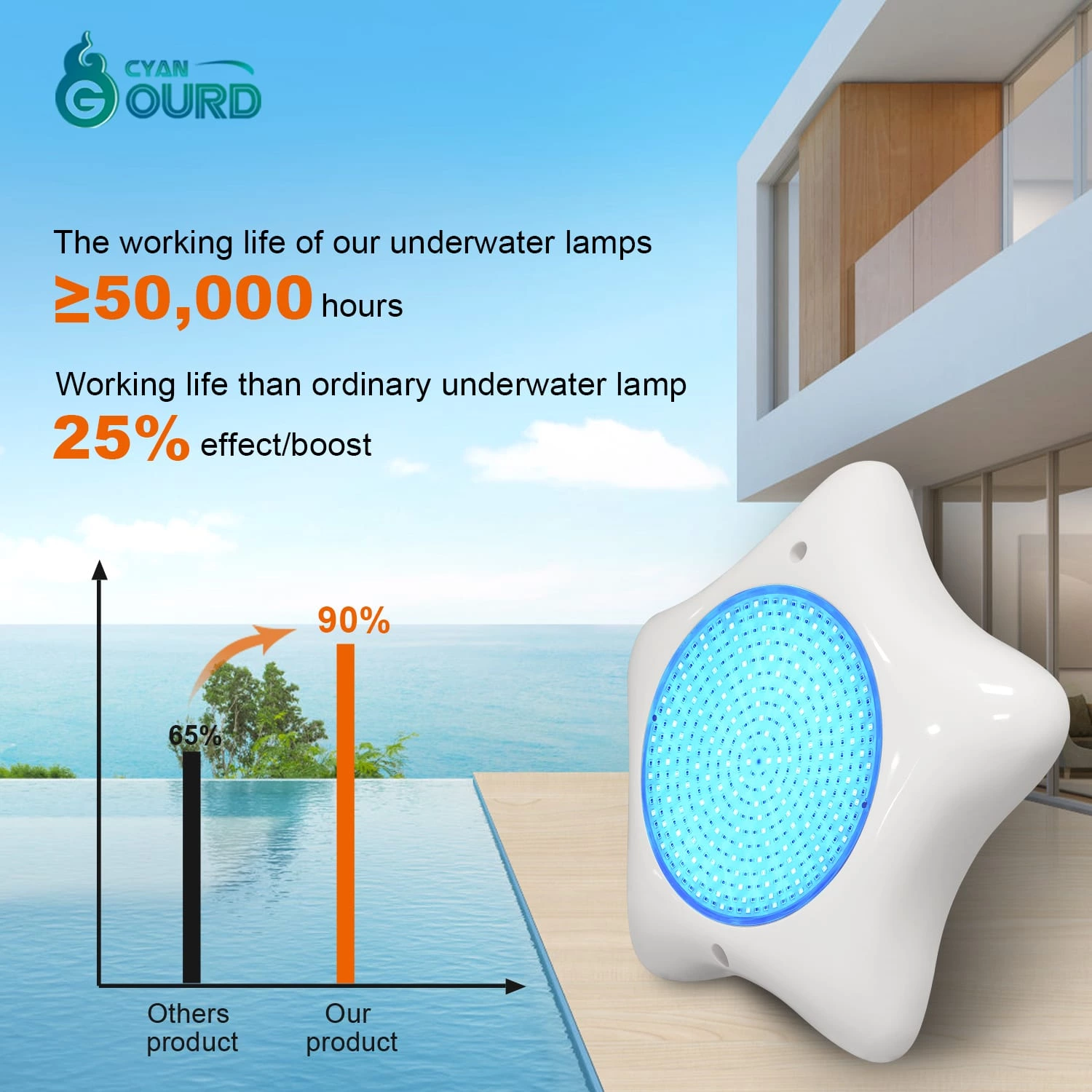
Advanced structural designs utilize the pool water itself for cooling, transferring heat through a conductive housing or a specialized aluminum backing plate integrated into the resin. By maintaining optimal operating temperatures, these structures extend the lifespan of the light to 50,000+ hours, drastically reducing the replacement frequency compared to air-cooled or poorly insulated designs.
4. Installation Types: Niche vs. Surface Mount Maintenance
The mounting structure—whether PAR56 niche-embedded or flat surface-mounted—impacts the complexity and labor cost of replacement. PAR56 bulbs housed in a niche are a legacy standard; replacing them is straightforward but often requires dealing with old, potentially corroded niche fixtures.
Surface-mounted lights, conversely, are attached directly to the pool wall. If the structural design includes a detachable bracket system, replacement is quick and requires minimal labor. However, if the design requires draining the pool or complex rewiring due to poor cable gland structures, the maintenance cost skyrockets. Wholesalers should prioritize designs that feature user-friendly mounting plates and ample cable length to facilitate above-water servicing.
5. The Hidden Costs of Warranty Claims and Labor
For contractors and distributors, the "cost" of a pool light extends beyond the hardware. A structural failure leads to warranty claims, site visits, and labor hours. A light with a weak structural seal (IP68 rating achieved only by temporary gaskets) may pass initial testing but fail within a year.
Investing in lights with robust, permanent structural sealing (like fully resin-filled units) minimizes these hidden costs. While the unit itself might be non-repairable, the reliability ensures that the contractor does not need to return to the site, preserving profit margins and reputation. The structural integrity acts as an insurance policy against recurring labor costs.
Comparison: Structural Designs vs. Maintenance Implications
| Structure Type | Waterproof Reliability | Maintenance Frequency | Replacement Complexity | Long-Term Cost Efficiency |
|---|---|---|---|---|
| Resin-Filled (Solid) | Extremely High (IP68) | Very Low | Low (Replace Unit) | High (Zero maintenance) |
| Gasket/O-Ring Sealed | Moderate (Degrades) | High (Seal checks) | Moderate (Disassembly) | Low (Labor intensive) |
| 316L Stainless Housing | High (Corrosion resistant) | Low | Low | High (Durability) |
| Plastic (Non-UV) | Low (Prone to cracking) | High | High (Housing failure) | Low (Frequent swaps) |
FAQ: Pool Light Structure and Cost Analysis
- 1. Why do resin-filled lights generally have lower maintenance frequency than gasket-sealed lights?
Resin-filled lights eliminate internal air voids, making them impervious to water ingress even if the outer casing is slightly compromised. Gasket-sealed lights rely on rubber seals that degrade over time due to chemicals and heat, leading to leaks and requiring frequent maintenance or seal replacements.
- 2. How does 316L stainless steel reduce replacement costs in saltwater pools?
Saltwater is highly corrosive to standard metals. 316L stainless steel contains molybdenum, which provides superior resistance to chloride corrosion. This structural durability prevents the housing from rusting and leaking, significantly extending the time between replacements compared to 304 steel or lower-grade alloys.
- 3. Is it cheaper to replace a PAR56 bulb or a whole surface-mounted light?
While a PAR56 bulb itself may be cheaper than a full surface-mounted fixture, the labor cost to open the niche, replace the gasket, and reseal the unit can be higher. Surface-mounted lights, especially resin-filled ones, are often "install and forget," reducing the cumulative labor costs associated with maintenance.
- 4. How does heat dissipation structure affect LED pool light longevity?
Effective heat dissipation structures (like aluminum backing or water-cooling designs) prevent LEDs from overheating. Overheating causes rapid lumen depreciation and driver failure. A good thermal structure ensures the light reaches its rated lifespan (e.g., 50,000 hours), reducing the frequency of purchasing replacements.
- 5. What structural rating should wholesalers look for to minimize warranty claims?
Wholesalers should prioritize lights with an IP68 waterproof rating achieved through permanent sealing methods (like resin filling) rather than temporary mechanical seals. Additionally, checking for impact resistance ratings (IK ratings) and material certifications (like UV-stabilized PC or 316L SS) ensures structural robustness.