Русский
 Français
 بالعربية
 Español
How Smart Control Systems Interface with Ultra-Thin Pool Lights for Wireless Color Changing
How Smart Control Systems Interface with Ultra-Thin Pool Lights for Wireless Color Changing
Integrating smart technology with ultra-thin LED swimming pool lights presents unique engineering challenges and opportunities. Unlike traditional bulky niche lights, ultra-thin fixtures—often measuring less than 10mm in thickness—rely heavily on external control interfaces to manage wireless color changing capabilities. For B2B distributors and pool contractors, understanding the architecture of these control systems is essential for delivering reliable, synchronized lighting solutions. This guide explores the technical interface between smart controllers and resin-filled, ultra-thin LED fixtures.
The Architecture of External Control Modules
The primary constraint of ultra-thin pool lights is physical space. To maintain a sleek profile and ensure a fully resin-filled, IP68 waterproof structure, complex wireless receivers (such as WiFi or Zigbee modules) are rarely embedded directly inside the light fixture. Instead, the "smart" interface resides in an external control box located above ground.
The interface functions by receiving wireless commands from a smartphone or remote and translating them into electrical signals sent down the low-voltage (AC/DC 12V or 24V) power lines. This separation ensures that the sensitive communication electronics are kept dry and accessible for maintenance, while the robust, stainless steel or ABS ultra-thin light remains submerged.
Wireless Protocols: WiFi, Bluetooth, and RF Integration
Smart control systems utilize various protocols to interface with the external controller. WiFi and Bluetooth Mesh are increasingly popular for high-end commercial projects, allowing facility managers to control pool lighting via mobile apps or voice assistants. The external controller acts as a bridge, connecting to the local network and modulating the power output to the lights.
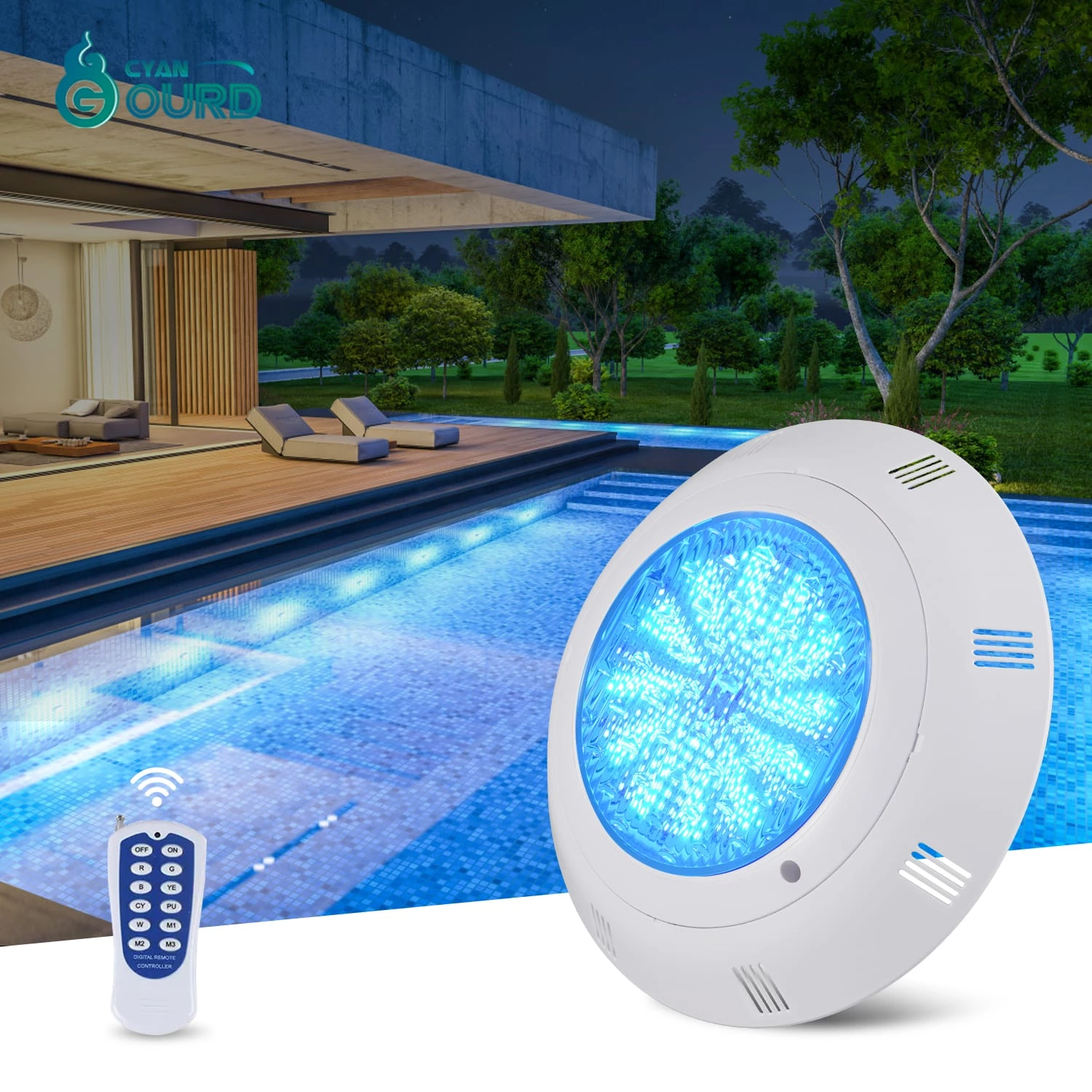
Radio Frequency (RF) remains a standard for standalone systems. The interface here involves a dedicated remote communicating with a receiver box. For ultra-thin lights, the synchronization logic is critical; the controller must ensure that the Pulse Width Modulation (PWM) signals sent to the Red, Green, and Blue (RGB) channels are perfectly timed to prevent color drift across multiple fixtures.
DMX512 Decoding for Advanced Light Shows
For commercial aquatic centers requiring complex light shows, DMX512 is the industry standard. Since ultra-thin lights often lack internal DMX decoding chips due to size constraints, the interface relies on an external DMX decoder.
The central DMX console sends digital data to the decoder, which then converts this data into analog PWM voltage outputs for the lights. This setup allows for individual addressing or group control of ultra-thin lights, enabling dynamic effects like wave patterns or music synchronization, provided the wiring infrastructure supports the necessary channel separation (typically 4-wire or 5-wire configurations).
Power Line Communication (PLC) Technology
To minimize cabling complexity, some smart systems use Power Line Communication (PLC). In this interface method, control data is superimposed onto the 2-wire AC power line. A specialized receiver inside the ultra-thin light (or a compact external dongle) decodes these signals to change colors.
PLC is particularly advantageous for retrofitting ultra-thin lights into existing pools where pulling new multi-wire cables is impossible. The smart controller modulates the frequency on the power line, triggering pre-programmed color modes without requiring a separate data cable.
Ensuring Signal Integrity and Synchronization
A major challenge in interfacing smart controls with pool lights is signal attenuation through water and distance. High-frequency wireless signals (WiFi/Bluetooth) do not penetrate water effectively. Therefore, the interface must rely on the hardwired connection from the dry-side controller to the submerged light.
To maintain synchronization, high-quality controllers utilize precise internal clocks and signal repeaters. When sourcing ultra-thin lights, it is crucial to verify that the external drivers are matched to the wattage and voltage drop characteristics of the cable run, ensuring that the color command received by the first light is identical to the one received by the last light in the circuit.
Comparison of Control Interface Technologies
| Interface Type | Wiring Requirement | Control Method | Best Application |
|---|---|---|---|
| Standard Switch / ON-OFF | 2-Wire (AC) | Power toggling | Basic residential retrofits |
| External WiFi/RF Controller | 4-Wire or 5-Wire (RGB/RGBW) | App or Remote via PWM | Modern smart homes |
| DMX512 System | 4-Wire + Data or 5-Wire | Digital Protocol | Commercial/Hotel pools |
| Power Line Communication (PLC) | 2-Wire | Signal over power line | Renovations without rewiring |
Frequently Asked Questions
1. Can ultra-thin pool lights connect directly to home WiFi?No, ultra-thin pool lights are submerged in water, which blocks WiFi signals. They must connect to an external WiFi controller box installed in a dry location, which then sends power and color commands to the lights via cable.
2. What is the maximum distance for the remote control interface?For RF remotes, the range is typically 20-30 meters in open air. However, if the controller is housed in a metal enclosure or underground, the range decreases. WiFi control range depends on the strength of the local network router.
3. Do I need a specific transformer for smart control systems?Yes. Most smart controllers operate on DC 12V or DC 24V. If your ultra-thin lights are designed for AC input, you may need a specific AC-compatible controller or a converter. Always match the transformer voltage to the light fixture's rating.
4. Can I synchronize different brands of ultra-thin lights?Synchronization across different brands is difficult unless they all use a standard protocol like DMX512 or standard RGB PWM. Proprietary 2-wire control systems are usually not cross-compatible between manufacturers.
5. How does the interface handle voltage drop in long cable runs?Smart controllers cannot fix voltage drop; they only send signals. For long runs, installers must use thicker gauge wire or higher voltage (24V) systems to ensure the control signal and power reach the ultra-thin light without degradation.