Русский
 Français
 بالعربية
 Español
Key Design Factors Manufacturers Consider in LED Swimming Pool Lights
Key Design Factors Manufacturers Consider in LED Swimming Pool Lights
In the competitive landscape of underwater illumination, the engineering behind LED swimming pool lights determines their longevity, safety, and performance. For manufacturers like Cyangourd Lighting, the design process is not merely about aesthetics but about overcoming the harsh realities of underwater environments. From chemical corrosion to thermal management, every component must be meticulously engineered to meet rigorous industrial standards. This article explores the primary design factors that top-tier manufacturers prioritize when developing wholesale LED pool lighting solutions.
Waterproofing Architecture and IP68 Integrity
The most critical design factor for any underwater fixture is its ability to prevent water ingress. Manufacturers must ensure a permanent IP68 rating. Modern design has shifted from traditional rubber gasket seals, which degrade over time, to fully resin-filled structures. By encapsulating the LED PCB and internal drivers in a specialized epoxy resin, manufacturers create a solid-state unit that is impervious to water, even if the outer casing is compromised. This design choice significantly reduces the failure rate associated with thermal expansion and contraction cycles.
Thermal Management and Heat Dissipation
Although LEDs are more efficient than halogens, they still generate heat that must be dissipated to prevent junction temperature spikes. In an underwater environment, the water itself acts as a cooling medium, but the internal design must effectively transfer heat from the LED chip to the housing. Manufacturers utilize high-conductivity aluminum substrates and design the housing—often 316L stainless steel or thermally conductive plastics—to maximize surface area contact with the water. Proper thermal engineering ensures lumen maintenance and prevents premature burnout.
Material Selection for Corrosion Resistance
Pool water is a chemically aggressive environment containing chlorine, salts, and acids. Design engineers must select materials that can withstand long-term exposure without corroding or becoming brittle. For high-end applications, 316L stainless steel is the standard due to its resistance to pitting and crevice corrosion. For more cost-effective or specific salt-chlorinator applications, high-grade ABS+PC plastics with UV stabilizers are chosen to prevent yellowing and cracking. The choice of material dictates the fixture's lifespan and maintenance requirements.
| Design Approach | Sealing Mechanism | Thermal Efficiency | Typical Application |
|---|---|---|---|
| Fully Resin-Filled | Solid epoxy encapsulation (No air gaps) | High (Direct transfer to housing) | Professional/Commercial Pools |
| O-Ring/Gasket Sealed | Mechanical compression seal | Medium (Relies on internal air/heatsink) | Budget/Residential Retrofits |
| Par56 Bulb Replacement | Depends on niche housing | Variable (Restricted by niche airflow) | Renovation Projects |
Optical Engineering and Beam Precision
The optical design determines how light travels through the water. Manufacturers carefully calculate beam angles to ensure uniform coverage without creating blinding glare for swimmers. High-transmittance lenses, typically made from polycarbonate or tempered glass, are engineered to focus light where it is needed. Whether the requirement is a wide flood for general illumination or a narrow spot for architectural features, the lens design is integral to the fixture's performance and energy efficiency.
Electrical Safety and Voltage Regulation
Safety is paramount in pool lighting design. Manufacturers strictly adhere to low-voltage standards, typically designing fixtures to operate on AC/DC 12V or 24V. This requires robust internal driver design to handle voltage drops over long cable runs. Furthermore, the design must ensure complete electrical isolation between the power source and the water. High-quality cable glands and reinforced cable entries are designed to prevent water wicking up the wire, a common failure point in inferior products.
Frequently Asked Questions
- Why do manufacturers prefer resin-filled designs over gaskets?
Resin-filled designs eliminate air gaps inside the light, making them completely waterproof (IP68) and resistant to condensation issues caused by temperature fluctuations, which often compromise gasket seals over time.
- How does material selection impact the lifespan of LED pool lights?
Materials like 316L stainless steel and UV-stabilized polycarbonate are selected to resist corrosion from chlorine and saltwater. Inferior materials will rust or crack, leading to water ingress and fixture failure.
- What is the importance of thermal management in underwater lights?
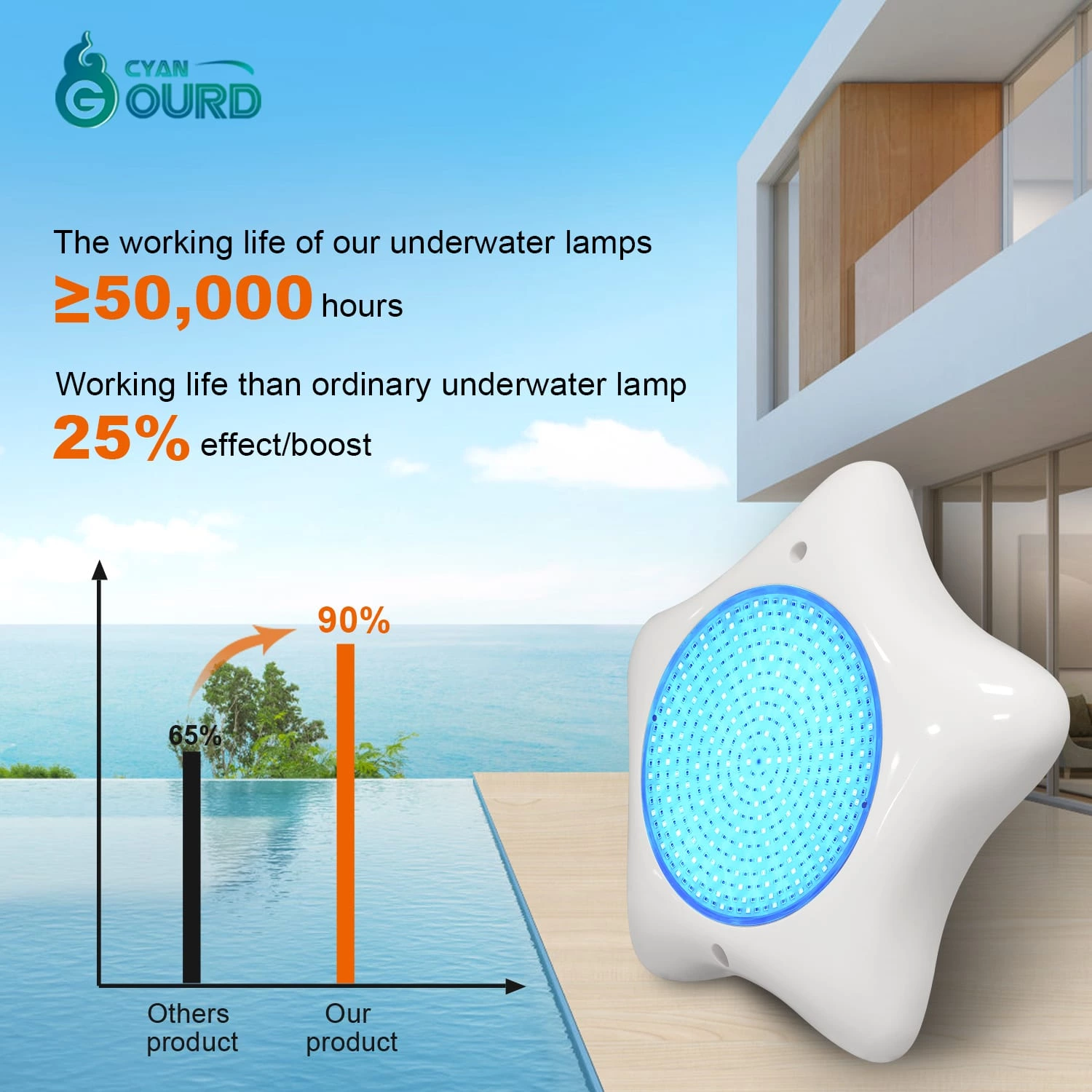
Effective thermal management prevents the LEDs from overheating. Even underwater, the internal components must dissipate heat efficiently to maintain brightness and ensure the rated lifespan of 50,000+ hours.
- Why are LED pool lights designed for low voltage (12V/24V)?
Low voltage is a mandatory safety design to prevent electrocution hazards. Manufacturers design internal drivers to convert and regulate this power safely within the underwater environment.
- How do manufacturers ensure color consistency in RGB pool lights?
Through precise binning of LED chips and advanced control protocols (like DMX or synchronous on/off), manufacturers ensure that multiple lights in a single pool display the exact same hue and transition speed.