Русский
 Français
 بالعربية
 Español
Key Differences Between Underwater Pool Lights and Surface Pool Lighting
Key Differences Between Underwater Pool Lights and Surface Pool Lighting
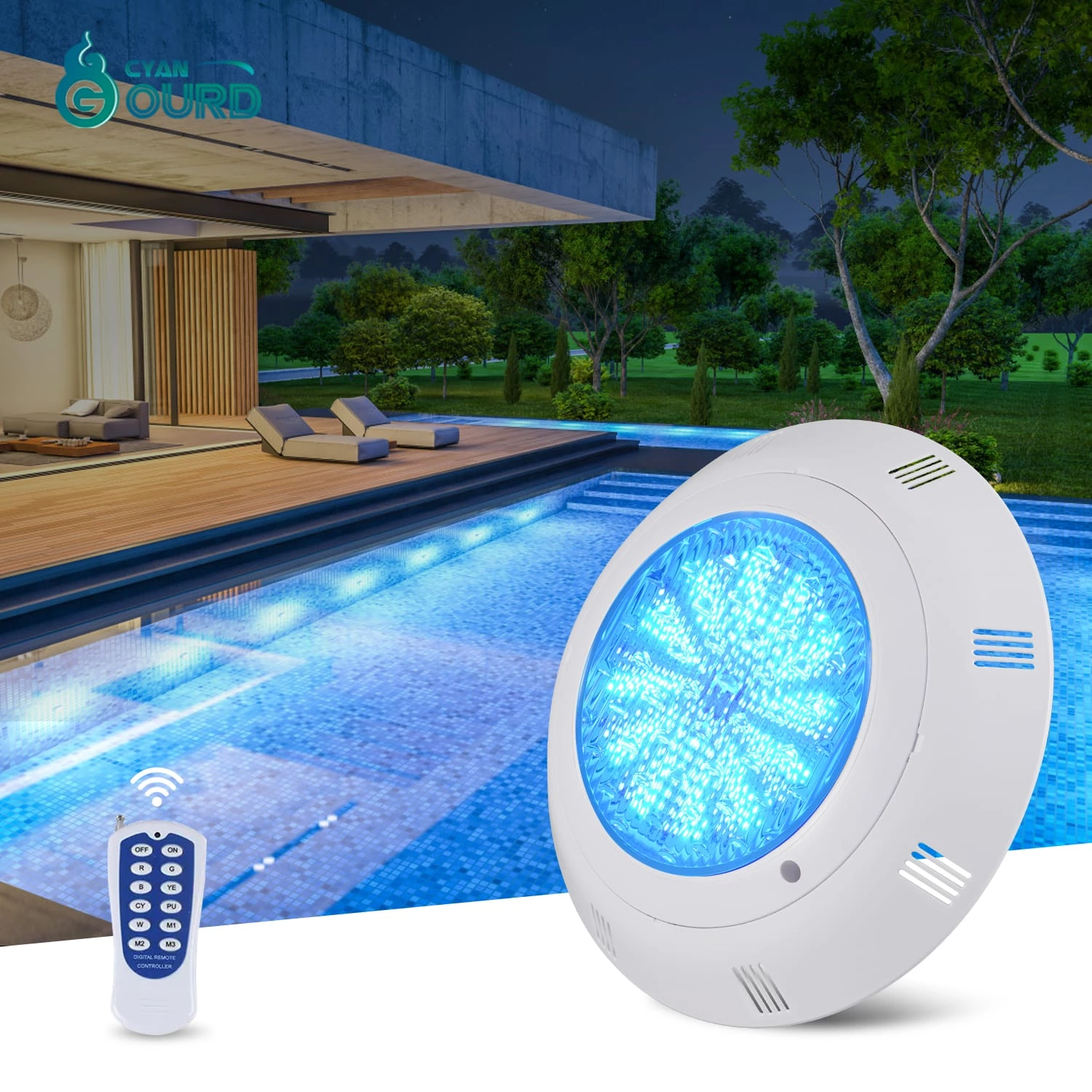
In the commercial swimming pool industry, lighting design is divided into two distinct categories: underwater illumination and surface (or perimeter) lighting. While both systems contribute to the aesthetic and safety of the aquatic environment, they operate under vastly different physical and electrical constraints. For distributors, contractors, and pool designers, understanding the technical distinctions between underwater pool lights (submerged) and surface pool lighting (installed above the waterline, such as deck or overhead lights) is essential for specifying the correct hardware. As a dedicated manufacturer of LED swimming pool lights, Cyangourd Lighting provides this technical analysis to aid in proper procurement and system integration.
1. Installation Environment and Thermal Management
The primary difference lies in the operating environment. Underwater pool lights are engineered to operate while fully submerged. This immersion is not just a location factor; it is often a functional requirement. Many high-power LED underwater lights rely on the surrounding water to act as a heat sink, dissipating the thermal energy generated by the diodes. Operating these lights out of water can lead to overheating and component failure.
Conversely, surface pool lighting—which includes coping lights, pole-mounted floodlights, or landscape lighting around the pool deck—operates in the air. These fixtures must rely on passive air cooling systems, often requiring larger aluminum heat sinks or finned housing designs to manage temperature without the benefit of water cooling.
2. Waterproof Ratings: IP68 vs. IP65 Standards
The ingress protection (IP) rating is the most critical specification separating these two categories. Underwater pool lights must strictly adhere to the IP68 standard, which certifies that the fixture is dust-tight and suitable for continuous immersion in water beyond 1 meter of depth. Manufacturers like Cyangourd utilize advanced sealing technologies, such as full resin-filled structures, to ensure zero water entry under pressure.
Surface pool lighting typically requires an IP65 or IP67 rating. While these fixtures must withstand rain, splashing, and humidity, they are not designed to hold a seal against the constant hydrostatic pressure found at the bottom of a pool. Confusing these ratings can lead to catastrophic failures if a surface-rated light is installed below the waterline.
3. Voltage Requirements and Electrical Safety
Safety regulations for submerged equipment are far more stringent than for surface equipment. Underwater pool lights generally operate on low voltage (12V or 24V AC/DC) to prevent the risk of electric shock to swimmers. This requires the use of step-down transformers and careful voltage drop calculations during installation.
Surface lighting, depending on local codes and placement distance from the water's edge, may operate on line voltage (110V/220V) or low voltage. However, any fixture installed within the immediate "wet zone" or splash zone is increasingly moving toward low voltage for enhanced safety, though the strict requirement for 12V is primarily a mandate for submerged fixtures.
4. Optical Performance: Refraction and Beam Angles
Light behaves differently in water than in air due to refraction. Underwater lights are designed with optics that account for the refractive index of water (approximately 1.33). This ensures the beam penetrates the water volume effectively without excessive scattering. The goal is to illuminate the water body itself, creating a glowing volume.
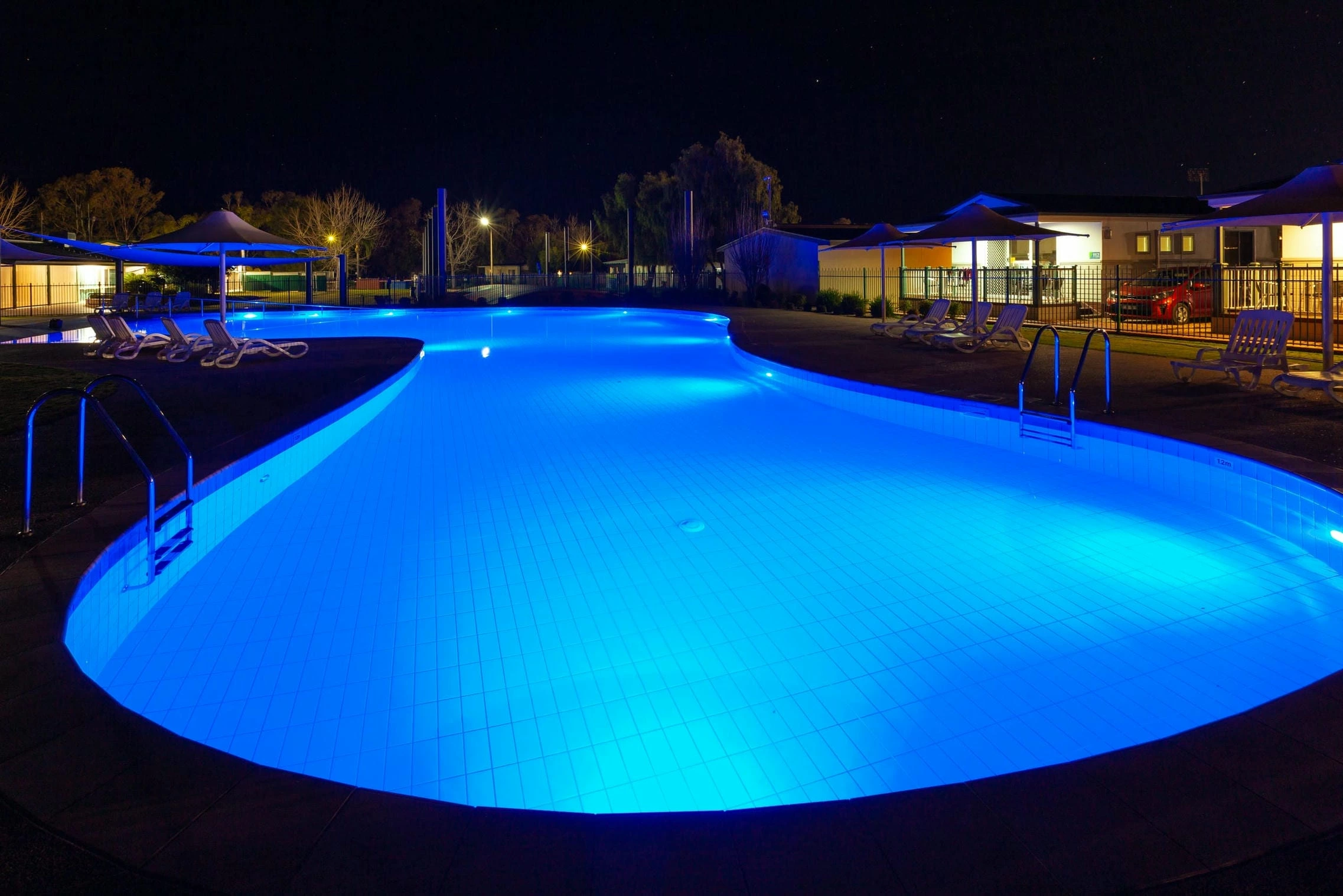
Surface lighting aims to illuminate the deck, the pool edge, or reflect off the water surface. Surface lights directed at the water often cause glare due to reflection, making it difficult to see into the pool at night. Therefore, surface lighting is primarily used for ambiance and deck safety, while underwater lighting is used for swimmer visibility and water aesthetics.
5. Maintenance Protocols for Commercial Facilities
From a facility management perspective, maintenance differs significantly. Replacing or servicing surface lights is straightforward, often requiring only a ladder or simple tools. The pool remains operational during maintenance.
Servicing underwater lights requires more planning. Modern niche-mounted or surface-mounted underwater lights usually have enough cable coiled in the niche to allow the fixture to be pulled up to the deck for service without draining the pool. However, if the fixture is not designed with this maintenance feature, or if the cable is too short, the pool water level may need to be lowered, disrupting commercial operations.
| Feature | Underwater Pool Lights | Surface Pool Lighting |
|---|---|---|
| Installation Zone | Submerged (Below Waterline) | Above Waterline (Deck, Wall, Overhead) |
| IP Rating Requirement | IP68 (Continuous Immersion) | IP65 / IP67 (Weather/Splash Proof) |
| Voltage Standard | Strictly Low Voltage (12V/24V) | Line Voltage (110V/220V) or Low Voltage |
| Cooling Mechanism | Water Cooled (Often) | Air Cooled (Passive Heatsink) |
| Primary Material | 316L Stainless Steel, ABS+PC (Corrosion Resistant) | Aluminum, Stainless Steel, Plastic |
Frequently Asked Questions
Can surface lighting effectively replace underwater pool lights?
No. Surface lighting illuminates the area around the pool or reflects off the water's surface. It cannot penetrate the water depth effectively to illuminate the pool floor or walls. For safety and aesthetics, underwater lights are required to make the water volume visible and inviting.
Why is IP68 mandatory for underwater lights but not surface lights?
IP68 certifies that a device can withstand continuous submersion under pressure. Surface lights (IP65/IP67) are only designed to resist water jets or temporary immersion. Using a non-IP68 fixture underwater will result in seal failure due to hydrostatic pressure, leading to short circuits and permanent damage.
Do underwater and surface lights require different power supplies?
Generally, yes. Underwater lights almost exclusively require 12V or 24V AC/DC transformers for safety compliance. Surface lights may connect directly to mains power or use different drivers. Mixing these on the same circuit requires careful electrical planning and is often avoided in commercial designs.
How does material selection differ between the two types?
Underwater lights face constant exposure to pool chemicals (chlorine, salt). Therefore, high-grade materials like 316L stainless steel or UV-stabilized ABS+PC are standard. Surface lights, while needing weather resistance, do not face the same constant chemical concentration, allowing for a wider range of housing materials like powder-coated aluminum.
Can I control underwater and surface lights with the same system?
Yes, with the right controller. Modern DMX512 or WiFi/RF control systems can synchronize RGB color changes across both underwater and surface zones, provided the drivers and controllers are compatible. This allows for a unified lighting theme across the entire pool environment.