Русский
 Français
 بالعربية
 Español
Master Class: Dynamic DMX Pool Lighting Control Systems for Luxury Resorts
For project engineers and MEP consultants managing large-scale aquatic installations, maintaining 99.9% uptime for complex lighting sequences is a baseline requirement. Modern luxury hospitality projects demand more than simple on-off functionality; they require high-density matrix control capable of executing sophisticated, jitter-free color transitions. Achieving this level of precision necessitates a deep understanding of Led Pool Light protocols and the structural challenges of managing signals across extensive cabling distances.
Section 1: The Engineering Challenge of Synchronized Resort Lighting
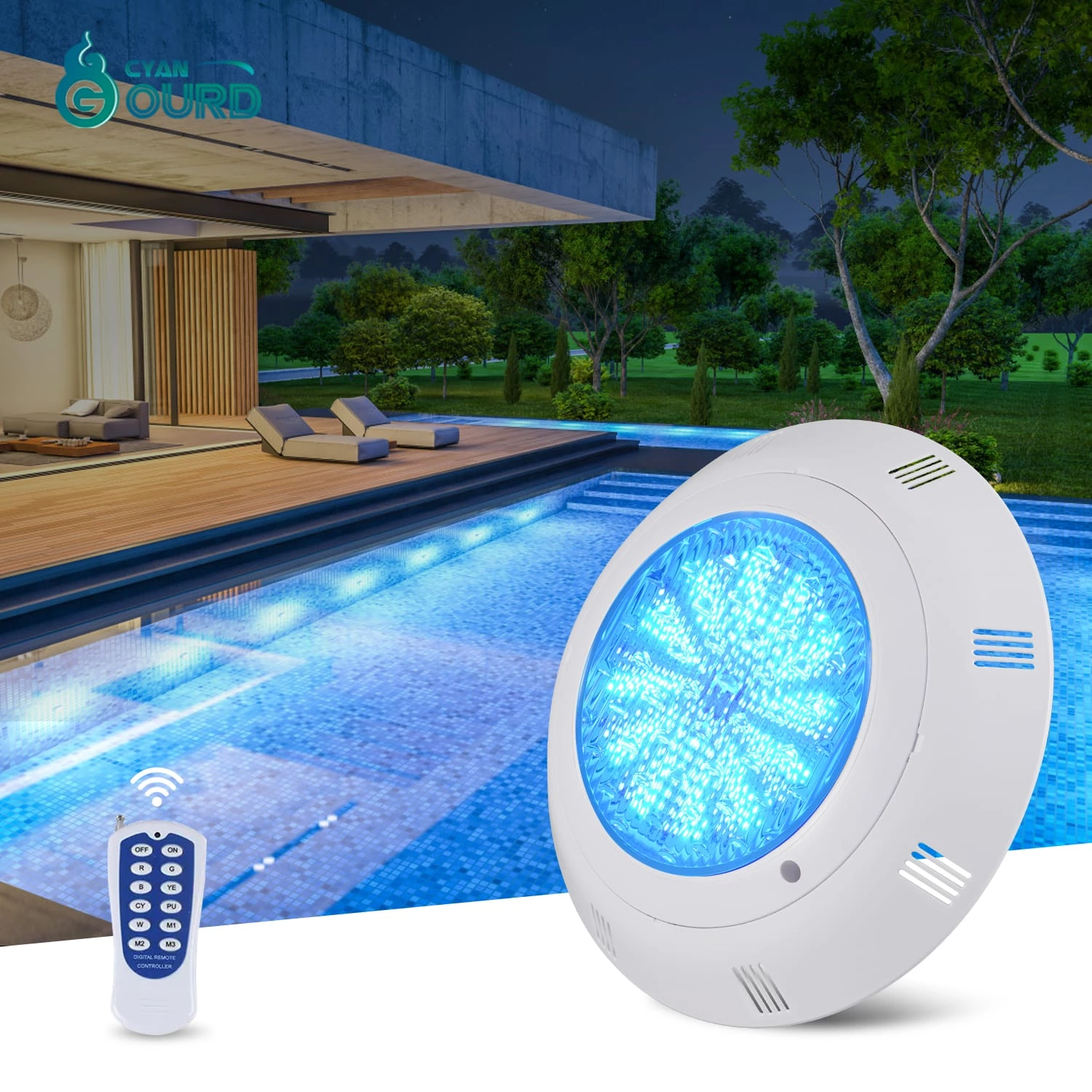
The primary hurdle in resort pool lighting is latency. When deploying hundreds of fixtures, signal propagation delay can result in desynchronized color shifts, destroying the luxury aesthetic. Our experience in the production line shows that without robust signal repeaters and properly shielded cabling, signal degradation over 100m+ runs leads to erratic flickering. The Embedded Pool Light series, such as our QR290-A, is specifically engineered to mitigate these issues through integrated buffers that maintain protocol integrity even at the end of long daisy-chain configurations.
Section 2: Decoding Protocol Compatibility: DMX512 vs. Proprietary Controllers
While proprietary building management systems (BMS) are common in hospitality, they are rarely natively equipped to drive hundreds of pool fixtures simultaneously. The industry standard remains DMX512/RDM. To integrate with systems like Crestron or Control4, engineers must specify DMX gateways that act as translators. By utilizing RDM (Remote Device Management), facility teams can perform bi-directional communication, allowing for individual fixture diagnostics without draining the pool. For those seeking technical guidance, our Engineering High Performance Dmx Pool documentation provides a clear roadmap for these integrations.
Section 3: High-Density Matrix Management
Scaling from 10 to 500+ fixtures requires strict adherence to electromagnetic interference (EMI) mitigation. In our factory audits, we have observed that improper shielding is the leading cause of random, uncommanded color changes. By utilizing high-density LED matrix architecture, our control systems partition the pool into logical universes, preventing the saturation of any single data line. This methodology ensures that even with 500+ Stainless Steel Pool Light units, the refresh rate remains well above the human flicker threshold.
Section 4: Technical Specifications for Longevity
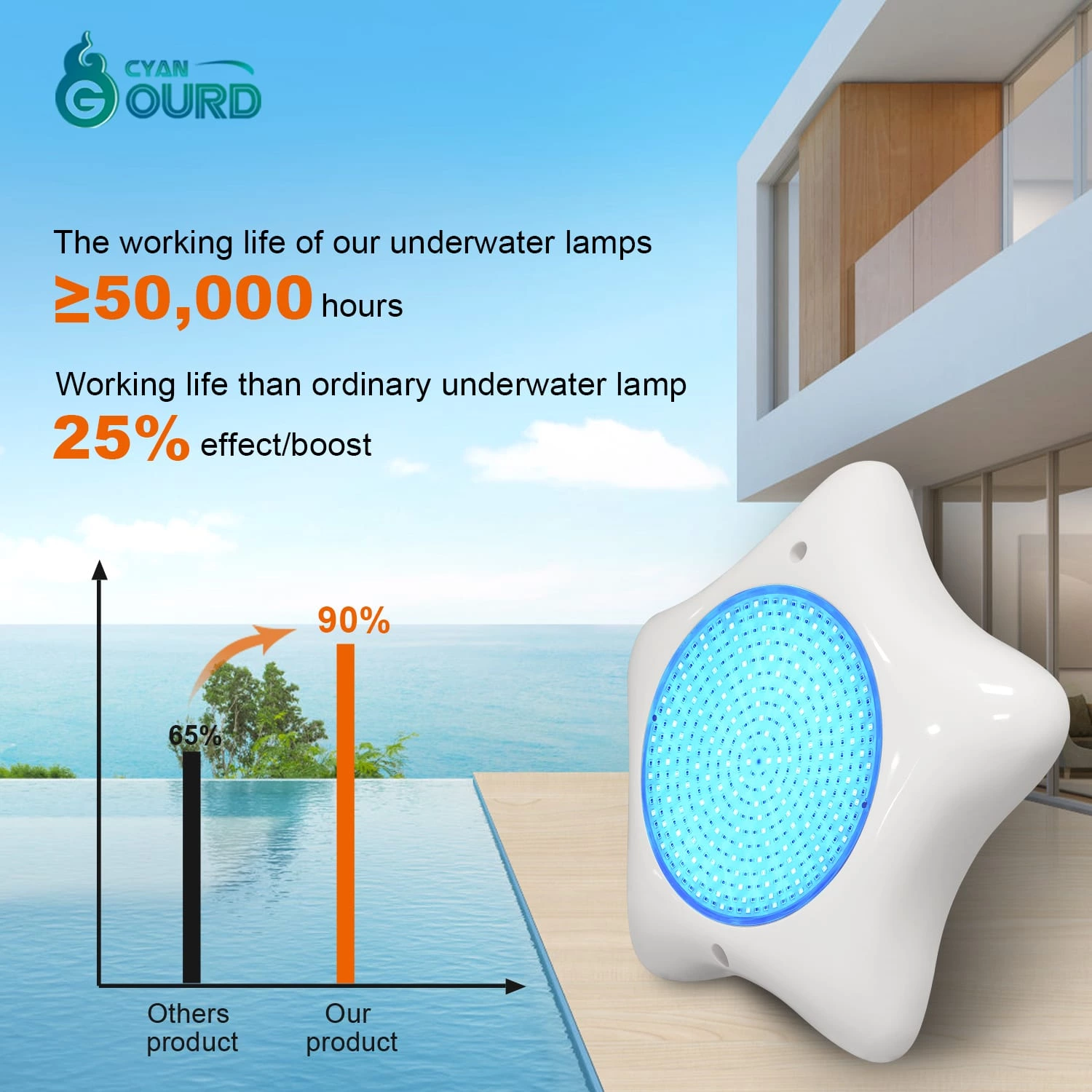
Thermal management is the silent killer of underwater electronics. Our YC series stainless steel housings are designed with passive heat dissipation, ensuring that PWM dimming does not trigger thermal throttling. We consistently test our hardware to meet the IEC 60598-2-18 standard for underwater safety. For reference, the QR-55 Nicheless Pool Light utilizes high-grade ABS construction, maintaining structural integrity across thermal cycles. Hardware MTBF (Mean Time Between Failure) for our DMX controllers is tested at 50,000 hours under constant 24/7 load simulations.
| Feature | Standard DMX Control | Proprietary BMS Direct |
|---|---|---|
| Synchronization Latency | Near-zero (44Hz refresh) | Variable (High) |
| Interoperability | Universal (RDM) | Closed/Restricted |
| Scaling Capability | Up to 512 channels/univ. | Limited by proprietary hub |
Section 5: Designing for Maintenance
Engineering for maintenance requires accessible junction points. We advocate for localized diagnostic panels that allow technicians to verify signal strength at different nodes along the pool perimeter without accessing the underwater housings. Our cable run testing data confirms that using twisted-pair shielded cabling prevents crosstalk in installations exceeding 150 meters, fulfilling the requirement for high-traffic environments where downtime equates to revenue loss.
Section 6: Case Study: Achieving Fluid Lighting Transitions
In a recent luxury resort project, we facilitated a complete transition from a legacy 0-10V system to a networked DMX512 architecture. The previous system suffered from significant lag, causing distinct, disjointed lighting colors during automated scene transitions. By deploying our QR290-A units with centralized DMX/RDM gateways, the hotel achieved sub-millisecond synchronization, verified by Crestron integration testing. This setup supports 99.9% uptime, provided that periodic testing of the watertight cable seals is conducted as per our maintenance schedule.
Section 7: Compliance as a Risk Mitigation Strategy
Safety is non-negotiable. Every unit manufactured in our facility undergoes rigorous testing for compliance with IEC/EN 60598-2-18 standards. Our IP68 certifications are not just labels; they are backed by vacuum pressure testing conducted in our onsite laboratory. For MEP consultants, this data is vital for liability reduction and passing mandatory safety inspections for hospitality projects.
Q: How do DMX vs. 0-10V systems impact stability?
A: DMX512 offers high-speed digital packet communication, eliminating the signal drift and latency inherent in analog 0-10V systems, especially over long cable distances.
Q: What are the integration requirements for hotel BMS?
A: Integration usually requires a DMX gateway that translates BMS-native protocols (such as BACnet or Modbus) into standard DMX512 data, ensuring seamless command of lighting scenes.
Q: How do you ensure color synchronization?
A: Using DMX512 with RDM allows each fixture to receive an identical timing clock signal, ensuring every LED array in the pool responds to color change commands simultaneously.
Q: What are the maintenance implications?
A: Remote RDM diagnostics allow facility managers to monitor individual fixture health, temperature, and run hours from a central location, significantly reducing the need for manual, in-pool inspections.
Q: How do you calculate voltage drop?
A: Use professional cable-sizing software to account for the total load (Watts) of the fixture chain relative to the distance; always maintain a maximum 3% voltage drop to ensure uniform luminosity.
Request Technical Engineering Consultation / Download Full Integration Spec Sheet