Русский
 Français
 بالعربية
 Español
Nicheless Pool Lights Explained: Structural Design Differences from a Manufacturer’s Perspective
Nicheless Pool Lights Explained: Structural Design Differences from a Manufacturer’s Perspective
In the evolving landscape of commercial and residential pool construction, the shift from traditional wet-niche fixtures to nicheless LED pool lights represents a significant structural advancement. For distributors and pool contractors, understanding the engineering behind these compact units is crucial for selecting reliable inventory. As a dedicated manufacturer, Cyangourd Lighting analyzes the structural design differences that make nicheless lights a preferred choice for modern aquatic environments, focusing on mounting interfaces, thermal management, and waterproofing integrity.
The Engineering Behind the Ultra-Thin Profile
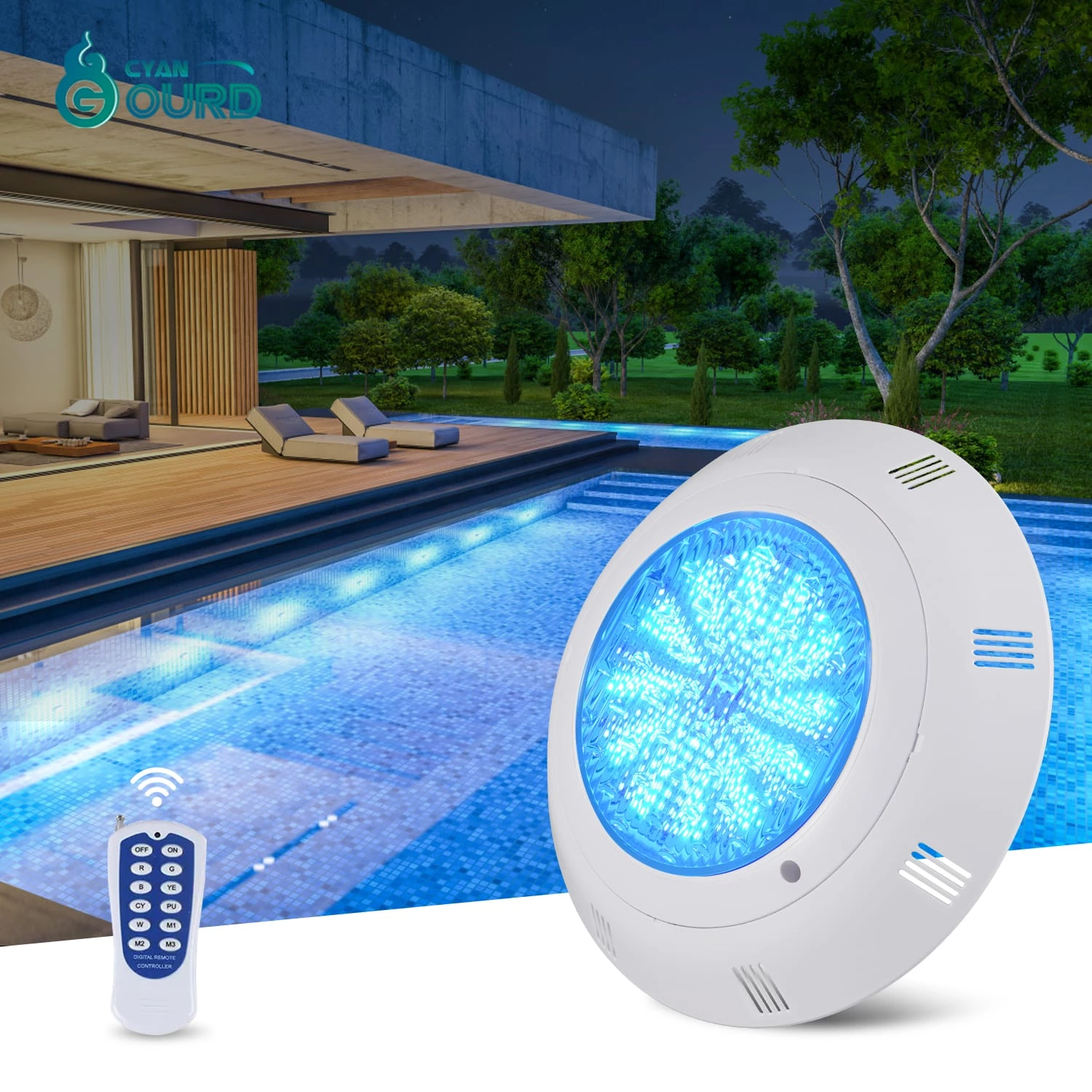
The defining characteristic of a nicheless pool light is its compact, low-profile form factor. Unlike traditional lights that require a large bucket (niche) embedded in the pool wall, nicheless designs are engineered to be surface-mounted or inserted into standard fittings. From a manufacturing perspective, this requires a highly integrated PCB (Printed Circuit Board) design. We utilize high-density component placement to fit powerful LED drivers and emitters into housings that are often less than 50mm thick. This structural reduction minimizes the protrusion into the swimming area, enhancing safety and aesthetics while reducing the material volume required for production.
Mounting Mechanisms: 1.5-Inch Fittings vs. Bracket Systems
Structural versatility in installation is a key value proposition for nicheless lights. Manufacturers typically design these units with two primary mounting interfaces:
- Threaded Return Fittings: Many nicheless lights are engineered with rear threads compatible with standard 1.5-inch wall returns. This design allows builders to use standard plumbing components rather than specialized lighting niches, significantly lowering construction costs.
- Cross-Bracket Surface Mounts: For flat-back designs, a stainless steel or plastic cross-bracket is anchored to the wall, and the light is secured via screws. This structural approach is ideal for retrofitting older pools where a niche does not exist or has been filled in.
Waterproofing Technologies: The Shift to Resin-Filled Structures
Traditional niche lights often rely on rubber gaskets and air-filled cavities to protect the bulb. However, nicheless lights, due to their permanent submersion and compact size, increasingly utilize fully resin-filled structures. In our manufacturing process, we inject a specialized epoxy resin into the housing, completely encapsulating the LED board and components. This creates a solid-state light engine that eliminates air gaps. Structurally, this provides superior IP68 waterproofing because there is no internal space for condensation to form, and the resin acts as a barrier against water ingress even if the outer lens sustains minor impact damage.
Material Selection for Compact Thermal Management
Heat dissipation is the primary engineering challenge in nicheless LED lights. Without the large volume of water circulating inside a wet niche to cool the fixture, the light body itself must act as a heat sink. Manufacturers prioritize materials with high thermal conductivity, such as 316L stainless steel or marine-grade anodized aluminum, for the housing. For plastic-bodied nicheless lights (often ABS+UV stabilizer), the internal structure must be carefully designed to transfer heat from the LED junction to the surrounding water. The structural integrity of the light depends on this thermal balance; overheating can lead to seal failure or LED degradation.
Manufacturing Efficiency and Construction Advantages
From a B2B procurement standpoint, the structural simplicity of nicheless lights translates to logistics and installation efficiency. Traditional niches require gunite crews to install buckets during the shell formation phase, adding complexity and potential leak points. Nicheless lights, utilizing standard plumbing pipes, decouple the lighting installation from the heavy construction phase. This structural difference allows pool builders to standardize their inventory, reducing the number of SKUs needed (no separate niches, potting compounds, or complex conduit runs) and streamlining the supply chain for wholesalers.
Comparison: Traditional Niche vs. Nicheless Structural Design
| Feature | Traditional Niche Light | Nicheless LED Light |
|---|---|---|
| Installation Requirement | Requires large embedded bucket (wet niche) | Fits standard 1.5" pipe or surface mount |
| Waterproofing Method | Gasket and clamp seal (air-filled) | Fully resin-filled (solid state) |
| Profile Thickness | Bulky, sits flush with wall but deep inside | Ultra-thin (10mm-40mm protrusion) |
| Cooling Mechanism | Water circulation inside the niche | Direct thermal transfer to pool water |
| Construction Phase | Must be planned during gunite/shell pour | Can be installed in standard plumbing lines |
Frequently Asked Questions
1. Why are nicheless lights considered structurally superior for waterproofing?Nicheless lights often employ a fully resin-filled design. This solid-state construction eliminates internal air cavities, preventing condensation and making the fixture highly resistant to water pressure and leaks compared to gasket-sealed niche lights.
2. Can nicheless lights be installed in any pool wall type?Yes, the structural design of nicheless lights is versatile. They can be threaded into standard 1.5-inch fittings for concrete pools or mounted via cross-brackets on vinyl and fiberglass pools, making them a universal solution for distributors.
3. How do nicheless lights manage heat without a large water volume?Manufacturers engineer the housing using thermally conductive materials like 316L stainless steel. The design ensures that the heat generated by the LEDs is efficiently transferred directly to the surrounding pool water, maintaining safe operating temperatures.
4. Are nicheless lights serviceable or do they require full replacement?Due to the resin-filled, sealed structural design, nicheless lights are typically non-serviceable units. If a failure occurs, the entire fixture is replaced. However, the ease of installation (often just unscrewing from the wall fitting) makes replacement faster and cheaper than servicing a niche light.
5. What is the standard voltage for nicheless structural designs?To ensure safety and compliance with international standards, nicheless LED lights are engineered for low-voltage operation, typically AC/DC 12V or 24V. This requires an external transformer but ensures safety for swimmers.