Русский
 Français
 بالعربية
 Español
Nicheless vs Inground Pool Light Fixtures: Manufacturing Trade-Offs for Modern Pool Construction
Nicheless vs Inground Pool Light Fixtures: Manufacturing Trade-Offs for Modern Pool Construction
The evolution of underwater illumination has shifted significantly with the advent of LED technology, driving a wedge between traditional niched inground fixtures and modern nicheless designs. For pool builders, architects, and wholesale distributors, understanding the manufacturing trade-offs between these two distinct styles is critical for project planning. While traditional wet-niche fixtures have been the industry standard for decades, nicheless LED lights are rapidly gaining market share due to their streamlined installation and advanced waterproofing structures. As a dedicated manufacturer of LED swimming pool lights, Cyangourd Lighting analyzes the structural, thermal, and material differences that influence procurement decisions in the B2B sector.
Structural Differences and Installation Efficiency
The primary distinction between these fixtures lies in their mounting requirements, which directly impacts construction timelines and labor costs. Traditional inground lights require a large wet niche (bucket) to be embedded into the pool wall during the gunite or concrete phase, often necessitating complex rebar work and precise bonding. From a manufacturing perspective, these units are bulky and require extensive housing materials.
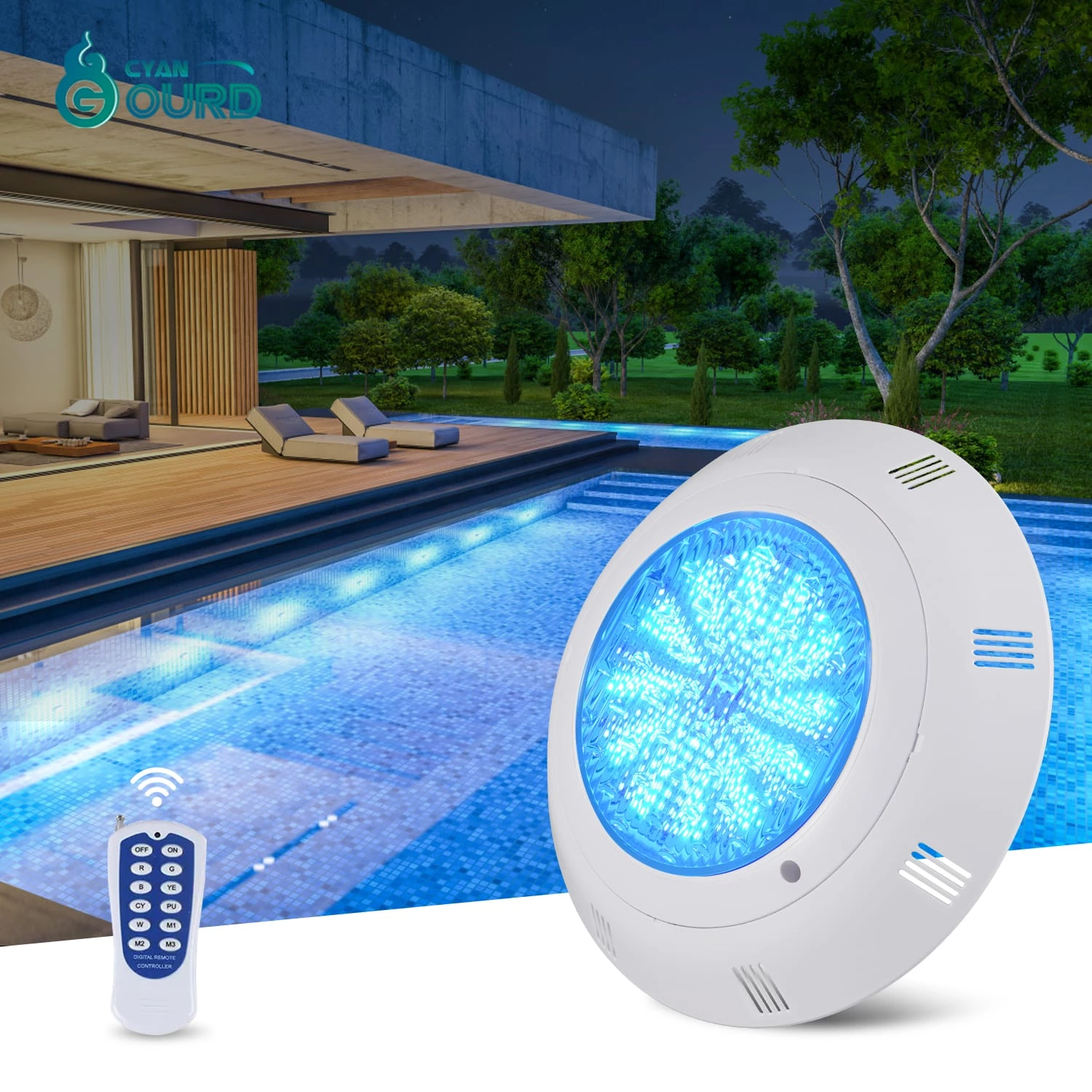
Conversely, nicheless fixtures are engineered to thread directly into standard 1.5-inch wall fittings. This design eliminates the need for a dedicated niche bucket, significantly reducing the concrete preparation time. Manufacturers focus on compacting the driver and LED array into a slim profile that sits flush against the wall. This trade-off prioritizes ease of installation and retrofitting capability over the high-lumen output traditionally associated with massive incandescent bulbs, although modern high-efficiency LEDs have largely bridged this brightness gap.
Thermal Management and LED Lifespan
Heat dissipation is the enemy of LED longevity. Traditional niched lights rely on the surrounding water circulating inside the wet niche to cool the fixture. However, stagnant water within a niche can sometimes lead to thermal pockets if circulation is poor. Manufacturing these units often involves heavy stainless steel or brass face rings to act as heat sinks.
Nicheless lights, being smaller, face stricter thermal constraints. To combat this, manufacturers utilize advanced PCB boards with high thermal conductivity and often integrate the light body with the water flow. High-quality nicheless designs use 316L stainless steel bodies that transfer heat directly to the pool water more efficiently than plastic alternatives. The trade-off here is that nicheless lights must be engineered with precise thermal fold-back protection to prevent overheating in such a compact form factor.
Waterproofing Technologies: Gaskets vs. Resin-Filled
Water intrusion remains the leading cause of pool light failure. Traditional inground lights typically rely on mechanical seals—O-rings and gaskets compressed by screws. While effective, these seals degrade over time due to chemical exposure and thermal expansion cycles, requiring maintenance.
Modern nicheless manufacturing has largely shifted toward fully resin-filled structures. In this process, the internal LED components are completely encapsulated in a transparent, high-grade epoxy resin. This creates a solid state IP68 waterproof rating where water cannot penetrate even if the outer lens is compromised. The trade-off is that resin-filled lights are generally non-serviceable; if an LED fails, the entire unit is replaced. However, the failure rate is drastically lower compared to gasket-sealed units.
Material Selection: Stainless Steel 316L vs. ABS
For wholesale buyers, material composition dictates both price point and durability. Traditional large niches are often made of stainless steel, which is costly but durable. Nicheless lights offer more variety in manufacturing materials. While entry-level nicheless options use ABS+UV resistant plastics, premium commercial-grade fixtures utilize Marine Grade 316L Stainless Steel.
The manufacturing trade-off involves weight and corrosion resistance. 316L stainless steel provides superior resistance to saltwater electrolysis and chlorine but increases the unit cost and shipping weight. ABS plastics reduce costs and are immune to electrolysis but may suffer from discoloration or brittleness over extended periods of UV exposure. Manufacturers must balance these factors based on the target market (residential vs. commercial).
Cost Implications for Large-Scale Projects
When analyzing the total cost of ownership for large-scale hotel or municipal projects, the comparison shifts from unit cost to installed cost. Traditional niched lights often have a lower per-lumen cost but incur higher labor and construction material costs (niches, rebar, concrete work). Nicheless lights may have a higher cost-per-watt due to the miniaturization of technology, but they drastically reduce installation labor.
From a supply chain perspective, nicheless lights are also more compact to ship and store, allowing wholesalers to stock higher quantities in less warehouse space. This logistical advantage is a subtle but important manufacturing trade-off that benefits international distribution channels.
Comparison of Manufacturing Specifications
| Feature | Traditional Niched (Inground) | Modern Nicheless |
|---|---|---|
| Installation Requirement | Requires large wet niche bucket embedded in wall | Fits standard 1.5" pipe fitting |
| Waterproofing Method | Mechanical seals (Gaskets/O-rings) | Fully resin-filled (Solid State IP68) |
| Thermal Management | Water circulation inside niche | Direct water contact & PCB thermal design |
| Profile | Bulky, recessed | Slim, flush-mount aesthetic |
| Maintenance | Bulb replaceable (high labor) | Unit replacement (low labor) |
Frequently Asked Questions
Direct replacement is difficult without construction work. However, retrofit kits exist that allow smaller LED units to be mounted inside existing niches. For new construction, nicheless is preferred for its simplicity.
Yes, generally. Resin-filled technology eliminates the air cavity inside the light, preventing condensation and water leakage, which are the most common causes of failure in gasket-sealed IP68 fixtures.
Most modern nicheless LED lights operate on low voltage AC/DC 12V or 24V systems. This ensures safety for swimmers and compliance with international electrical standards for underwater equipment.
Yes. While physically smaller, high-efficiency SMD LEDs allow nicheless fixtures to produce high lumen outputs. For very large commercial pools, builders may simply install more units to ensure uniform coverage.
For saltwater environments, 316L Stainless Steel is the superior choice due to its corrosion resistance. ABS is also resistant to salt but lacks the premium finish and impact resistance of steel.