Русский
 Français
 بالعربية
 Español
Pool Light Replacement vs Full Fixture Upgrade: How Manufacturers Evaluate Cost, Safety, and Lifecycle
Pool Light Replacement vs Full Fixture Upgrade: How Manufacturers Evaluate Cost, Safety, and Lifecycle
In the commercial swimming pool industry, facility managers and contractors frequently face a critical decision during renovations: simply replacing a burnt-out bulb or upgrading to a completely new LED fixture. While swapping a bulb appears cost-effective initially, manufacturers evaluate this choice through the lens of long-term safety, waterproofing integrity, and total lifecycle cost. As a dedicated manufacturer of wholesale LED swimming pool lights, we analyze the structural and electrical implications of both approaches to guide distributors and project engineers toward the most reliable solutions.
The Core Difference: Retrofit Bulbs vs. Integrated LED Fixtures
The fundamental difference lies in the sealing architecture. A replacement bulb (often a PAR56 LED retrofit) relies on the existing niche and faceplate gasket to maintain a watertight seal. If the original housing is aged or corroded, the seal is compromised regardless of the bulb's quality. Conversely, a full fixture upgrade involves installing a completely sealed, factory-assembled unit. Modern integrated fixtures often utilize resin-filled technology, where the internal LED components are fully encapsulated, eliminating the air gap that causes condensation and failure in traditional bulb-and-housing setups.
Safety and Waterproofing Integrity: The IP68 Factor
Achieving a true IP68 waterproof rating is the primary safety concern for manufacturers. When a contractor replaces only the bulb, the safety of the installation depends heavily on the manual resealing of the fixture by the technician. Human error or worn-out gaskets can lead to water ingress, which may cause short circuits or electrolysis. Full fixture upgrades, particularly those manufactured with 316L stainless steel and resin-filled interiors, offer a factory-guaranteed IP68 rating. This significantly reduces liability for commercial pool operators by ensuring that water cannot contact live electrical components, maintaining strict adherence to low-voltage (12V/24V) safety standards.
Lifecycle Cost Analysis (LCA) for Commercial Projects
While the procurement cost of a replacement bulb is lower, the lifecycle cost often favors full fixtures. Manufacturers calculate LCA by factoring in maintenance labor, frequency of failure, and energy efficiency. Replacement bulbs placed in old niches often suffer from poor heat dissipation, leading to shorter operational lifespans. Integrated fixtures are designed with optimized heat sinks and thermal management systems. For hotels and municipal pools, the labor cost of draining a pool or hiring divers to replace bulbs repeatedly often exceeds the one-time investment of installing a high-durability, fully integrated LED fixture.
Material Durability and Heat Dissipation
Heat is the enemy of LED longevity. In a retrofit scenario, an LED bulb is placed inside a sealed air cavity (the old housing). Air is a poor conductor of heat, causing the internal temperature of the LED driver to rise, which accelerates degradation. Full fixture upgrades, especially surface-mounted or ultra-thin designs, are engineered to use the pool water itself for cooling. Manufacturers utilize materials like marine-grade 316L stainless steel or high-thermal-conductivity ABS+PC to transfer heat directly to the water. This thermal efficiency ensures that the LEDs maintain their brightness and color consistency over thousands of hours of operation.
Procurement Strategy: When to Retrofit and When to Upgrade
From a wholesale supply perspective, we recommend distributors stock both options but advise clients based on the condition of existing infrastructure. If the existing niches are pristine and the budget is strictly limited (e.g., residential repairs), replacement bulbs are a viable short-term solution. However, for commercial projects, renovation contracts, or environments with aggressive water chemistry (saltwater pools), a full fixture upgrade is the manufacturer-recommended standard. It ensures compatibility with modern control systems (DMX/WiFi) and eliminates the recurring maintenance headaches associated with legacy housings.
Comparison: Replacement Bulb vs. Full Fixture Upgrade
| Evaluation Criteria | Replacement Bulb (Retrofit) | Full Fixture Upgrade (Integrated) |
|---|---|---|
| Initial Material Cost | Low | Medium to High |
| Waterproof Reliability | Dependent on old gasket/niche condition | High (Factory sealed, often Resin-filled) |
| Heat Dissipation | Poor (Air gap insulation) | Excellent (Water cooling design) |
| Installation Labor | Low (Plug and play) | Medium (Requires cable pulling) |
| Long-term ROI | Lower (Frequent replacements) | Higher (Long lifespan, low maintenance) |
Frequently Asked Questions
-
1. Can I install a full LED fixture into an existing pool niche?
Yes, many modern LED fixtures are designed as universal retrofits. They come with adapter brackets that fit into standard niches (like PAR56 housings), allowing you to upgrade to a fully sealed unit without major construction work.
-
2. Why do manufacturers prefer resin-filled lights over standard bulbs?
Resin-filled lights offer superior waterproofing. By encapsulating the LEDs and electronics in epoxy resin, manufacturers eliminate internal air voids, preventing condensation and ensuring the light remains IP68 waterproof even if the outer lens cracks.
-
3. Is it necessary to change the transformer when upgrading to LED fixtures?
Usually, yes. While some LED lights can operate on AC 12V, upgrading to a DC power supply is often recommended for better dimming control and stability. Always ensure the voltage matches the manufacturer's specifications (typically 12V or 24V) to prevent damage.
-
4. How does a full fixture upgrade improve safety in commercial pools?
Full fixtures eliminate the reliance on aging gaskets and corroded niches. By installing a new, factory-sealed unit with new VDE-certified cabling, the risk of water leakage reaching electrical connections is drastically minimized.
-
5. What is the lifespan difference between a replacement bulb and a full fixture?
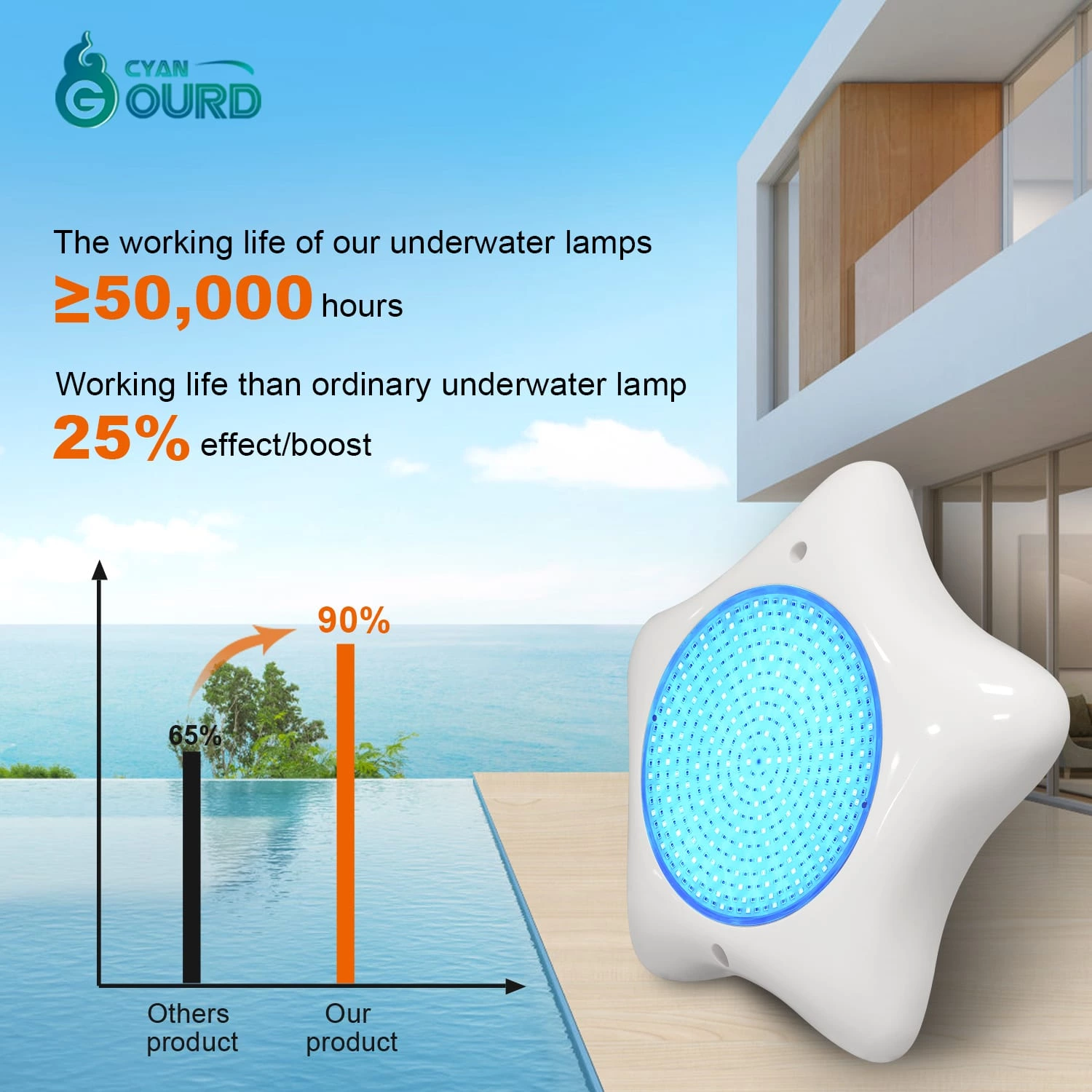
A standard replacement bulb may last 15,000 to 25,000 hours due to thermal constraints. A high-quality, integrated LED fixture with proper heat management can exceed 50,000 hours, providing a significantly better return on investment over time.