Русский
 Français
 بالعربية
 Español
Retrofitting Legacy Pools: Sourcing LED Pool Light Replacement Kits for Commercial Facility Upgrades
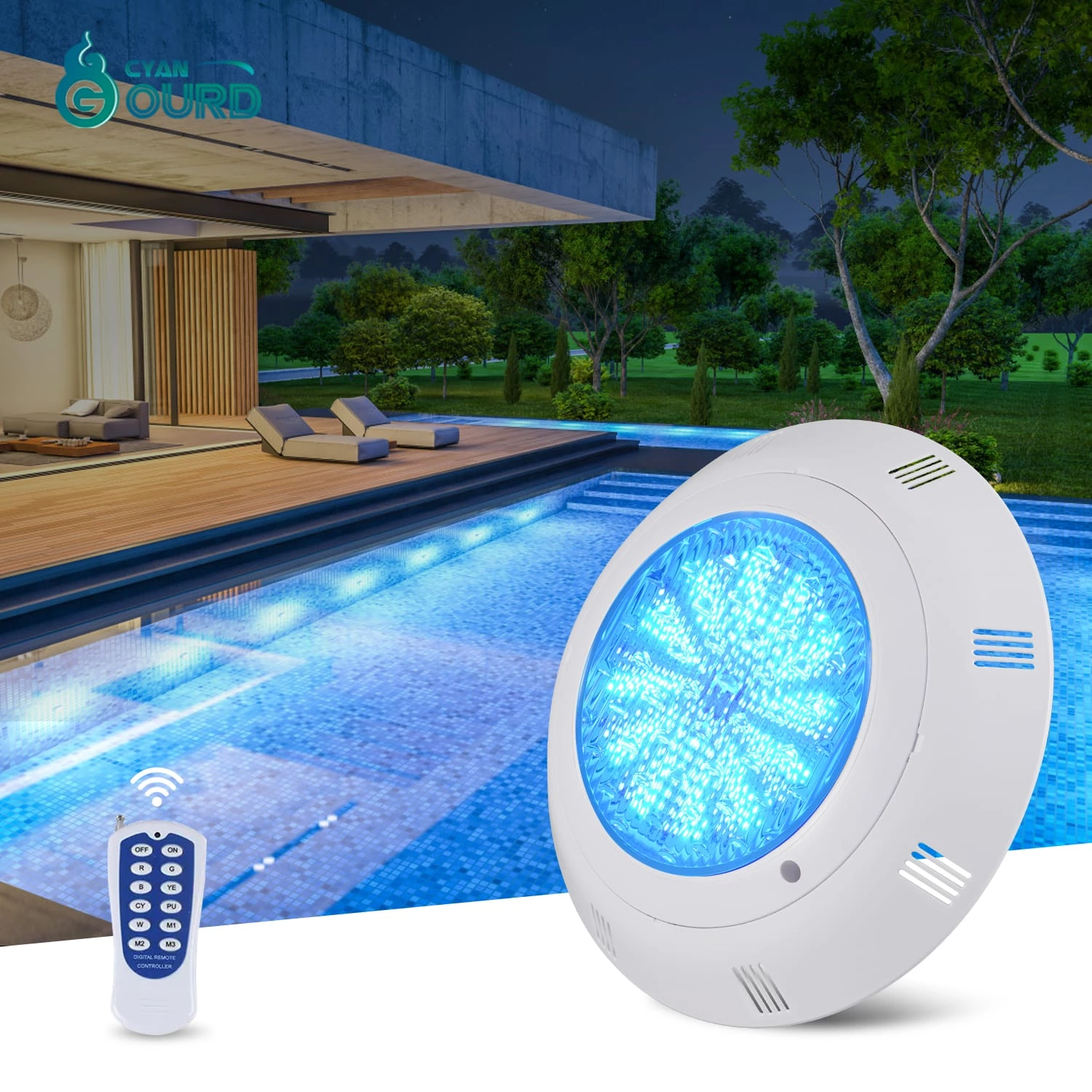
Modernizing aquatic facilities requires a precise approach to upgrading legacy lighting systems. Facility managers and MEP engineers must navigate the complexities of niche compatibility, thermal dissipation, and electrical load management to ensure that any Commercial Led Pool Light integration meets rigorous safety and performance benchmarks.
The Engineering Challenge of Commercial Retrofits: Why Housing Replacement is Rarely Necessary
In our manufacturing experience, the assumption that legacy pool housings must be removed during an upgrade is a common misconception that drives up project labor costs. By utilizing specialized Nicheless Pool Light engines or specific retrofit mounting plates, facilities can retain the existing infrastructure. We have found that the structural integrity of concrete-embedded niches often outlives the original lighting components, making a full extraction unnecessary and risky for the pool shell seal.
Bridging the Gap: Technical Solutions for Legacy Niche Housings
Successful retrofitting hinges on universal-fit mounting bracket engineering. For instance, our Stainless Steel Pool Light YC105/165/205-SP series utilizes adjustable stainless steel hardware to accommodate diverse niche diameters. During factory production, these brackets undergo rigorous pull-testing to ensure they withstand the mechanical stress of water turbulence in high-volume commercial environments.
Managing Voltage Drop and Electrical Load in Multi-Zone Aquatic Arrays
In olympic-sized aquatic facilities, voltage drop across long cable runs is a critical failure point for LED drivers. Calculating for a 12V or 24V system requires accounting for wire gauge resistance. To manage electrical load effectively, we recommend segmenting the array into smaller zones. Using high-efficiency systems like the Embedded Pool Light QR290-A allows for optimized power distribution, preventing the thermal overload often seen in older, high-wattage halide systems.
Thermal Physics: Extending Lifespan in High-Chlorine Commercial Environments
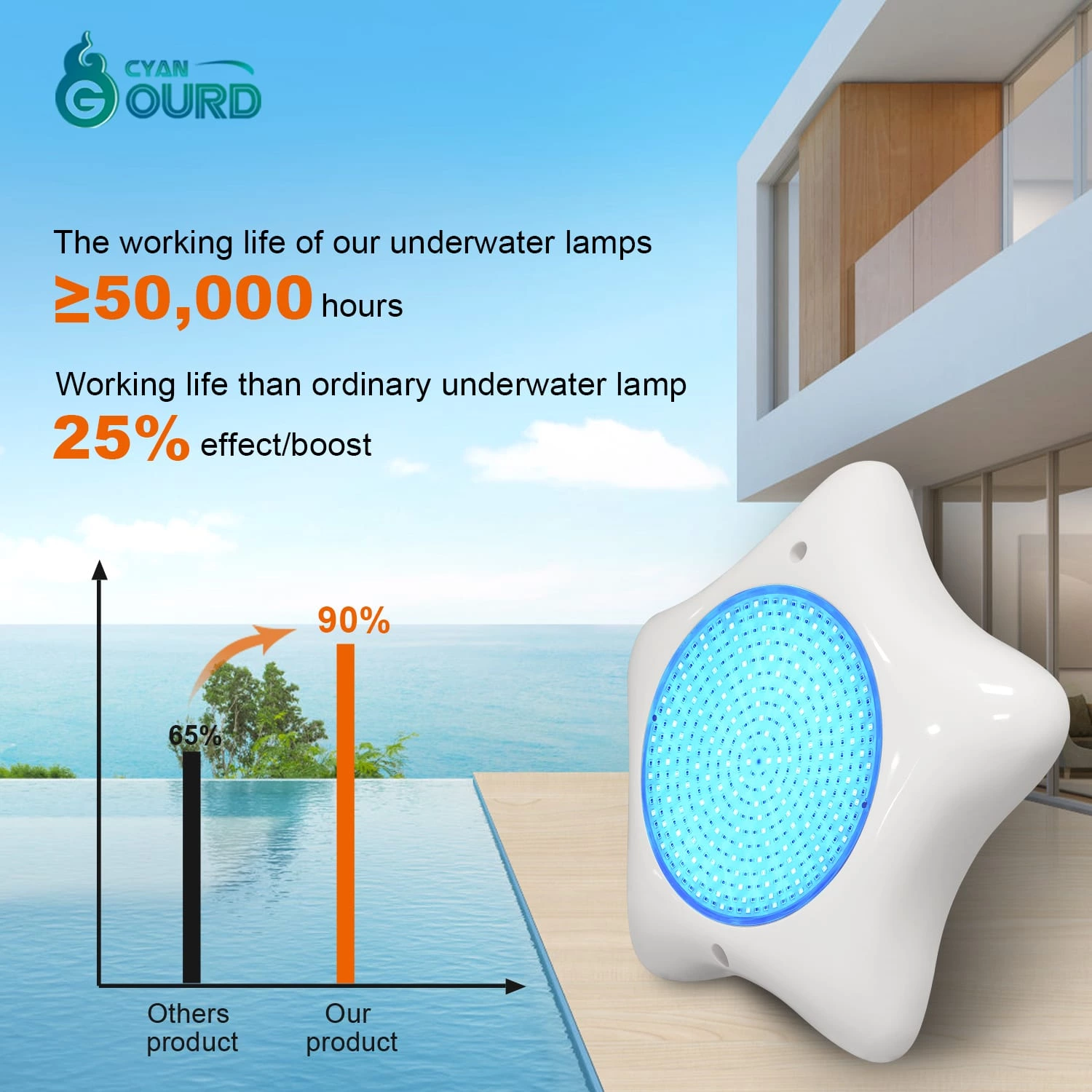
Thermal management is the most significant factor in component longevity. While standard resin-filled lights often trap heat, our engineering process incorporates high-grade heat sinks designed for continuous submerged operation. Below is a comparison showing the performance advantage of our advanced thermal assemblies.
| Metric | Standard Resin-Filled | YC-Series Advanced Heat Sink |
|---|---|---|
| Thermal Dissipation Rate | Low (Insulated by resin) | High (Direct water contact) |
| Operating Temp (Steady State) | 65C+ | 42C |
| Expected Component Life | 15,000 Hours | 50,000+ Hours |
Lighting Quality: Achieving ANSI/IES Standards with Optimized Lens Diffusion
Uniformity is essential for safety in deep-water environments. Our optical lens diffusion technology is specifically calibrated to minimize glare and hot spots. By utilizing SMD 3535 chips in our QR-55 series, we achieve wide-angle illumination that meets ANSI/IES requirements for underwater visibility without requiring excessive light sources.
Compliance and Safety: Navigating UL 676 and IP68 Requirements
Every commercial installation must adhere to UL 676 standards for underwater luminaires to ensure electrical safety. Our factory audits verify that every unit undergoes IP68 testing, ensuring the housing can withstand the pressures found at depths typical of commercial pool deep-ends. These protocols are vital for protecting facility managers from liability related to electrical leakage or water ingress.
Selecting the Right Kit: Comparing QR-55 and YC Series for Facility Specifications
Choosing between the compact QR-55 (55mm diameter) and the heavy-duty YC series depends on the niche depth and existing conduit capacity. While the QR-55 excels in smaller niche retrofits, the YC series is engineered for massive volume environments where thermal management is the primary challenge.
Q: How do I ensure compatibility with existing niches? A: Most legacy niches accept standard mounting adapters; our guide provides measurements to verify your specific niche housing dimensions.
Q: Does LED lighting require special transformers? A: Yes, LED lights require magnetic or electronic transformers capable of handling the specific wattage and DC conversion requirements of your chosen fixtures.
Q: Is the system truly maintenance-free? A: No, while the electronics are robust, standard maintenance must include periodic seal and gasket inspections every 24 months to ensure IP68 integrity.
Q: How does color temperature impact water clarity? A: Higher color temperatures (6000K) often provide better visibility in deep water, while warmer temperatures (3000K) reduce glare on the pool surface.
Q: Can these kits be used in salt-water pools? A: Yes, our 316-grade stainless steel components are rated for high-mineral and high-chlorine environments, provided routine cleaning is performed.