Русский
 Français
 بالعربية
 Español
Selecting the Right Underwater Lighting System for Swimming Pool Projects
Selecting the Right Underwater Lighting System for Swimming Pool Projects
For architects, landscape designers, and pool contractors, selecting the appropriate underwater lighting system is a critical component of project success. The lighting solution must not only enhance the aesthetic appeal of the aquatic environment but also adhere to strict safety standards, durability requirements, and integration capabilities. As a dedicated manufacturer of LED swimming pool lights, Cyangourd Lighting understands that commercial and high-end residential projects demand robust specifications, including IP68 waterproofing, low-voltage safety, and advanced control protocols. This guide outlines the essential factors for procuring the correct lighting infrastructure for large-scale swimming pool projects.
Assessing Project Scope and Pool Construction Types
The first step in selecting a lighting system is identifying the pool's construction material and the project's specific needs. Concrete pools typically require recessed niche lights or standard wall-mounted fixtures, whereas vinyl liner and fiberglass pools demand specialized mounting hardware to ensure a watertight seal without damaging the pool shell. For commercial projects such as hotel pools or municipal aquatic centers, the lighting system must provide uniform illumination without glare. Contractors must determine whether the project requires high-lumen output for safety visibility or ambient RGB color-changing capabilities for architectural effect.
Material Durability and Waterproofing Standards
In the harsh environment of chlorinated or saltwater pools, material selection dictates the longevity of the lighting system. For saltwater applications, 316L stainless steel is the industry standard due to its superior corrosion resistance compared to 304 stainless steel or standard plastics. Furthermore, the waterproofing technology is paramount. We recommend prioritizing resin-filled (fully potted) LED lights over traditional gasket-sealed fixtures. Resin-filled lights offer a higher degree of reliability against water intrusion, maintaining a true IP68 rating even as thermal expansion and contraction occur over time.
Voltage Safety and Power Supply Configuration
Safety is non-negotiable in underwater lighting. International safety standards mandate the use of low-voltage systems, typically AC/DC 12V or 24V, to eliminate the risk of electrical shock. When selecting a system, engineers must calculate the total wattage load to size the transformers correctly, accounting for voltage drop over long cable runs. Using high-efficiency LED technology reduces the overall power load, allowing for smaller transformers and thinner cabling, which can significantly lower installation costs for large commercial projects.
| Selection Criteria | Standard Residential Grade | Commercial/Professional Grade |
|---|---|---|
| Housing Material | ABS Plastic or SS304 | SS316L Stainless Steel or High-Grade PC |
| Waterproofing | O-Ring / Gasket Seal | Fully Resin-Filled (Solid State) |
| Control Protocol | Simple On/Off or Remote | DMX512, PLC, or WiFi Integration |
| Beam Angle | Fixed Wide Angle | Customizable (Narrow Spot to Wide Flood) |
Advanced Control Systems and Synchronization
Modern swimming pool projects often require dynamic lighting effects that integrate with broader building management systems. For simple installations, 2-wire switch control or remote control is sufficient. However, for complex commercial projects involving fountains, multiple pool zones, or music synchronization, DMX512 control systems are the preferred choice. DMX allows for precise control over individual fixtures, color mixing (RGB/RGBW), and dimming capabilities. Ensuring the selected luminaires are compatible with the intended control infrastructure is vital to avoid operational issues post-installation.
Installation Types: Surface Mount vs. Recessed
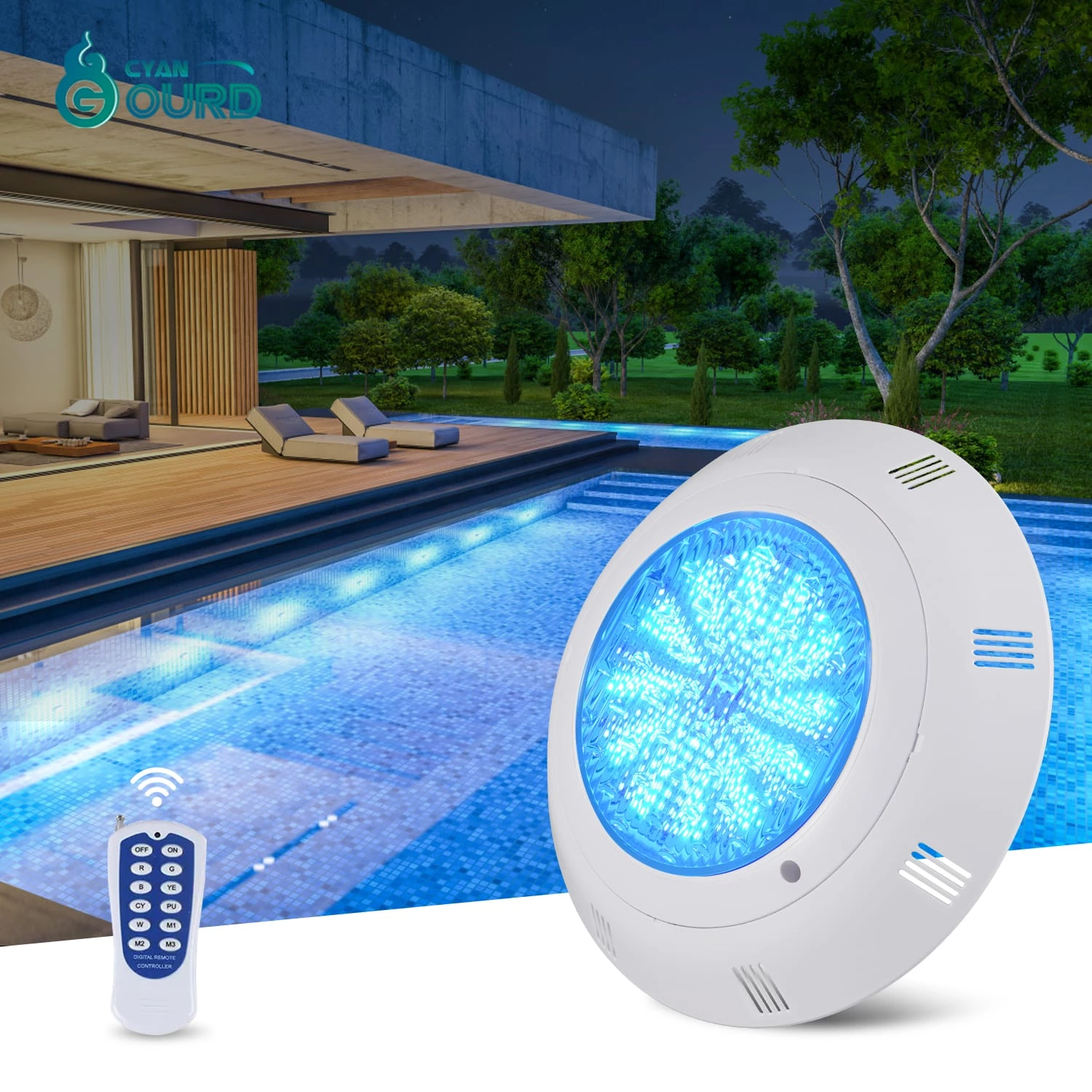
The choice between surface-mounted and recessed lighting depends largely on the stage of construction. Recessed lights (PAR56 or niche-based) offer a flush finish that is aesthetically pleasing and unobtrusive to swimmers, making them ideal for new construction where niches can be cast into the concrete. Surface-mounted flat lights are excellent for retrofitting existing pools or for projects where core drilling for niches is not feasible. These lights mount directly to the pool wall and are designed to be ultra-thin to minimize protrusion. Selecting the right form factor ensures ease of maintenance and long-term structural integrity.
Frequently Asked Questions
- 1. Why is 316L stainless steel recommended for commercial pool lighting projects?
316L stainless steel contains molybdenum, which provides superior resistance to corrosion from chlorides found in saltwater pools and heavy chemical treatments used in commercial settings, ensuring a longer lifespan than 304 stainless steel.
- 2. What is the advantage of resin-filled LED pool lights over gasket-sealed ones?
Resin-filled lights are fully potted, meaning the internal components are encased in a solid material. This eliminates air gaps and prevents water ingress caused by seal degradation or thermal pressure changes, offering the highest IP68 reliability.
- 3. Can I integrate underwater pool lights with a central building automation system?
Yes, by selecting lights compatible with DMX512 protocols, underwater lighting can be integrated into centralized control systems, allowing for synchronized lighting shows and remote management across the facility.
- 4. How do I determine the correct cable length for underwater lights?
Cable length should be calculated based on the distance from the light fixture to the junction box above the water line. It is crucial to leave enough slack cable coiled in the niche to allow the fixture to be lifted to the deck for maintenance without draining the pool.
- 5. What voltage is safest for underwater swimming pool lighting?
AC/DC 12V or 24V is the standard for underwater safety. High-voltage lighting is dangerous in aquatic environments. A properly rated transformer must be used to step down the mains voltage to the safe operating voltage of the LED fixtures.