Русский
 Français
 بالعربية
 Español
Sourcing Integrated Inground Pool Fountain with Lights Systems: A Wholesale Buyer’s Guide
For procurement managers and MEP contractors, the selection of integrated inground pool fountain lighting systems directly impacts long-term operational budgets. Moving beyond initial acquisition costs, high-performance aquatic projects require solutions that balance complex automation integration with simplified field maintenance to minimize total cost of ownership. This guide outlines the engineering benchmarks necessary for ensuring system longevity in high-end commercial installations.
The Total Cost of Ownership (TCO) Analysis: Why Fountain-Light Integration Matters for Commercial Projects
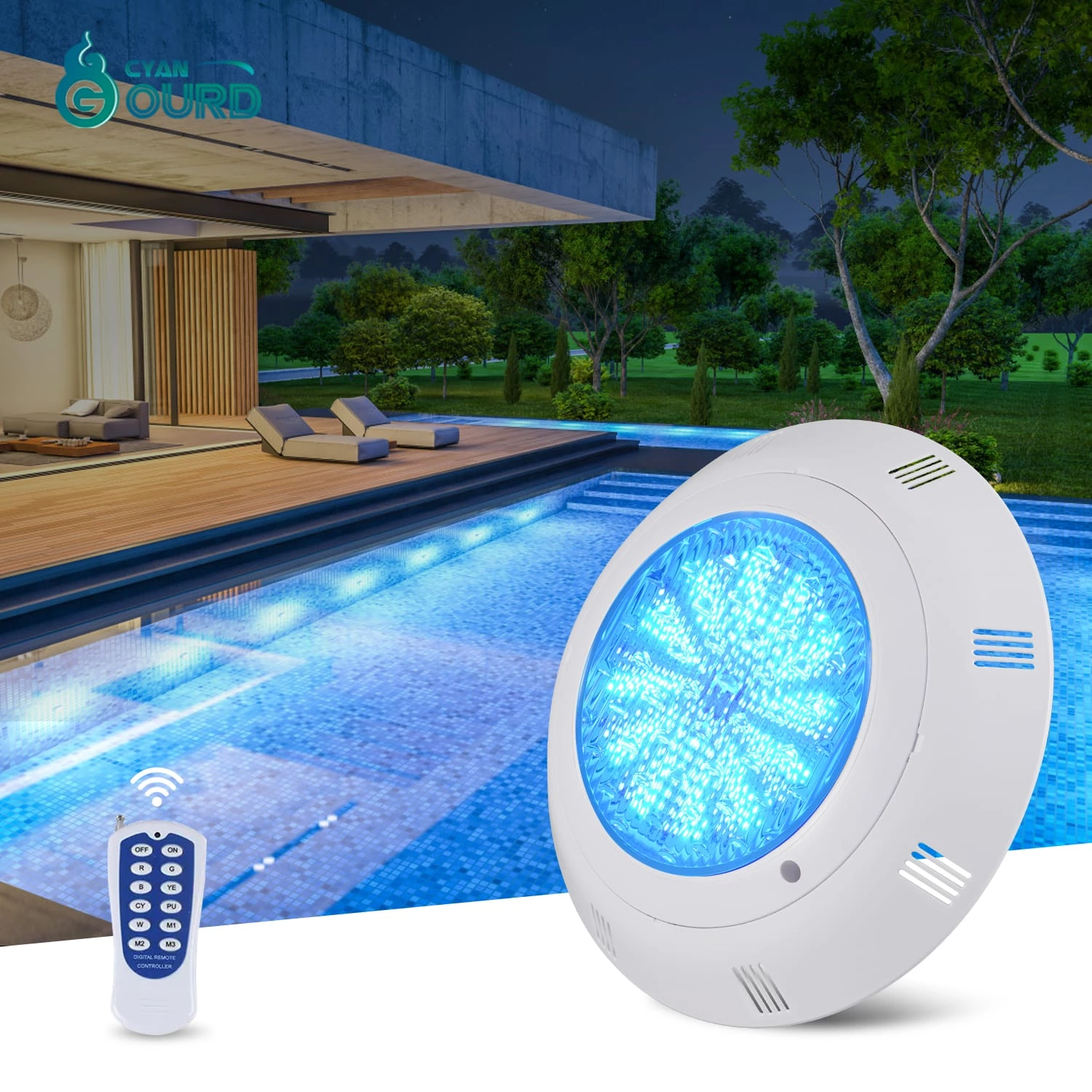
Commercial aquatic environments face extreme stress from water chemistry, hydrostatic pressure, and thermal cycling. A standard Led Pool Light often fails due to water ingress at the cable entry point or thermal fatigue. By prioritizing integrated systems designed for rapid modular replacement, contractors can eliminate the need for costly pool draining—a process that incurs significant labor and revenue-loss expenses in commercial settings. Investing in durable Stainless Steel Pool Light housings ensures the shell infrastructure remains intact for decades, even if internal LED modules require periodic upgrades.
Technical Specifications: IP68 Standards, Optical Distribution, and Thermal Management
Engineering reliability starts with strict compliance to international standards. Our manufacturing process enforces IP68 submersion certification, verifying that units function continuously at depth without moisture ingress. For instance, our Nicheless Pool Light (Model QR-55) provides a robust solution with dimensions of 55mm by 110mm, utilizing high-grade PC transparent covers that resist chemical yellowing. We conduct thermal stress assessments for every batch, confirming that internal components maintain structural integrity when operating at peak load within standard ambient water temperatures of 20 to 30 degrees Celsius.
Bridging the Gap: Integrating Fountain Lighting with Pentair/Jandy/Hayward Automation Systems
Technical friction often arises from signal incompatibility between proprietary fountain lights and universal controllers. We engineer our systems to interface seamlessly with standard 12V/24V pool automation control systems by supporting both PWM (Pulse Width Modulation) and DMX signal protocols. By adhering to IEC 60598 standards for luminaire safety, we ensure that our hardware communicates effectively with industry-standard control panels, provided the voltage and protocol requirements are specified during the design phase.
The Serviceability Mandate: Designing for Module Replacement Without Draining the Pool
Maintenance-free lifecycle costs are achieved only through modular design. Our Embedded Pool Light models feature an exploded-view design that allows the optical module to be extracted from the main housing while the housing remains permanently grouted in the fountain wall. This design choice prevents the need for invasive structural repairs and allows licensed contractors to perform maintenance directly from the pool deck or via underwater access.
Factory-Floor Rigor: How We Prevent Condensation Failure via Resin Encapsulation
Condensation is the primary cause of circuit failure in underwater lighting. In our production line, we utilize factory-level vacuum-sealed resin encapsulation. By removing all air pockets during the potting process, we ensure that even if the external lens sustains a minor scratch, the circuitry remains hermetically sealed. From manufacturing thousands of units, we have found that this process effectively eliminates the humidity accumulation that typically leads to short circuits over a 3-5 year lifespan.
| Feature | Standard Lighting | Our Modular System |
|---|---|---|
| Maintenance | Requires pool drain | Modular swap-out |
| Seal Method | Gasket/O-ring | Vacuum resin potting |
| Integration | Proprietary only | PWM/DMX Universal |
Procurement Checklist: What to Demand in Your Supplier’s Compliance Documentation
Q: What documentation is required for IP68 compliance?
A: Always request the full test report indicating depth (in meters) and duration of testing. General claims are insufficient for commercial projects.
Q: How do we verify electrical compatibility?
A: Demand an integration compatibility matrix that lists specific voltage requirements (12V/24V) and supported control protocols for your automation system.
Q: Are thermal stress reports necessary?
A: Yes, these reports validate that the LED chips will not degrade under continuous operation in high-temperature water environments.
Q: Who is qualified to install these systems?
A: Installation must be performed by licensed electrical contractors who are familiar with local codes and low-voltage underwater installation practices.
Q: What is the benefit of resin encapsulation?
A: It prevents internal condensation, which is the leading cause of electronic failure in submerged aquatic hardware.
Request Technical Spec Sheet & Integration Compatibility Guide by contacting our engineering support team directly.