Русский
 Français
 بالعربية
 Español
The Impact of Material Selection on the Lifespan of Bulk LED Swimming Pool Lights: ABS vs. Stainless Steel
The Impact of Material Selection on the Lifespan of Bulk LED Swimming Pool Lights: ABS vs. Stainless Steel
For distributors, contractors, and pool lighting wholesalers, the choice of housing material is a critical determinant of product longevity and client satisfaction. When procuring bulk LED swimming pool lights, the debate often centers on two primary materials: Acrylonitrile Butadiene Styrene (ABS) plastic and Stainless Steel (specifically 304 or 316L grades). While the internal LED components and resin-filled waterproofing technologies (IP68) play significant roles, the external housing dictates how well the fixture withstands harsh underwater environments, chemical exposure, and thermal stress. This analysis explores how material selection influences the operational lifespan of underwater lighting systems.
1. Corrosion Resistance in Saline and Chlorinated Environments
Swimming pools are chemically aggressive environments. High concentrations of chlorine, varying pH levels, and the increasing popularity of saltwater chlorination systems pose significant threats to submerged equipment. Stainless steel, particularly marine-grade 316L, offers superior resistance to oxidation and pitting corrosion compared to lower grades like 304. However, even high-grade steel can suffer from galvanic corrosion if not properly passivated or if installed incorrectly near dissimilar metals.
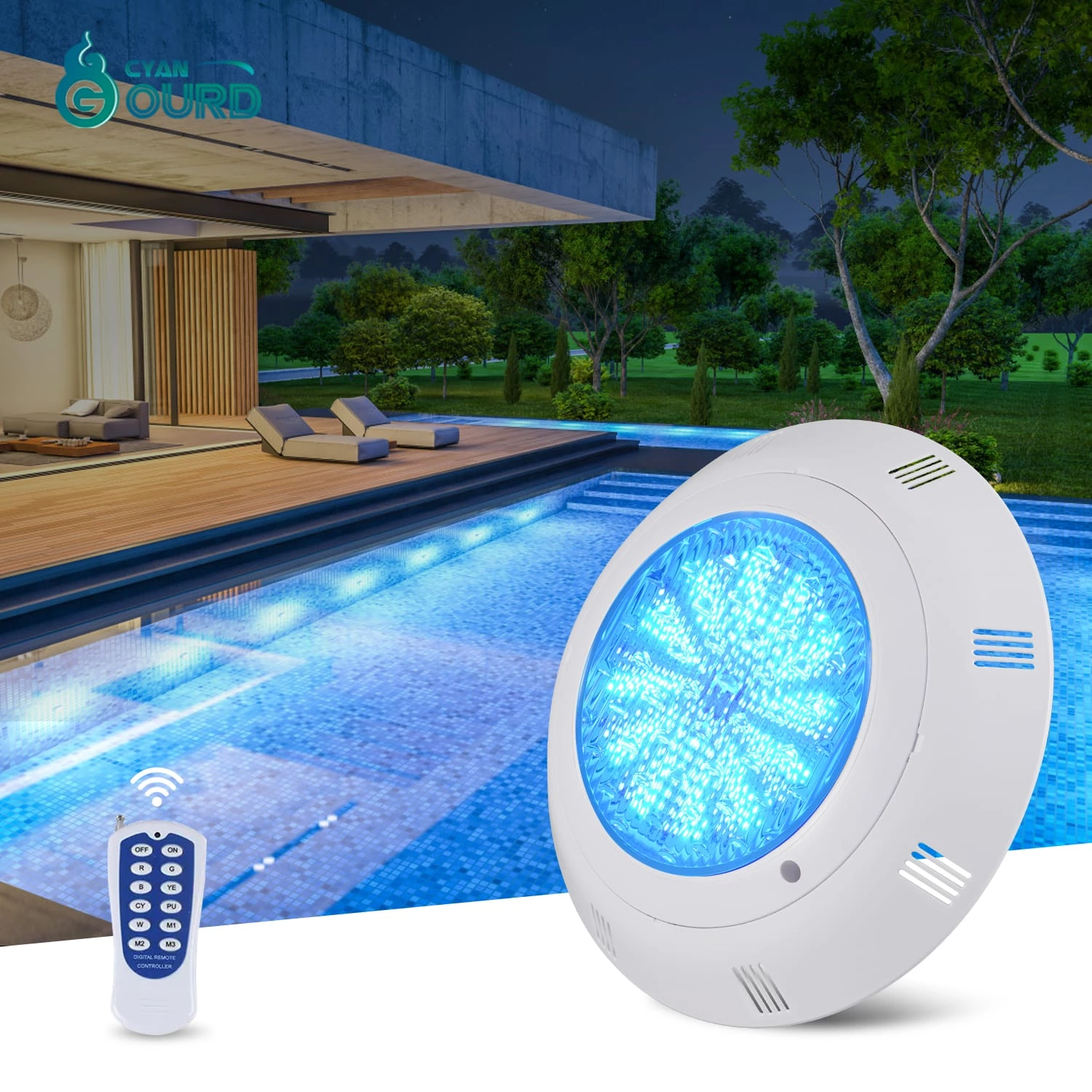
Conversely, ABS plastic is inherently immune to electrolytic corrosion and rust. High-quality ABS composites used in professional manufacturing are often UV-stabilized to prevent yellowing or brittleness. For projects involving high-salinity water where budget constraints prevent the use of premium titanium or specialized alloys, ABS housings provide a chemically inert solution that guarantees the structural integrity of the light fixture remains compromised by rust over time.
2. Thermal Management and LED Junction Temperature
Heat is the primary enemy of LED longevity. The lifespan of an LED chip is directly correlated to its junction temperature; cooler operation results in slower lumen depreciation. Stainless steel has significantly higher thermal conductivity than ABS plastic. A stainless steel housing acts as an effective heat sink, transferring thermal energy from the LED board into the surrounding water efficiently.
ABS plastic is a thermal insulator. While modern resin-filled designs help dissipate heat internally, an all-plastic housing can trap heat if the fixture is high-wattage. Consequently, for high-power LED pool lights (typically above 18W or 24W), stainless steel is the preferred material to ensure the LEDs operate within their optimal thermal range, thereby extending the Mean Time Between Failures (MTBF).
3. Mechanical Durability and Impact Resistance
In commercial and public pool applications, physical durability is a key procurement criterion. Stainless steel housings offer robust protection against accidental impacts from pool cleaning equipment or vandalism. The rigidity of steel also ensures that the seal integrity is maintained under the pressure of deep-water installations.
ABS is durable but has a lower tensile strength compared to steel. Over time, constant exposure to fluctuating water temperatures and chemicals can cause lower-grade plastics to become brittle, potentially leading to cracking under stress. However, reinforced ABS+PC (Polycarbonate) blends used by reputable manufacturers mitigate this risk, offering a balance of flexibility and strength suitable for residential and light commercial applications.
4. Aesthetic Longevity and Market Perception
For luxury hotel projects and high-end residential builds, the visual appeal of the fixture is as important as its function. Polished 316L stainless steel maintains a premium, sleek look that resists staining and algae adhesion better than textured plastics. This aesthetic durability supports a higher price point and perceived value in the market.
ABS lights are functional and cost-effective but may fade or discolor slightly after years of intense UV exposure in shallow water. For wholesalers targeting the mid-range market or retrofits of older vinyl liner pools, the aesthetic compromise of ABS is often outweighed by the cost savings, but for premium specifications, steel remains the standard.
5. Cost-Benefit Analysis for Wholesale Procurement
The material choice significantly impacts the unit cost and the Total Cost of Ownership (TCO). Stainless steel fixtures command a higher manufacturing cost due to raw material prices and machining requirements. However, their extended lifespan in high-wattage applications can reduce warranty claims and replacement labor costs.
ABS fixtures offer a lower entry price, allowing distributors to compete aggressively on volume projects. When manufactured with full resin-filling technology to ensure IP68 waterproofing, ABS lights provide an excellent ROI for standard residential pools where extreme heat dissipation is less critical. Balancing these factors depends on the specific target market of the distributor.
Comparative Analysis: ABS vs. 316L Stainless Steel
| Feature | ABS Plastic (High Grade) | 316L Stainless Steel |
|---|---|---|
| Corrosion Resistance | Excellent (Chemically Inert) | Superior (Requires 316L for Saltwater) |
| Heat Dissipation | Low (Insulator) | High (Conductor) |
| Mechanical Strength | Moderate | Very High |
| Ideal Wattage | Low to Medium (<18W) | Medium to High (>18W) |
| Wholesale Cost | Low / Economical | High / Premium |
Frequently Asked Questions
1. Which material is better for saltwater swimming pools?For saltwater pools, high-quality ABS is often safer as it is completely immune to salt corrosion. If stainless steel is preferred for aesthetic reasons, it must be 316L grade or higher to withstand the saline environment without pitting.
2. Does the housing material affect the IP68 waterproof rating?Not directly. The IP68 rating is primarily achieved through internal resin filling and sealing gaskets. Both ABS and stainless steel housings can achieve IP68 certification if the manufacturing process includes proper sealing technologies.
3. Why are stainless steel pool lights more expensive than ABS?Stainless steel involves higher raw material costs and more complex machining and polishing processes compared to injection-molded ABS plastic. This results in a higher unit cost but offers greater durability and heat management.
4. Can ABS lights handle high-wattage LED configurations?ABS has poor thermal conductivity. While low to medium wattage LEDs function well in ABS, high-wattage fixtures risk overheating, which can shorten the LED lifespan. Stainless steel is recommended for high-output applications to ensure effective heat dissipation.
5. How does UV exposure affect ABS pool lights compared to stainless steel?Stainless steel is unaffected by UV radiation. Lower-grade ABS can yellow or become brittle over time when exposed to sunlight. However, Cyangourd Lighting uses UV-stabilized ABS materials to minimize degradation and maintain structural integrity.