Русский
 Français
 بالعربية
 Español
What Control Modules Enable Wireless Switching for Transformer-Powered LED Pool Lights?
What Control Modules Enable Wireless Switching for Transformer-Powered LED Pool Lights?
In the professional swimming pool lighting industry, the transition from static on/off switches to dynamic wireless control is a key upgrade for modern aquatic facilities. Since most LED pool lights operate on low-voltage safety standards (AC/DC 12V or 24V), they require a step-down transformer to convert mains voltage. However, the transformer alone rarely provides wireless capability. To enable remote switching, color changing, and synchronization, specific control modules must be integrated into the circuit. For distributors and contractors, understanding the architecture of these control systems is essential for specifying the correct components for residential and commercial projects.
1. The Architecture of Low-Voltage Wireless Control
The fundamental requirement for wireless switching is the insertion of a control receiver between the power source (transformer) and the load (LED lights). In a standard setup, the transformer outputs constant low-voltage power. A wireless control module interrupts this circuit to modulate the power or send data signals to the fixtures. These modules must be rated to handle the total wattage of the connected lights and must be compatible with the specific voltage type (AC vs. DC). For RGB and RGBW systems, the controller also manages the color mixing and synchronization logic.
2. RF (Radio Frequency) Receiver Units
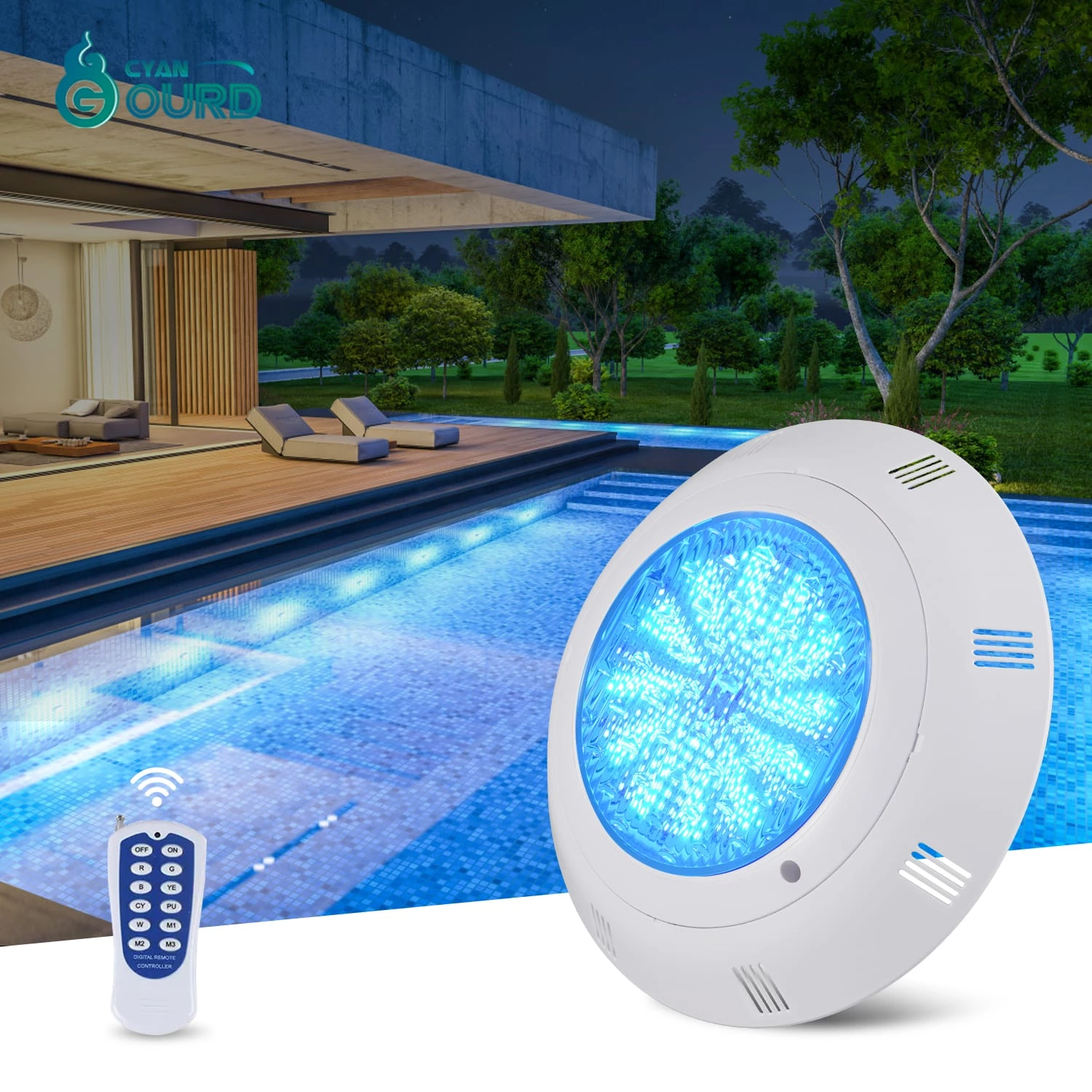
Radio Frequency (RF) modules are the most prevalent solution for retrofitting and standard installations. An RF receiver box is typically installed on the secondary side (low voltage side) of the transformer. It communicates with a handheld remote control or a wall-mounted touch panel. These modules are favored for their long transmission range and ability to penetrate obstacles like walls and pool decks. High-quality RF modules for pool lighting often feature synchronization capabilities, ensuring that multiple lights connected to the same receiver change colors simultaneously without lag.
3. WiFi and Bluetooth Smart Gateways
For clients demanding smart home integration, WiFi and Bluetooth control modules are required. These devices act as a bridge between the LED lights and a mobile application or a home automation system. A WiFi controller connects to the local network, allowing users to control pool lighting from anywhere via a smartphone. Bluetooth mesh modules offer local control with high reliability. These modules often require a DC power input, meaning the transformer setup must include a rectifier or be a dedicated DC power supply to function correctly with the smart controller.
4. DMX512 Decoders for Commercial Precision
In commercial settings such as hotels or public aquatic centers, simple remote switching is often insufficient. DMX512 decoders are the industry standard for complex lighting scenes. A DMX decoder is installed after the transformer and connects to a central DMX console or computer interface. This module assigns specific addresses to each light or group of lights, enabling precise control over color, brightness, and timing. Wireless DMX transmitters and receivers can be added to this chain to eliminate the need for running data cables over long distances across large facilities.
5. Power Line Communication (PLC) Controllers
Power Line Communication (PLC) technology simplifies installation by sending control signals over the existing 2-wire power cables. This eliminates the need for extra data wires (like the 4-wire or 5-wire setups used in standard RGB/RGBW systems). A PLC control module is installed near the transformer. It modulates the power frequency to communicate with compatible PLC-enabled LED pool lights. This is an excellent solution for renovation projects where re-cabling is impossible, allowing for advanced wireless switching using the existing electrical infrastructure.
6. External vs. Integrated Transformer Controls
While most systems use modular components, some modern transformers come with built-in wireless control modules. These "all-in-one" power supply units reduce installation time and complexity. However, for wholesale inventory flexibility, stocking separate external control modules is often preferred. This allows distributors to offer custom solutions—pairing a standard transformer with either an RF, WiFi, or DMX module depending on the specific needs of the project, rather than being locked into a single control protocol.
Comparison of Wireless Control Module Technologies
| Control Module Type | Signal Transmission | Wiring Complexity | Best Use Case |
|---|---|---|---|
| RF Receiver | Radio Frequency (433MHz) | Low (Inline connection) | Standard residential pools, retrofits |
| WiFi/Bluetooth Gateway | 2.4GHz Network / BLE | Medium (Requires stable network) | Smart home integration, app control |
| DMX512 Decoder | Digital Data Protocol | High (Requires data cabling) | Commercial hotels, musical fountains |
| PLC Controller | Power Line Modulation | Very Low (Uses existing wires) | Renovations without re-cabling |
Frequently Asked Questions
1. Can I use any RF controller with my existing transformer?Not necessarily. The RF controller must match the voltage output of your transformer (e.g., 12V AC or DC) and must be rated for the total wattage of the connected lights. Additionally, if you have RGB lights, the controller logic must match the wiring configuration (4-wire common anode is standard) to ensure colors change correctly.
2. Do wireless control modules require a specific IP rating?While the LED pool lights themselves must be IP68 waterproof, the control modules are typically installed outside the pool, often in a weatherproof box or utility room. If installed outdoors, the module or its enclosure should be rated IP65 or IP67. If installed inside a dry panel, IP20 is sufficient.
3. How does synchronization work with wireless modules?Synchronization is achieved by connecting all lights to a single control module or by using multiple modules that communicate via a master-slave protocol. In RF systems, a single receiver usually handles multiple lights to ensure they receive the exact same signal simultaneously, preventing color drift.
4. Can I retrofit a WiFi module onto an older 12V AC transformer system?It depends on the module. Many WiFi controllers require DC power. If your existing transformer is AC, you may need to add an AC-to-DC rectifier before the controller or replace the transformer with a DC power supply. Always check the input voltage specifications of the WiFi module before installation.
5. What is the maximum distance for wireless control of pool lights?Standard RF remotes typically have a range of 20 to 50 meters in open air, but this is reduced by walls and metal enclosures. WiFi control depends on the strength of the local network signal at the equipment pad. For long-distance commercial control, DMX or wired PLC systems are recommended to ensure signal integrity.