Русский
 Français
 بالعربية
 Español
What Defines A Quality Pool Light In Commercial Swimming Pool Projects
What Defines A Quality Pool Light In Commercial Swimming Pool Projects
In the realm of commercial architecture and facility management, lighting is not merely an aesthetic choice; it is a critical component of safety, operational efficiency, and guest experience. For hotels, resorts, and municipal aquatic centers, defining a "quality" pool light goes beyond brightness. It involves a rigorous assessment of engineering standards, material resilience, and long-term reliability. As a dedicated manufacturer, we understand that commercial projects demand fixtures capable of withstanding harsh chemical environments and continuous operation cycles that far exceed residential requirements.
Superior Waterproofing: The IP68 Standard and Resin-Filled Technology
The baseline for any underwater fixture is an IP68 waterproof rating, but for commercial applications, the method of achieving this rating is what defines quality. Standard fixtures often rely on rubber gaskets or O-rings, which can degrade over time due to thermal expansion and chemical exposure. High-quality commercial pool lights utilize fully resin-filled technology. By encapsulating the LED module and internal drivers in a solid epoxy resin, manufacturers eliminate air voids where condensation could form. This structural waterproofing ensures that even if the outer lens is compromised, the internal electronics remain isolated from water ingress, significantly reducing maintenance downtime for facility managers.
Material Selection: Corrosion Resistance for Heavy Usage
Commercial pools often maintain higher concentrations of chlorine or utilize saltwater chlorination systems, creating a highly corrosive environment. A quality commercial light is defined by its housing material. While ABS plastic is suitable for some applications, premium commercial projects typically specify Marine Grade 316L Stainless Steel. This alloy contains molybdenum, which provides superior resistance to pitting and crevice corrosion caused by chlorides. For budget-conscious yet durable options, high-grade UV-resistant PC (Polycarbonate) is also utilized, but it must be engineered to resist yellowing and brittleness under prolonged UV exposure.
Thermal Management: Ensuring Longevity in Continuous Operation
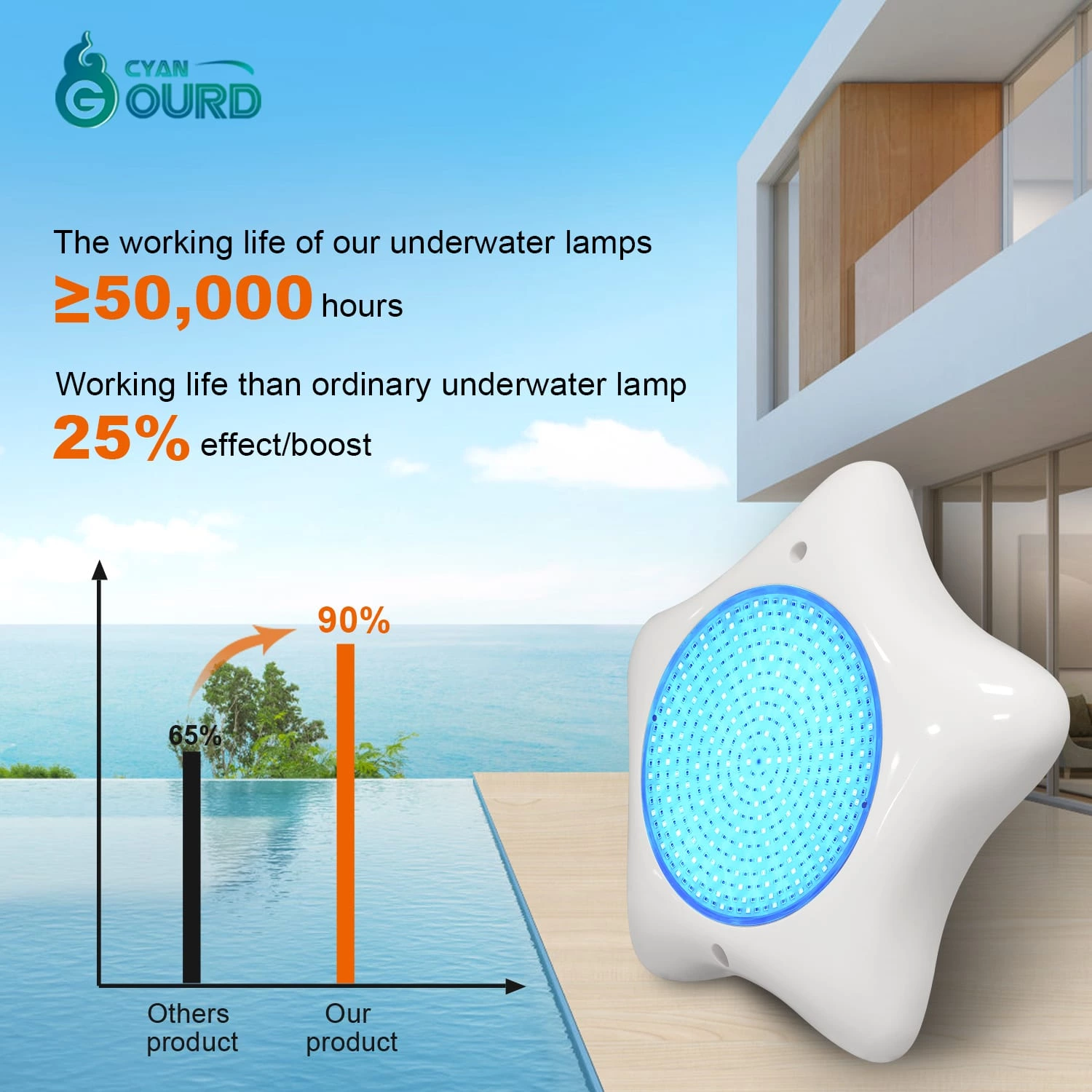
Unlike residential pools where lights may run for a few hours, commercial pool lighting often operates for 12 hours or more daily. This duty cycle generates significant heat, which is the primary enemy of LED lifespan. Quality is defined by the fixture's thermal management system. Advanced engineering incorporates efficient heat sinks and intelligent driver boards that regulate current based on temperature. This prevents the LEDs from overheating, ensuring that the lumen output remains stable over the rated 50,000+ hour lifespan and preventing premature failure that would disrupt facility operations.
Electrical Safety and Voltage Stability
Safety is non-negotiable in public aquatic facilities. Quality commercial lighting must strictly adhere to low-voltage standards, typically operating at AC/DC 12V or 24V. This eliminates the risk of high-voltage shock in the event of a structural breach. Furthermore, commercial-grade fixtures are designed to handle voltage drops that occur over the long cable runs common in large Olympic-sized pools or resort complexes. High-quality drivers ensure consistent brightness across all fixtures in a circuit, preventing the dimming issues often seen in inferior products installed at significant distances from the power source.
Intelligent Control and Synchronization Capabilities
In modern commercial projects, lighting is part of the architectural atmosphere. A defining factor of quality is the ability to integrate with central building management systems. Professional-grade pool lights often support DMX512 control protocols, allowing for precise color mixing, dimming, and synchronization across multiple pools and water features. This capability allows hotel operators to program lighting scenes that align with events or branding, a feature rarely found in standard residential-grade lighting solutions.
Comparison: Commercial Grade vs. Residential Grade Criteria
| Feature Criteria | Standard Residential Grade | Commercial Quality Grade |
|---|---|---|
| Waterproofing Method | O-Ring / Gasket Seals | Fully Resin-Filled (Solid State) |
| Housing Material | Standard Plastic / 304 SS | 316L Stainless Steel / UV-Stabilized ABS+PC |
| Control Protocol | Simple Switch / Remote | DMX512 / PLC / WiFi Integration |
| Duty Cycle Design | Intermittent (2-4 hours) | Continuous (12+ hours) |
| Cable Quality | Standard PVC 2-wire | VDE Certified Rubber Cable (4-wire/5-wire) |
Frequently Asked Questions
-
Why is 316L stainless steel preferred over 304 for commercial projects?
316L stainless steel contains molybdenum, which significantly increases resistance to chloride corrosion found in saltwater pools and heavily chlorinated public water, whereas 304 stainless steel is more prone to rusting in these aggressive environments.
-
How does resin-filled technology improve commercial light durability?
Resin-filled technology completely encases the internal components in a solid epoxy block. This eliminates air gaps, prevents condensation, and ensures the light remains waterproof even if the external lens cracks, offering superior reliability for high-traffic pools.
-
What voltage standards are required for commercial pool lighting?
Commercial projects typically require low-voltage systems, specifically AC/DC 12V or 24V, to comply with international safety codes (such as NEC or IEC) and minimize the risk of electrical shock to swimmers.
-
Can commercial pool lights be integrated with hotel automation systems?
Yes, high-quality commercial LED lights often feature DMX512 compatibility, allowing them to be connected to central automation systems for synchronized light shows, dimming, and remote management across the facility.
-
What certifications should I look for when sourcing commercial pool lights?
For commercial procurement, look for certifications such as CE, RoHS, IP68 test reports, and specific regional safety listings like ETL or UL if applicable to your market, ensuring the products meet rigorous safety and environmental standards.