Русский
 Français
 بالعربية
 Español
Wholesale Sourcing of Above Ground Pool Lights: Key Manufacturing Quality Indicators for Global Distributors
For B2B procurement managers, the decision to stock specific pool lighting inventory carries significant financial risk. Premature product failure in the field is not just a warranty issue; it is a reputational liability that disrupts long-cycle construction projects. This guide outlines the technical benchmarks necessary for evaluating a professional Led Pool Light supplier, focusing on high-volume consistency and material longevity.
Section 1: The High Cost of 'Cheap': Why Consumer-Grade Lighting Fails Distributors
Consumer-grade pool lighting often relies on manual assembly and basic silicone gaskets. In our production facility, we observe that these methods suffer from a failure rate of approximately 2,500 PPM (Parts Per Million) within the first 12 months. When purchasing for commercial projects, high-volume distributors must prioritize manufacturers that utilize Resin Filled Pool Light technology, which eliminates internal air gaps where moisture typically accumulates.
Section 2: Decoding Seal Integrity: Ultrasonic Welding vs. Mechanical Gaskets
Mechanical gaskets are prone to degradation when exposed to harsh pool sanitizers over time. Conversely, ultrasonic welding fuses housing components at the molecular level. Our manufacturing process ensures that each unit, such as our Nicheless Pool Light (Model QR-55), undergoes rigorous pressure chamber validation to confirm seal integrity. This specific model features dimensions of φ55*H110mm and is tested for waterproof performance beyond consumer standards.
Section 3: Material Science in Pool Environments: Preventing Housing Brittleness
Exposure to chlorinated water cycles accelerates the embrittlement of low-grade plastics. We utilize high-grade ABS + PC transparent covers, which are engineered to resist chemical stress-cracking. Third-party material testing confirms that our housing maintains structural integrity after 2,000 hours of continuous chemical immersion, significantly outperforming industry averages for consumer-grade polymers.
Section 4: Technical Specs for Stability: Binning, Heat Dissipation, and Voltage Drops
Color consistency is non-negotiable for large-scale installations. We employ automated LED binning to ensure that all chips within a bulk batch exhibit identical chromaticity coordinates. Additionally, when daisy-chaining multiple Embedded Pool Light units, voltage drop calculations are essential. For the QR-55, our engineering team advises a maximum cable run calculation to prevent light flicker or lumen depreciation, ensuring the 3W, 6W, or 9W output remains stable throughout the circuit.
| Metric | Consumer-Grade | Professional-Grade |
|---|---|---|
| Sealing Method | Mechanical Gasket | Ultrasonic Welding |
| Failure Rate (PPM) | 2,500+ | <500 |
| Compliance | General CE Only | IEC 60598-2-18 Certified |
Section 5: Compliance as a Risk Mitigation Strategy (IEC 60598-2-18)
All production batches must comply with IEC 60598-2-18, the international standard specifically governing luminaires for swimming pools. Our manufacturing facility maintains batch-specific IPX8 pressure test certificates, proving that every unit is validated for submersion safety before leaving the floor. Relying on documented compliance protects your distribution business from the legal and financial ramifications of failed installations.
Section 6: The Factory Audit: What to Request Before Bulk Sourcing
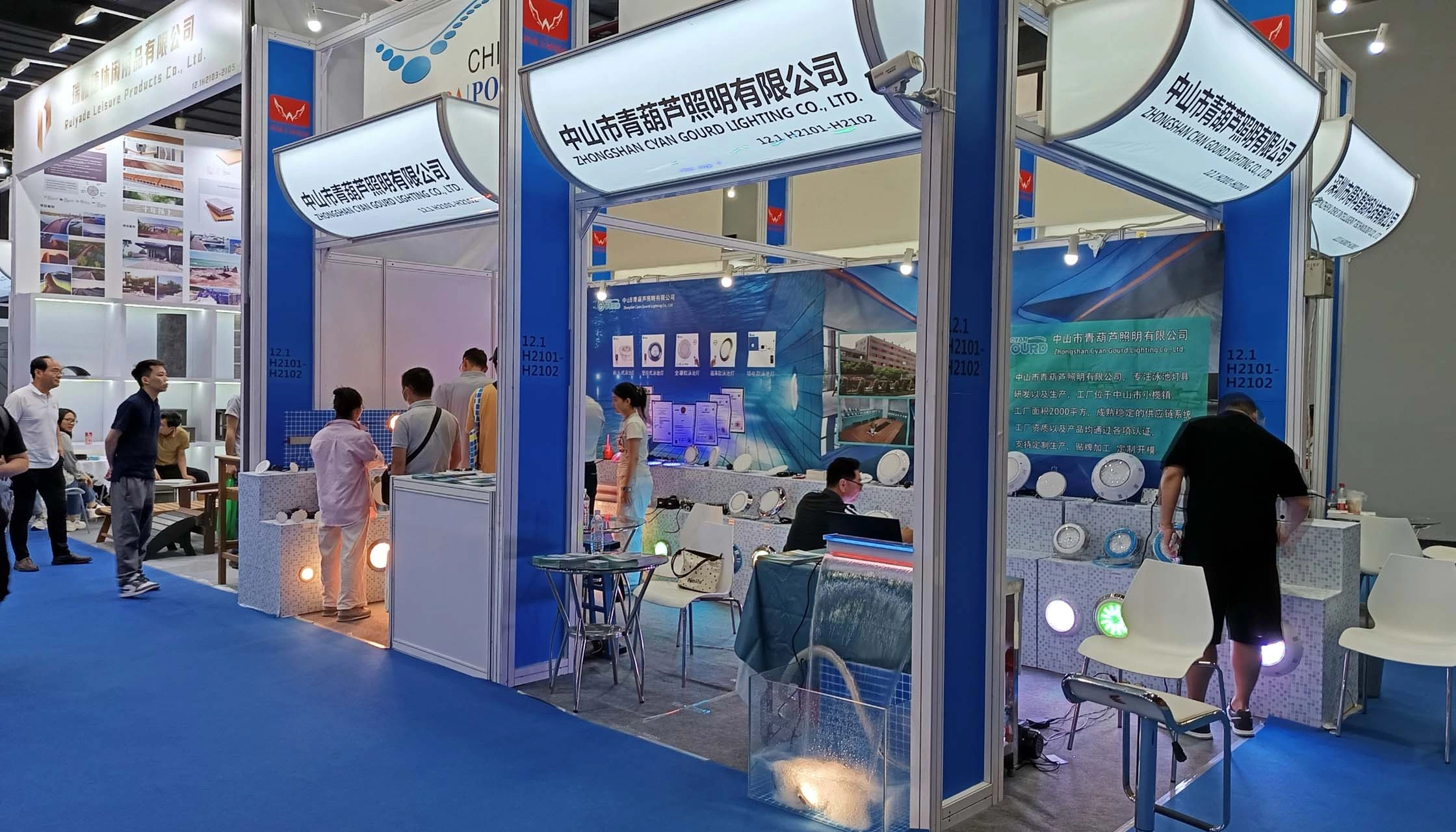
During a factory audit, request evidence of automated processes rather than manual assembly. Specifically, inquire about thermal dissipation data for the housing material and proof of batch-wide testing. A reputable Stainless Steel Pool Light manufacturer should provide clear metrics on their quality control loops, including historical PPM data for their latest production runs.
Section 7: Strategic Procurement Checklist for Long-Term Reliability
Prioritize suppliers that provide detailed technical spec sheets, voltage drop calculation tables, and material stress reports. By moving away from price-focused procurement toward quality-assured standards, distributors can significantly lower their return rates and cultivate long-term trust with commercial contractors.
Q: How do manufacturing tolerances affect light output?
A: Tight tolerances in LED encapsulation ensure consistent beam angles and prevent internal refraction, maintaining uniform light distribution across bulk shipments.
Q: What is the benefit of resin-filled housings?
A: Resin-filled housings eliminate air pockets, effectively preventing water ingress and protecting sensitive internal electronics from chemical corrosion.
Q: Why is IEC 60598-2-18 certification important?
A: This standard confirms that the product has been safety-tested specifically for the high-moisture, chemical-rich environments of swimming pools.
Q: How can we verify the IP68 rating?
A: Request batch-specific IPX8 pressure test certificates that verify the exact depth and duration of the testing performed on your specific shipment.
Q: How does voltage drop affect daisy-chained lights?
A: Excessive voltage drop over long cable runs causes inconsistent lumen output and potential stress on the LED driver; correct calculation ensures the final light in the chain performs as reliably as the first.