Русский
 Français
 بالعربية
 Español
Why Hardwired Connections Are Preferred for Commercial Pool Lights
Why Hardwired Connections Are Preferred for Commercial Pool Lights
In the realm of commercial aquatic facility design, the choice between hardwired and wireless power solutions for underwater lighting is a critical decision. While wireless and battery-operated options have gained traction in the residential temporary lighting market, commercial-grade swimming pool lights require a level of reliability, safety, and longevity that only hardwired connections can consistently deliver. For hotels, resorts, and municipal pools, the lighting system is part of the permanent infrastructure. As a dedicated manufacturer of wholesale LED swimming pool lights, Cyangourd Lighting emphasizes the technical superiority of hardwired systems (AC/DC 12V/24V) for large-scale projects requiring robust IP68 waterproofing and seamless integration.
Ensuring Continuous Operation in High-Traffic Venues
Commercial pools often operate for extended hours, sometimes 24/7 in resort settings. Hardwired LED pool lights draw power directly from the facility's electrical grid via low-voltage transformers. This ensures a constant, uninterrupted power supply without the downtime associated with recharging batteries. Wireless power solutions, typically reliant on internal batteries or inductive charging, introduce a significant point of failure: energy depletion. For a commercial operator, having lights fade or fail during evening hours due to battery exhaustion is unacceptable. Hardwired connections guarantee that the illumination remains consistent as long as the facility has power.
Signal Integrity for DMX and RGB Synchronization
Modern commercial lighting design often involves complex color-changing scenes and synchronization across multiple fixtures. Hardwired systems utilize physical cables (such as 4-wire or 5-wire configurations) to transmit data signals for DMX512 or PLC control systems. Water is a dense medium that significantly attenuates radio frequency (RF) signals used by wireless controls. By using a physical connection, hardwired lights ensure zero latency and perfect synchronization across all fixtures in a large pool. This is crucial for creating cohesive aesthetic environments in luxury hospitality settings where lagging or mismatched colors can degrade the guest experience.
Eliminating Battery Degradation and Replacement Cycles
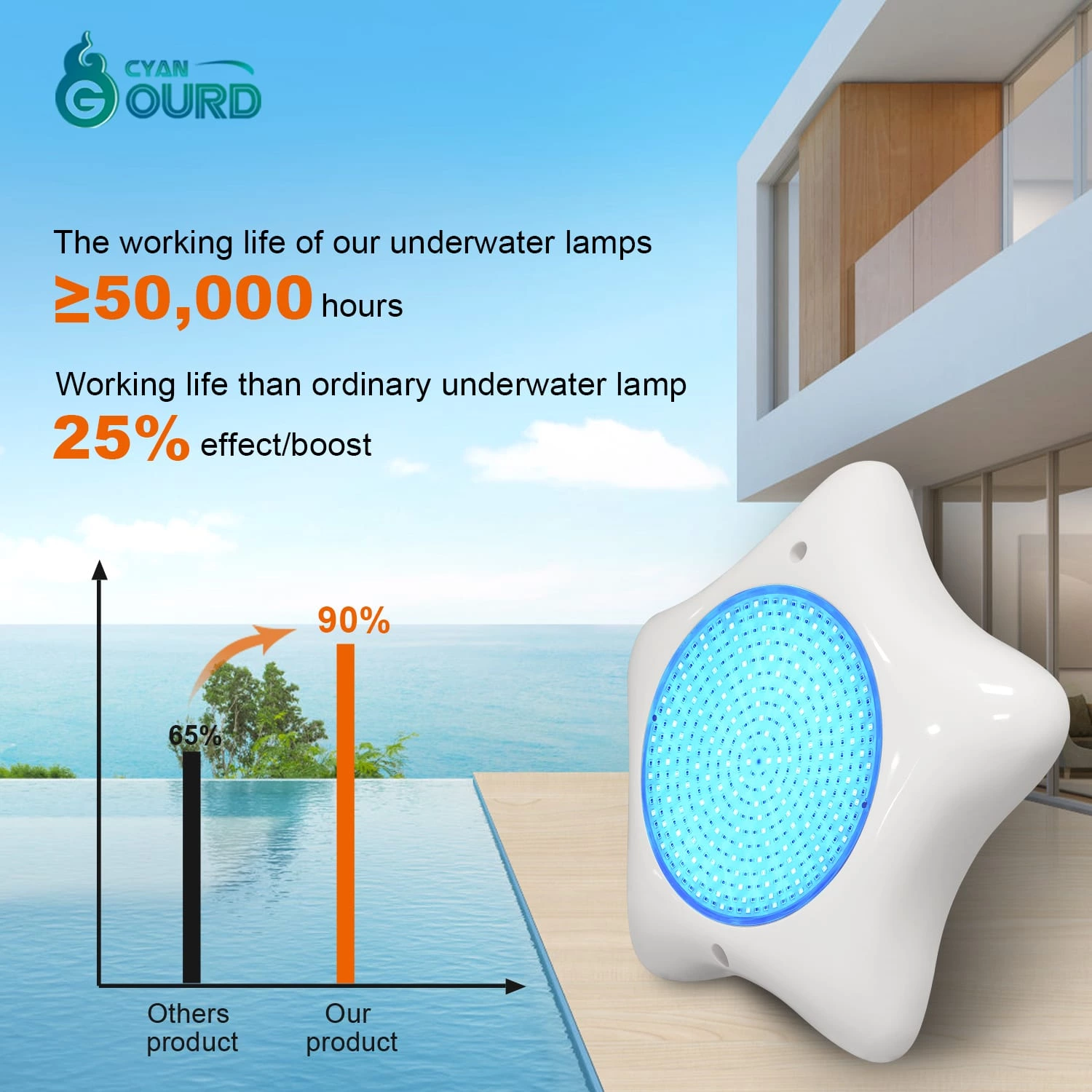
The lifespan of a commercial LED pool light should be measured in tens of thousands of hours. High-quality LEDs can last 50,000 hours or more. However, in wireless systems, the internal battery is the limiting factor, often degrading within 2 to 3 years of charge cycles. Since commercial underwater lights are sealed with resin or structural waterproofing to achieve IP68 ratings, replacing an internal battery is often impossible without compromising the seal. This forces the replacement of the entire fixture. Hardwired lights, devoid of internal chemical batteries, align the lifespan of the power source with the longevity of the LED chips and the 316L stainless steel housing.
Electrical Safety and Low-Voltage Compliance
Safety is the paramount concern in commercial pool construction. Hardwired systems utilize external transformers to step down high voltage to a safe AC/DC 12V or 24V. This separation of the high-voltage source from the water is a standard safety requirement in international building codes. While wireless lights also operate at low voltages, the reliance on charging bases or removal for charging introduces handling risks and potential wear on seals. Hardwired installations, once properly sealed and connected via conduit, reduce the need for human interaction with the fixtures, thereby minimizing the risk of accidental damage or seal compromise during maintenance routines.
Structural Integrity and Waterproof Sealing
To maintain a true IP68 rating, commercial pool lights often employ fully resin-filled technologies or robust gasket systems. Hardwired lights are designed as permanent fixtures where the cable entry is heavily reinforced with gland seals to prevent water ingress. Wireless lights that require opening for charging or battery swaps inherently weaken their waterproof integrity over time. Every time a seal is broken and resealed, the risk of a leak increases. Hardwired fixtures, particularly those using VDE-certified rubber cables, maintain a static seal that is far more reliable for long-term underwater submersion.
| Feature | Hardwired Commercial Lights | Wireless/Battery Lights |
|---|---|---|
| Power Source | Continuous AC/DC 12V/24V via Transformer | Internal Battery (Requires Recharging) |
| Control Signal Stability | High (Direct Cable Connection) | Low (RF/WiFi struggles in water) |
| Maintenance Frequency | Low (Set and Forget) | High (Frequent Charging/Battery Swaps) |
| Lumen Output | Consistent High Brightness | Dims as Battery Drains |
| Lifespan | 50,000+ Hours (LED dependent) | Limited by Battery Cycles (2-3 Years) |
Frequently Asked Questions
- 1. Why are hardwired lights considered safer for commercial pools?
Hardwired lights utilize external transformers to convert dangerous mains voltage to safe low voltage (12V or 24V) before the electricity reaches the water. This setup complies with strict international safety standards and eliminates the risks associated with handling battery-operated units near water.
- 2. Can hardwired pool lights be synchronized easily?
Yes, hardwired connections are the industry standard for synchronization. Using RGB or RGBW controllers via 4-wire or 5-wire cables ensures that all lights in the pool change colors simultaneously without the signal loss common in wireless transmission through water.
- 3. What is the maintenance advantage of hardwired systems?
Hardwired systems eliminate the labor costs associated with removing lights to charge them. Once installed and sealed, they require minimal maintenance, whereas battery-powered lights need constant attention and eventual replacement of the entire unit when the battery fails.
- 4. Do hardwired lights require specific cabling?
Yes, commercial installations typically use VDE-certified rubber cables that are resistant to chlorine, saltwater, and UV radiation. These cables are designed to prevent water wicking and ensure a long-lasting electrical connection.
- 5. Are hardwired lights compatible with automation systems?
Absolutely. Hardwired LED lights can be integrated into broader building management systems or DMX control panels, allowing facility managers to schedule lighting scenes, adjust brightness, and manage energy consumption centrally.