Русский
 Français
 بالعربية
 Español
Why Traditional Pool Light Bulb Replacement Is Being Replaced by Integrated LED Designs
Why Traditional Pool Light Bulb Replacement Is Being Replaced by Integrated LED Designs
In the commercial and residential swimming pool industry, lighting technology has undergone a significant evolution. For decades, the standard solution involved a waterproof niche housing a replaceable incandescent or halogen bulb (such as PAR56). While the transition to LED initially followed this form factor—simply swapping the filament bulb for an LED bulb—the market is now decisively shifting toward fully integrated LED designs. As a specialized manufacturer, we observe that wholesalers and contractors prefer integrated, resin-filled fixtures for their superior waterproofing, thermal management, and longevity.
1. The Waterproofing Revolution: Resin-Filled Technology
The primary failure point of traditional bulb-and-housing systems is the seal. When a bulb is replaced, the gasket (O-ring) must be perfectly reseated to prevent water ingress. Human error during maintenance often leads to leaks, which can corrode the socket and trip breakers. Integrated LED designs solve this by eliminating the air gap entirely.
Modern integrated lights utilize a fully resin-filled structure. The internal LED circuit board and components are encapsulated in high-grade epoxy or silicone resin. This creates a solid block that is impervious to water, achieving a true IP68 rating. Even if the outer lens is cracked, water cannot reach the electrical components, significantly reducing warranty claims for distributors.
2. Superior Thermal Management and Heat Dissipation
Heat is the enemy of LED longevity. In a traditional "drop-in" replacement bulb, the LED sits inside a sealed air-filled housing. Air is a poor conductor of heat, causing the internal temperature of the bulb to rise, which degrades the LED chips and driver over time.
Integrated designs leverage the entire fixture body for heat dissipation. The resin filling acts as a thermal bridge, transferring heat away from the PCB to the outer casing (often 316L stainless steel or thermally conductive ABS), where the surrounding pool water cools it efficiently. This direct thermal path extends the operational lifespan of the fixture well beyond that of a retrofit bulb.
3. Slim Profiles and Aesthetic Versatility
Traditional bulb fixtures require deep niches (buckets) embedded in the pool wall to accommodate the length of the bulb and the socket. This limits installation options, particularly in renovations or thin-wall pools (like fiberglass or vinyl liner pools).
Integrated LED lights allow for ultra-slim profiles. Surface-mounted flat lights can be as thin as 8mm to 30mm, eliminating the need for deep excavation or complex niche installation. This sleek aesthetic is increasingly demanded by modern pool designers and architects, driving the wholesale market away from bulky housing units.
4. Enhanced Durability and Material Safety
Old-style bulbs often utilize glass fronts which pose a breakage risk in active pool environments. Integrated LED fixtures typically employ UV-resistant Polycarbonate (PC) or heavy-duty Stainless Steel (304 or 316L). These materials offer superior impact resistance and chemical stability against chlorine and saltwater.
Furthermore, integrated systems are designed strictly for low-voltage safety (AC/DC 12V or 24V). By manufacturing the unit as a sealed entity, the risk of voltage leakage due to corroded sockets—a common issue in aging bulb housings—is virtually eliminated.
5. Long-Term ROI for Commercial Projects
While the initial unit cost of an integrated fixture may be slightly higher than a replacement bulb, the Total Cost of Ownership (TCO) is lower. Commercial pools, such as those in hotels and resorts, cannot afford downtime for frequent bulb changes or repairs caused by flooded niches.
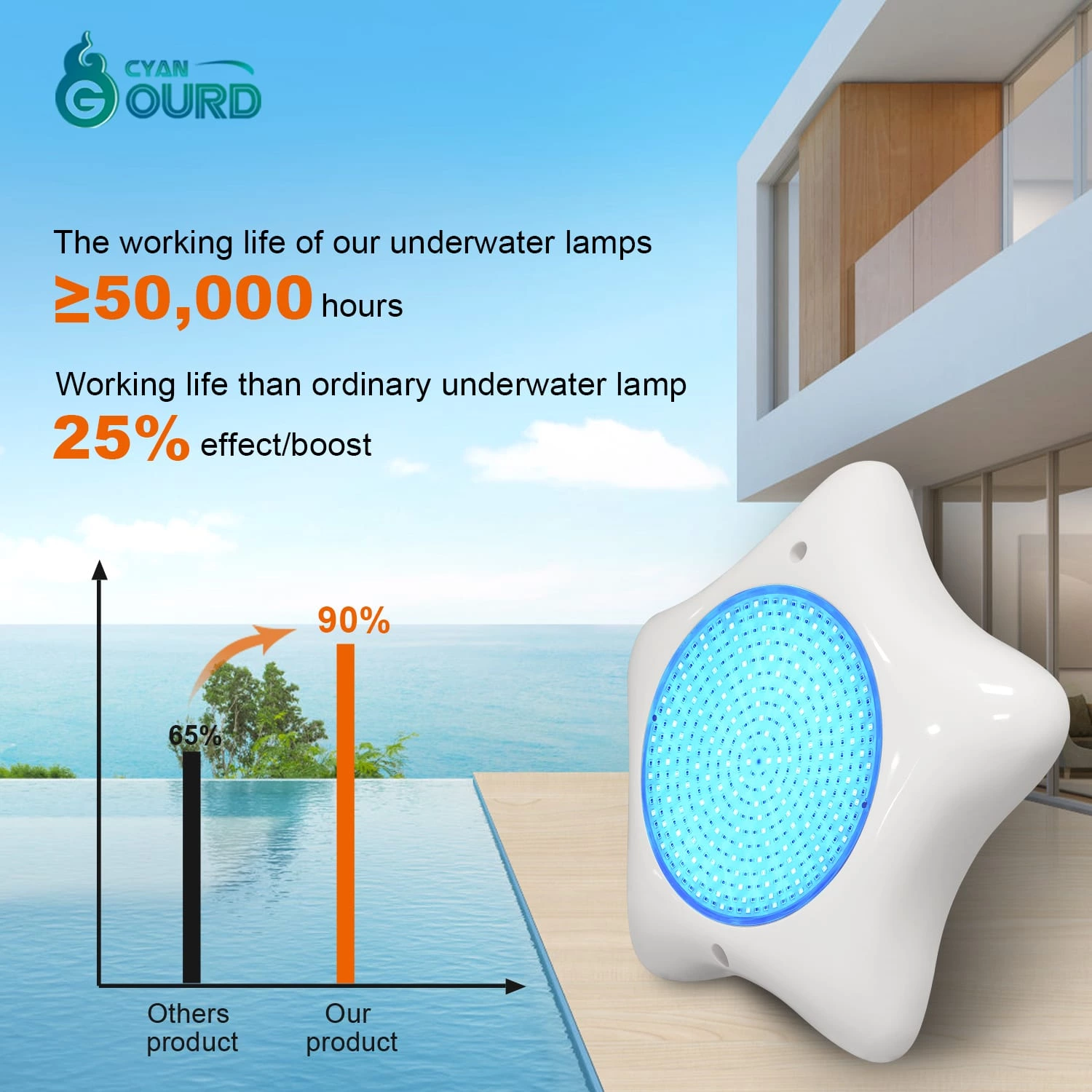
Integrated lights offer a "fit and forget" solution. With lifespans often exceeding 50,000 hours and no gaskets to service, maintenance costs drop drastically. For wholesalers, stocking integrated units builds a reputation for quality and reduces the logistical headache of handling returns for leaked bulbs.
Comparison: Traditional Bulb Replacement vs. Integrated LED Fixture
| Feature | Traditional Bulb Replacement (Retrofit) | Integrated Resin-Filled LED |
|---|---|---|
| Waterproofing | Relies on housing gasket (O-ring); prone to leaks. | 100% Resin-filled; IP68 rated; no air gaps. |
| Heat Dissipation | Poor (air insulation); leads to overheating. | Excellent; direct thermal transfer to water. |
| Installation Depth | Requires deep niche (bucket). | Can be ultra-thin (surface mount) or niche-compatible. |
| Durability | Socket corrosion risk; glass breakage. | Solid state; impact-resistant PC or SS body. |
| Maintenance | Frequent gasket and bulb changes required. | Zero maintenance; sealed unit. |
Frequently Asked Questions
Q: Can integrated LED lights replace existing PAR56 bulbs in older pools?
A: Yes. Manufacturers produce integrated LED units specifically designed to retrofit into standard PAR56 niches. These units use the existing niche but replace the bulb and faceplate with a fully sealed, resin-filled LED module, offering the benefits of integrated design without requiring structural changes to the pool.
Q: What happens if an integrated LED light fails?
A: Unlike a bulb that can be unscrewed, an integrated fixture is a sealed unit. If it fails, the entire light unit is replaced. However, due to the resin-filled construction and superior heat management, these units have a significantly longer lifespan than replaceable bulbs, making failure rare.
Q: Are integrated LED pool lights compatible with 120V systems?
A: Most professional integrated LED pool lights are designed for low voltage (AC/DC 12V or 24V) to ensure swimmer safety. If the existing system is 120V or 220V, a step-down transformer must be installed. Direct high-voltage underwater lighting is becoming obsolete due to safety regulations.
Q: Do integrated lights offer better color synchronization?
A: Generally, yes. Integrated fixtures often feature advanced drivers compatible with DMX512, WiFi, or remote control systems. Because the driver is matched perfectly to the LED board within the sealed unit, color mixing (RGB/RGBW) and synchronization across multiple lights are smoother and more reliable than mixing various replacement bulbs.
Q: Why is resin-filling critical for integrated pool lights?
A: Resin-filling eliminates air pockets inside the light. This prevents condensation from forming on the lens (fogging) and ensures that water pressure does not compromise the internal electronics, even if the outer casing sustains minor damage. It is the gold standard for IP68 underwater durability.