Русский
 Français
 بالعربية
 Español
Blue vs RGB Pool Lights: Manufacturing Differences And Project Selection Guide
Blue vs RGB Pool Lights: Manufacturing Differences And Project Selection Guide
For lighting distributors, pool contractors, and architectural specifiers, choosing between single-color Blue and multicolor RGB LED pool lights involves more than just aesthetic preference. It requires a deep understanding of manufacturing variances, wiring infrastructure, and control system compatibility. As a dedicated LED swimming pool light manufacturer, Cyangourd Lighting analyzes the technical and structural differences between these two dominant lighting types to aid in wholesale procurement and project planning.
1. Core Manufacturing Differences: LED Chips and PCB Design
The fundamental difference lies in the Surface Mounted Device (SMD) or High Power LED packaging. Single-color Blue lights utilize LED chips emitting a specific wavelength, typically between 460nm and 475nm. This specific spectrum is chosen for its superior transmission through water. The Printed Circuit Board (PCB) design for blue lights is relatively straightforward, requiring a single channel for power distribution.
Conversely, RGB lights integrate Red, Green, and Blue diodes within a single package (3-in-1) or arranged closely on the board. The manufacturing process for RGB fixtures is more complex, necessitating a PCB with three distinct channels to control the intensity of each color independently. This complexity extends to the driver components, which must handle color mixing logic and synchronization protocols.
2. Wiring Infrastructure and Installation Complexity
From an installation and wholesale perspective, wiring requirements are a critical differentiator. Standard Blue LED pool lights typically operate on a simple 2-wire system (AC/DC 12V or 24V). This makes them universally compatible with existing transformers and ideal for renovation projects where rewiring conduit is not feasible.
RGB lighting systems offer multiple wiring configurations depending on the control method. While 2-wire RGB lights exist (using on/off switch cycling or Power Line Communication), advanced commercial projects often specify 4-wire (V+, R, G, B) or 5-wire (RGBW) systems for precise external control. Distributors must ensure that the cable core count matches the control system specified by the project engineer to avoid installation failures.
3. Control Systems and Synchronization Logic
Synchronization is the primary challenge in RGB manufacturing. Unlike static Blue lights, RGB fixtures must change colors simultaneously. We utilize various control protocols to achieve this:
- Switch Control: The most basic method, toggling the power supply to cycle through pre-programmed modes.
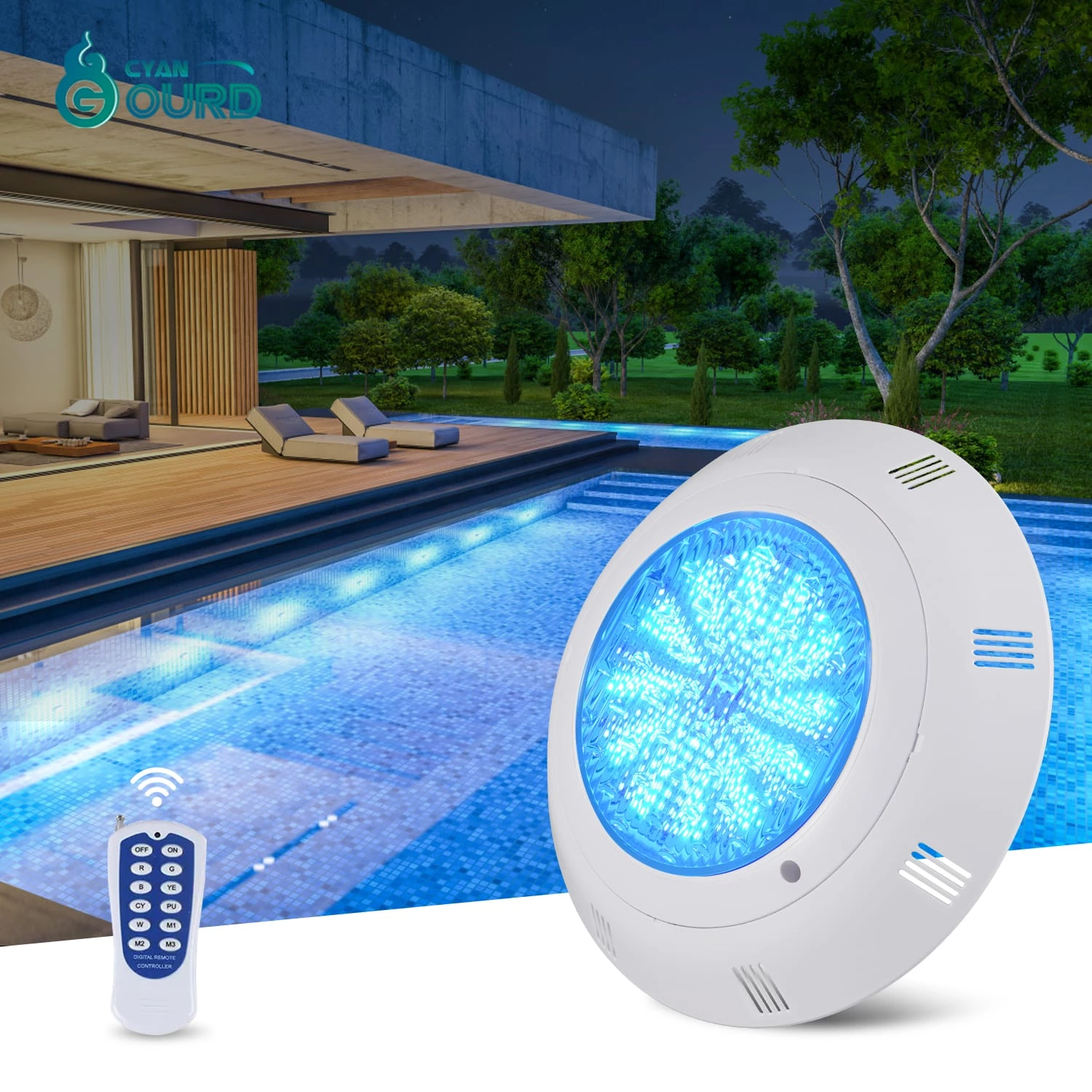
- Remote/WiFi Control: Utilizes RF signals or a dedicated receiver box to manage color selection.
- DMX512: The industry standard for commercial and municipal projects. DMX allows for individual addressing and complex light shows but requires shielded cabling and decoders.
4. Optical Performance and Water Penetration
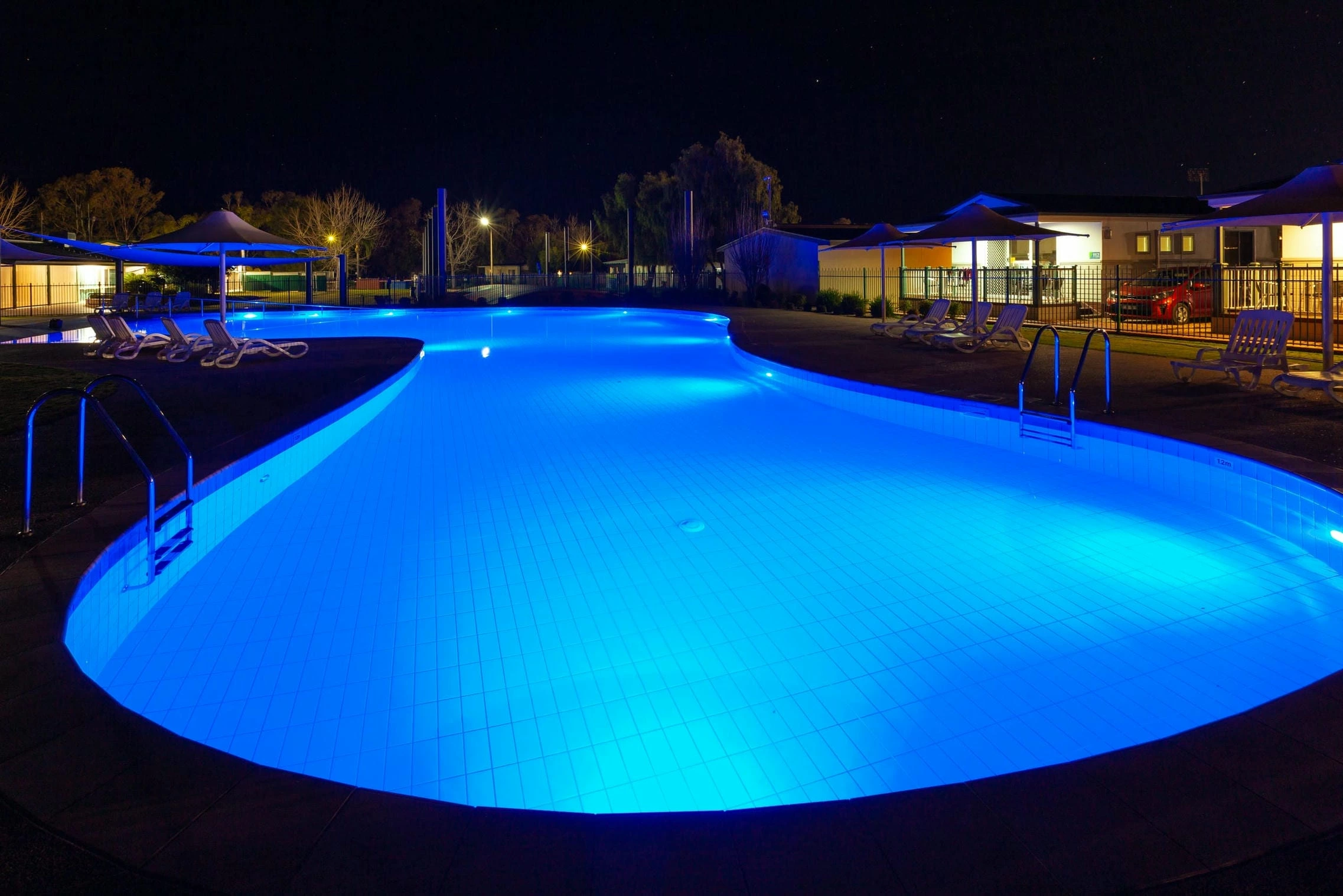
Physics dictates that blue light travels the furthest underwater with the least absorption. For large Olympic-sized pools or deep diving wells, Blue LED fixtures provide better visibility and safety per watt of energy consumed compared to RGB fixtures set to other colors. While RGB lights can produce blue, the luminous flux may be lower than a dedicated single-color blue fixture because only one-third of the diodes (the blue ones) are active, unless the fixture is specifically over-engineered.
5. Project Suitability: Commercial vs. Residential Applications
Selecting the right SKU depends on the end-application. Blue lights are the standard for municipal lap pools, universities, and competition venues where visibility and a classic aquatic look are paramount. They offer lower unit costs and higher reliability due to simpler internal electronics.
RGB lights are preferred for hospitality projects, resort pools, backyard oases, and water features where ambiance and versatility are required. They allow facility managers to change lighting themes for holidays or events. However, these projects require a higher budget for both the fixtures and the control infrastructure.
| Feature | Single Color Blue | RGB Multicolor |
|---|---|---|
| Primary Application | Competition pools, public facilities, simple retrofits | Resorts, hotels, luxury residential, water features |
| Wiring Requirement | 2-Wire (Standard) | 2-Wire, 4-Wire, or 5-Wire (System dependent) |
| Control Complexity | None (On/Off) | Requires Controller (Switch, Remote, or DMX) |
| Luminous Efficiency | High (Best water penetration) | Variable (Depends on color mix) |
| Cost Factor | Lower manufacturing & installation cost | Higher cost due to chips and control gear |
Frequently Asked Questions
Q1: Can I replace existing Blue pool lights with RGB lights without changing the wiring?
Yes, provided you choose 2-wire RGB lights that utilize on/off switch control or Power Line Communication (PLC). If you select 4-wire RGB lights, you will need to pull new cable through the conduit.
Q2: Which option has a longer lifespan, Blue or RGB?
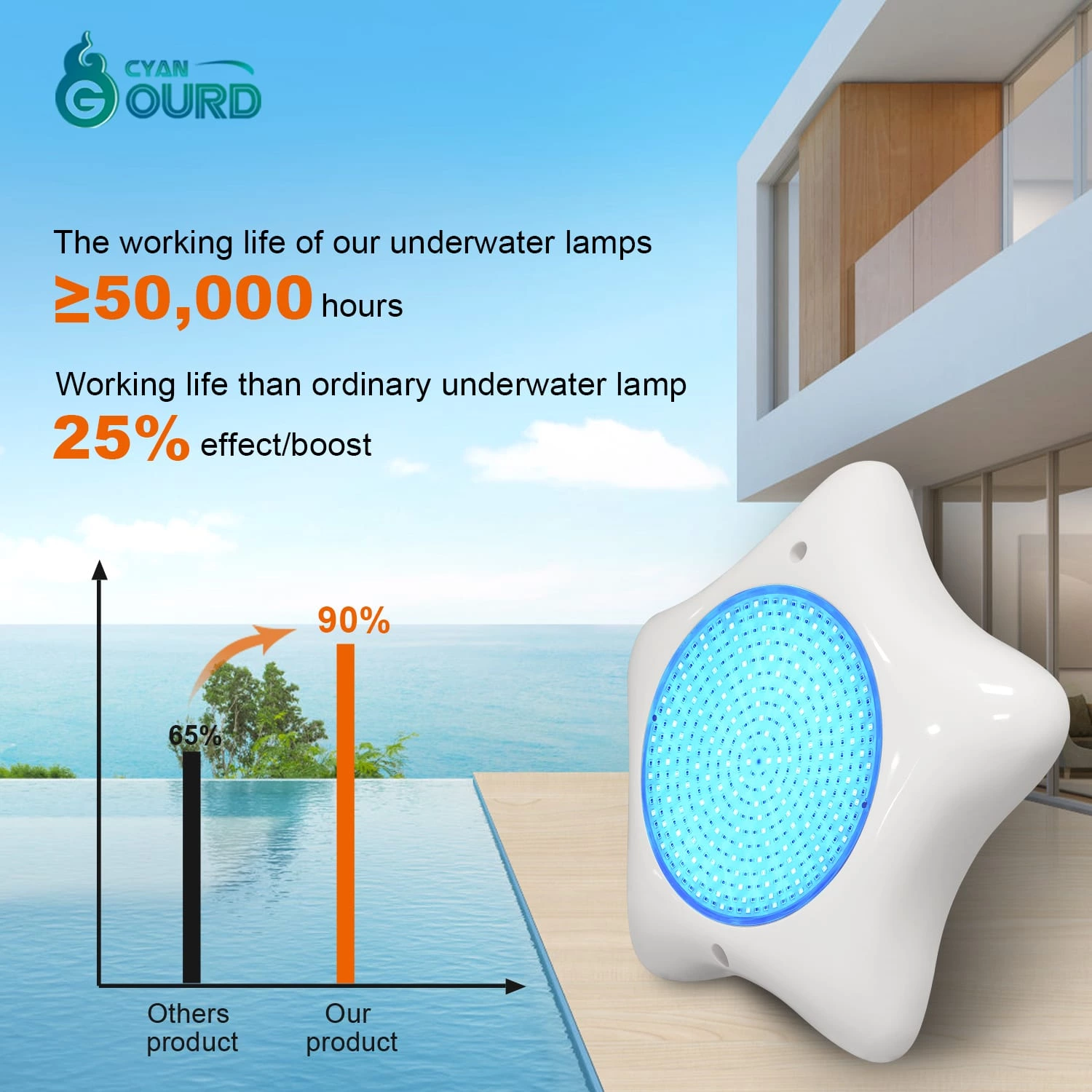
Generally, single-color Blue lights have a slightly longer theoretical lifespan because the driver circuitry is simpler and generates less heat than the color-mixing drivers found in RGB units. However, high-quality resin-filled RGB lights also offer excellent longevity.
Q3: Do RGB lights require a specific type of transformer?
Both Blue and RGB LED lights typically require a low-voltage AC 12V or 24V transformer. However, for RGB systems, it is crucial to ensure the transformer capacity can handle the load, and DC power supplies may be required for certain DMX control systems.
Q4: Is DMX control available for single-color Blue lights?
While technically possible to dim single-color lights via DMX, it is rarely implemented. DMX is primarily used for RGB or RGBW systems to manage color mixing and dynamic effects in commercial settings.
Q5: What is the difference between RGB and RGBW?
RGB mixes Red, Green, and Blue to create colors, including a composite white. RGBW adds a dedicated White diode (Cool White or Warm White), allowing for a purer, brighter white light and a broader range of pastel colors.