Русский
 Français
 بالعربية
 Español
Commercial Pool Light Modernization: Transitioning to Smart, Connected LED Systems
Modernizing aquatic facility infrastructure requires balancing legacy electrical constraints with the demands of advanced IoT-enabled management. For facility managers and procurement officers, the transition from high-voltage, standalone lighting to intelligent, interconnected ecosystems is a strategic investment in operational longevity and data-driven maintenance.
The Modernization Imperative: Moving Beyond Basic Illumination
Commercial aquatic centers face mounting pressure to reduce energy consumption while improving safety monitoring. Moving beyond basic illumination allows for precise control of light intensity, scheduling, and remote diagnostics. By utilizing an advanced Led Pool Light system, managers can achieve centralized control that reduces labor costs and enhances facility security.
Technical Roadmap: Adapting Legacy Wiring for Smart DC Drivers
Retrofitting often involves navigating high-voltage AC inputs that are incompatible with modern low-voltage DC LEDs. We utilize smart drivers that act as conversion bridges, allowing the repurposing of existing wiring infrastructure where local electrical codes permit. During our production process, we verify that these drivers include sophisticated surge protection to handle the electrical noise common in environments with large pump motors.
Open-Protocol vs. Proprietary Ecosystems
Large-scale facilities should avoid vendor lock-in by favoring open-protocol integration (such as DMX or BACnet). Unlike proprietary systems that limit future upgrades to a single manufacturer, open-protocol infrastructure ensures that your Nicheless Pool Light units can communicate effectively with future building management software updates.
| Feature | Proprietary Ecosystem | Open-Protocol Infrastructure |
|---|---|---|
| Scalability | Restricted to vendor hardware | Vendor-agnostic |
| Initial Cost | Variable | Moderate |
| Long-term Maintenance | Dependency on legacy support | Broad component availability |
Thermal & Electrical Integrity
Heat is the primary enemy of underwater LED longevity. For example, our QR-55 Nicheless LED features an ABS+PC housing engineered for optimal thermal dissipation. During factory stress testing, we simulate 2x nominal depth pressure to ensure the resin-potted seals maintain IP68-rated integrity. These design choices prevent premature driver failure in high-temperature aquatic environments.
Cybersecurity for Aquatic IoT
Connected public infrastructure must employ a defense-in-depth strategy. Rather than claiming impossible immunity, we recommend network-isolated architectures where lighting controllers operate on a dedicated VLAN, separated from guest or public internet access. Electromagnetic Interference (EMI) shielding in our Stainless Steel Pool Light housings ensures that the connected electronics remain stable even when installed near high-power pool motors.
Compliance Frameworks & Future-Proofing
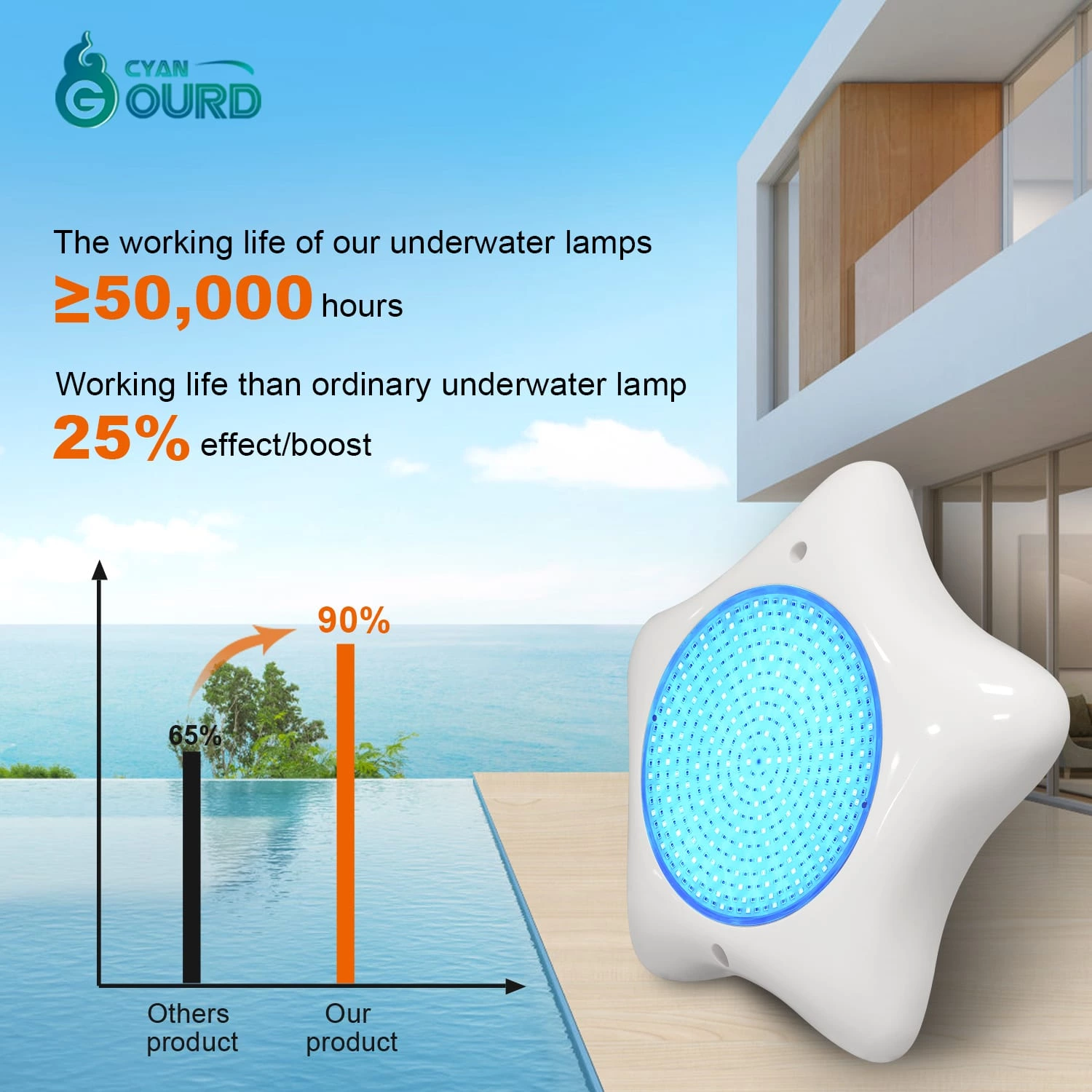
Compliance is non-negotiable in public aquatic facilities. All equipment must adhere to UL 676 and IEC 60598-2-18 standards. We utilize Accelerated Life Testing (ALT) to project a Mean Time Between Failure (MTBF) exceeding 50,000 hours for our YC-series stainless steel components, providing facility managers with predictable maintenance cycles and minimized downtime.
Q: How do I determine if my existing wiring can support smart LEDs?
A: Most legacy wiring can be adapted, but it requires a certified electrical audit to determine voltage tolerances and verify that the current cable gauge is sufficient for the load of new DC drivers.
Q: What is the benefit of resin-potted electronics over air-gap designs?
A: Resin potting eliminates moisture ingress risks and improves thermal conductivity, allowing heat to transfer away from the LED chip and into the surrounding water more effectively than air-filled housings.
Q: Can I integrate new lights into an existing building management system?
A: Yes, by using protocol gateways that translate DMX or DALI commands from your lighting system into the language recognized by your building management system.
Q: How are cybersecurity risks managed for outdoor lighting?
A: We advocate for air-gapped or VLAN-isolated control systems, restricting access to internal facility staff and preventing unauthorized external network penetration.
Q: What does MTBF mean for my maintenance schedule?
A: MTBF indicates the reliability projection of a product; an MTBF of 50,000 hours allows procurement teams to calculate precise replacement intervals, reducing the frequency of emergency pool closures for maintenance.