Русский
 Français
 بالعربية
 Español
Designing Safety and Durability: High-Power Underwater Swimming Pool Lights for Commercial Resorts
For procurement managers and MEP engineers, the selection of underwater lighting is a critical decision that directly impacts operational expenses and guest safety. While residential-grade fixtures may appear cost-effective initially, their failure in high-intensity commercial resort environments creates significant financial liabilities through frequent pool draining and labor-intensive maintenance. This guide outlines the engineering standards required to ensure longevity and performance in large-scale aquatic infrastructure.
The Commercial-Grade Reality Check: Residential vs. Resort-Spec Engineering
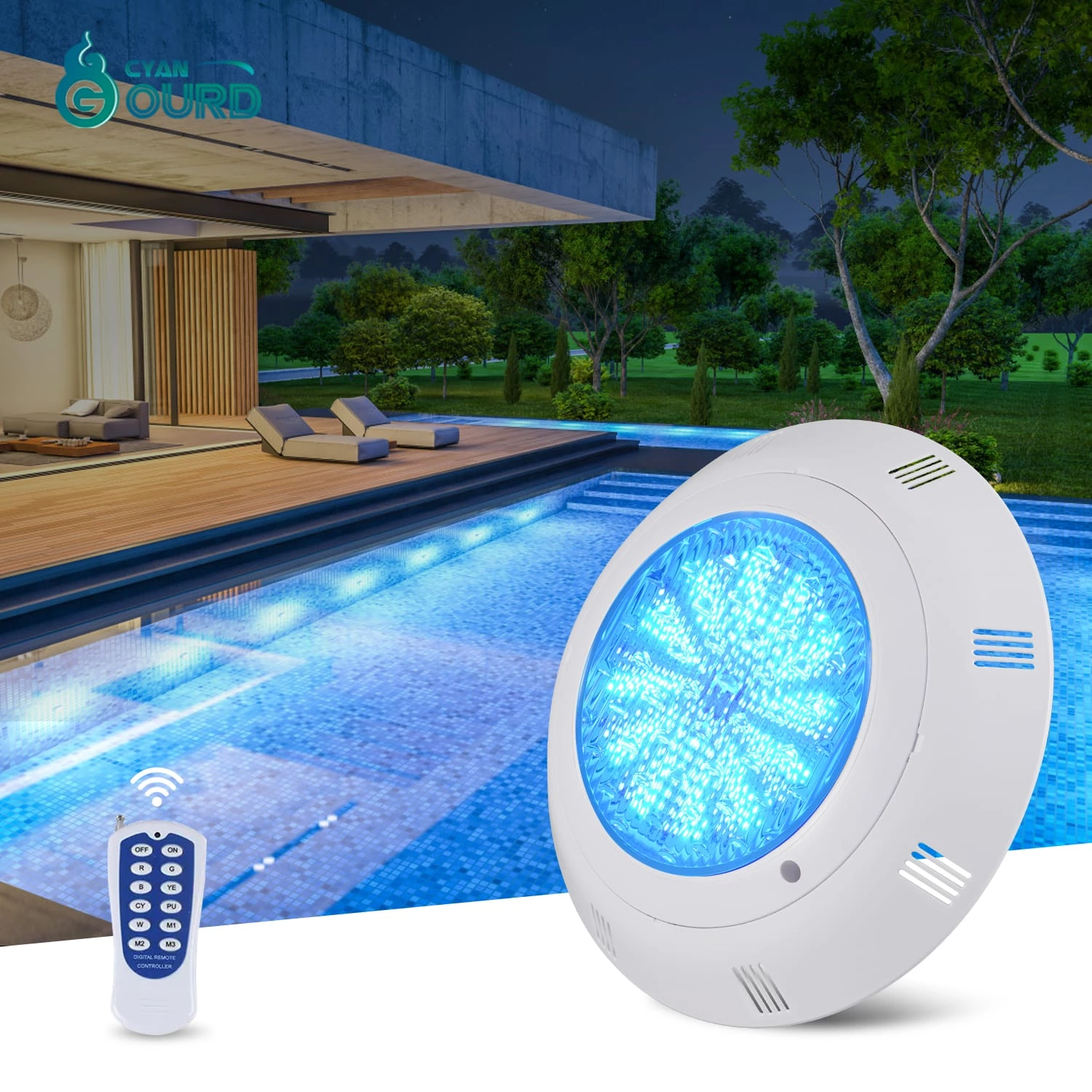
In our production line, we see the clear distinction between standard consumer units and high-performance hardware. A commercial-grade Led Pool Light is engineered for 24/7 operation under varying chemical compositions. Unlike residential fixtures, resort-spec hardware must account for high-traffic environments where chemical concentrations often fluctuate due to bather load, necessitating materials that resist rapid corrosive degradation.
Thermodynamics of Submersion: Heat Dissipation and Internal Driver Protection
The primary driver of premature LED failure is poor thermal management. We utilize a proprietary cold-forged aluminum housing that provides 30% improved thermal dissipation over standard die-cast units. This ensures that the junction temperature of the LED remains stable. Proper Stainless Steel Pool Light housings are often chosen for their superior ability to conduct heat away from the electronics while maintaining structural integrity in chlorinated water.
Structural Integrity Under Hydrostatic Pressure: Gasket Design and Housing Material
Hydrostatic pressure at depth is a significant stressor on fixture seals. Our manufacturing process incorporates dual-stage vacuum encapsulation technology, ensuring zero moisture ingress at depths up to 10 meters. We test these units according to IP68 protocols, verifying integrity through 24-hour continuous submersion at 5 meters. This rigorous verification prevents the common industry failure point where seal failure leads to moisture-induced short circuits.
Electrical Infrastructure: Managing Voltage Drop and Cable Selection for Centralized Power
In large resort installations, managing voltage drop is essential to maintain uniform brightness across all nodes. We provide calculated voltage drop charts for centralized power supply setups, guiding installers on proper cable gauging based on run length. Adhering to Mandatory Safety Transformer Specifications Pool guidelines ensures that all Embedded Pool Light units receive stable, flicker-free power, preventing driver degradation caused by inconsistent voltage.
Compliance and Verification: Why IEC 60598-2-18 Matters for Liability Mitigation
To reduce safety liability, procurement must insist on IEC 60598-2-18 compliance certificates. This international standard specifically covers the safety of luminaires for swimming pools. When a Resin Filled Pool Light or any other submerged unit bears this certification, it signals that the design has passed strict testing against electrical shock and environmental ingress, providing a defensible standard for facility operators.
| Feature | Residential Grade | Commercial Resort Grade |
|---|---|---|
| Housing Material | Standard Die-cast/ABS | Cold-forged Aluminum/316 SS |
| Thermal Control | Passive | Active heat sink optimization |
| Moisture Sealing | Single O-ring | Dual-stage vacuum encapsulation |
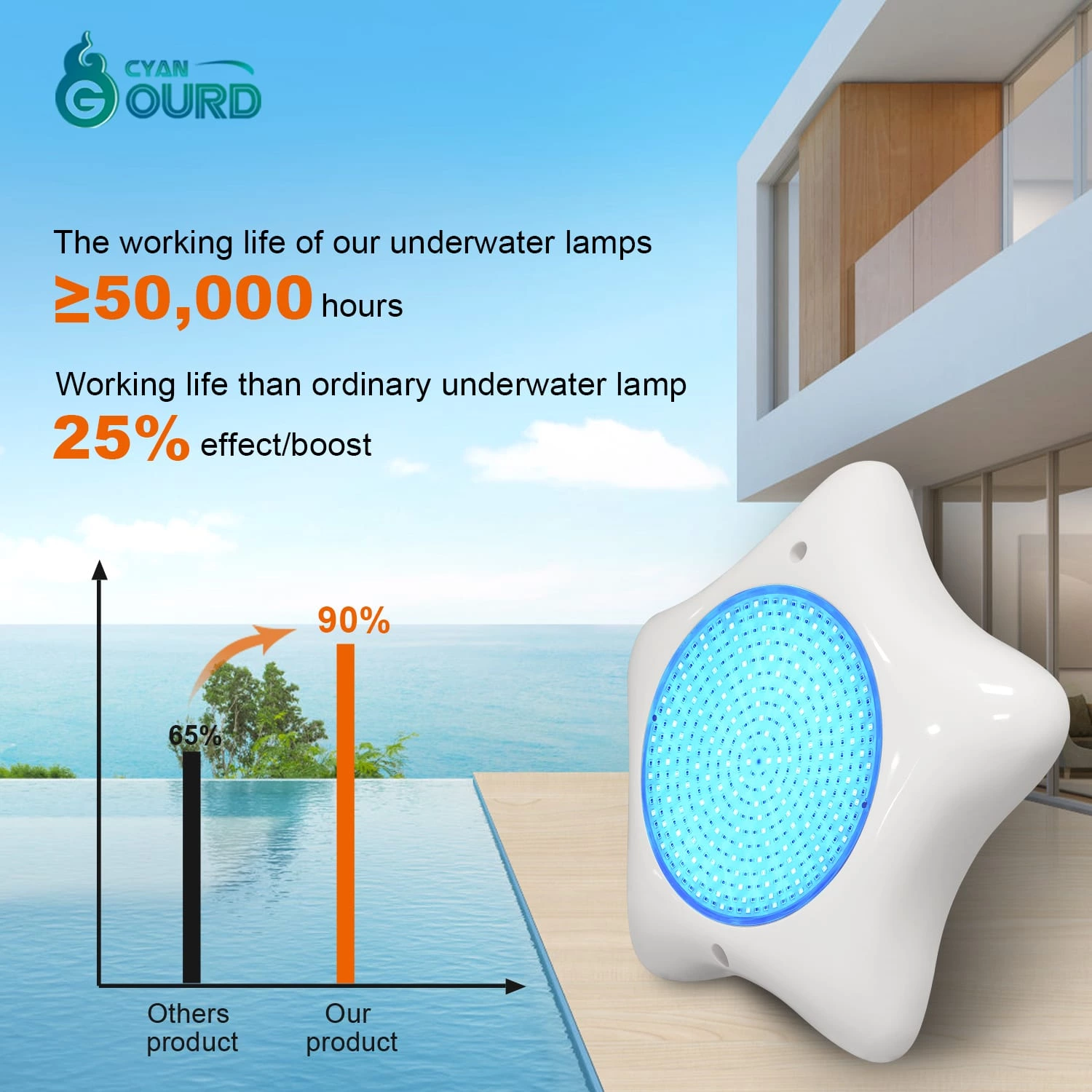
| Lumen Depreciation | Variable (untested) | <5% at 50,000 hours |
Q: Why is lumen depreciation testing important for my resort?
A: Lumen depreciation testing ensures the light output remains consistent over years of operation. With <5% depreciation at 50,000 hours, you avoid the patchy, uneven appearance that occurs when individual lights fail or dim at different rates.
Q: What is the benefit of custom LED binning (SDCM < 3)?
A: SDCM < 3 ensures that every light fixture in your installation emits the exact same color temperature and hue, preventing visual inconsistencies across large surface areas.
Q: Can I use residential IP68 lights in a deep commercial pool?
A: No. Commercial hydrostatic pressure requires specific testing beyond standard IP68. Without IEC 60598-2-18 compliance and confirmed pressure ratings, residential units are highly susceptible to catastrophic seal failure.
Q: How do salt spray chamber results influence purchasing?
A: Accelerated aging tests in salt spray chambers simulate long-term corrosion in saline environments, providing proof that the housing will resist pitting and structural decay for extended service intervals.
Q: How does cable selection affect my maintenance schedule?
A: Proper cable sizing minimizes voltage drop, preventing drivers from overheating. This ensures the electronic components operate within their intended parameters, significantly extending the time between necessary maintenance interventions.
Request Detailed Technical Spec Sheet and Engineering Validation Report to learn more about our rigorous testing protocols and project success rates.