Русский
 Français
 بالعربية
 Español
The Engineering Behind High-Efficiency Swimming Pool Lighting LED Systems for Public Aquatics
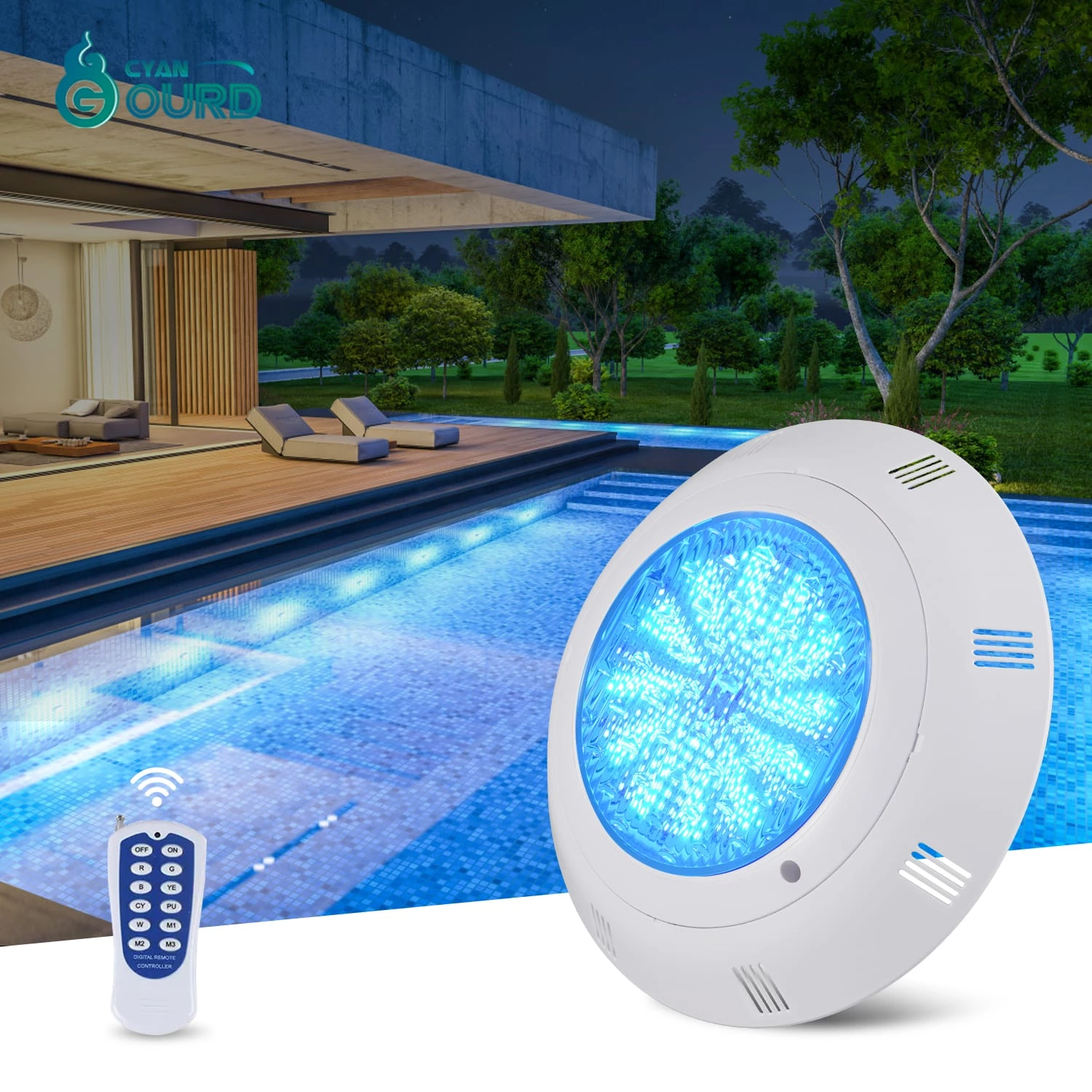
For procurement engineers and facility managers, the choice of commercial aquatic lighting is a critical factor in reducing total cost of ownership. Consumer-grade luminaires often lack the thermal stability and material integrity required for high-traffic environments, leading to premature component failure and increased labor costs. This guide explores the engineering principles, such as Led Pool Light design and thermal dissipation, necessary for specifying systems that meet the rigorous demands of public aquatics.
The Hidden Cost of Consumer-Grade Lighting in Public Aquatics
The primary pain point in public pool lighting is the recurring replacement cycle. Consumer-grade products utilize plastic housings susceptible to UV degradation and chemical brittle-fracture from chlorine. In our production line, we have observed that housing failure is rarely the result of a single factor; rather, it is the synergy of high water pressure, chemical exposure, and inadequate heat management that destroys standard components. Selecting industrial-grade lighting requires a focus on material science and verifiable durability rather than initial purchase price alone.
Decoding Ingress Protection (IP) and Chemical Resistance
IP68 ingress protection is a standard requirement, but for commercial applications, the testing protocol matters more than the rating itself. A genuine IP68 certification requires testing at specific depths and durations to ensure internal circuitry remains isolated. For instance, our Resin Filled Pool Light (Model YC260-2AP) utilizes high-grade epoxy potting to eliminate internal air pockets, effectively preventing moisture migration. Unlike consumer models, these industrial units are tested against aggressive chemical concentrations common in municipal facilities.
Engineering Junction Temperature: Why Thermal Management Dictates LED Lifespan
The junction temperature (Tj) is the single most important metric for LED longevity. When thermal dissipation pathways are insufficient, heat buildup causes irreversible degradation of the semiconductor material, resulting in lumen depreciation or catastrophic failure. Our Par Pool Light series, including the P38-A and P56-A, are engineered with internal heat-sinks that optimize junction-to-case resistance. Through continuous 24/7 stress testing, we monitor T-junction levels to ensure they stay within the safety margins defined by semiconductor manufacturers.
The Role of Potting Compounds in Long-Term Submersible Reliability
Moisture ingress often occurs at the cable entry point, the weakest link in any submersible luminaire. We utilize specialized polyurethane-based potting compounds that bond chemically to both the cable jacket and the housing body. This manufacturing process creates a hermetic seal that withstands the hydrostatic pressure of deep-water installations. From our experience, these industrial-grade potting techniques extend service intervals significantly compared to mechanical gaskets, which are prone to compression set and fatigue.
Compliance and Safety: Navigating IEC 60598-2-18
Safety compliance is non-negotiable for municipal projects. We adhere strictly to IEC 60598-2-18 standards, which govern luminaires specifically designed for swimming pools and similar applications. This standard requires adherence to strict creepage distances and dielectric strength tests. Furthermore, we provide driver compatibility matrices that verify integration with industry-standard building management systems (BMS), ensuring that electrical loads remain within the specified safe parameters for public safety.
| Feature | Consumer-Grade | Commercial-Grade (Our Units) |
|---|---|---|
| Housing Material | Standard ABS | UV-Stabilized High-Impact Polymer |
| Thermal Management | Passive / Air | Junction-to-Case Heat Dissipation |
| Waterproofing | Gasket/O-ring | Specialized Potting/Epoxy Resin |
| Compliance | None/Minimal | IEC 60598-2-18 Certified |
Frequently Asked Questions
Q: How do you validate the IP68 rating for your products?
A: We perform rigorous in-house ingress protection testing where units are submerged at a depth of 2 meters for a duration of 24 hours, followed by rigorous inspection for moisture penetration and dielectric integrity.
Q: Are these lights compatible with my existing facility BMS?
A: Yes, our driver systems are designed for compatibility with standard 12V AC/DC inputs. We provide full technical documentation and compatibility matrices to confirm integration with your specific control systems.
Q: What is the expected service interval for these luminaires?
A: While no electronic component is truly maintenance-free, our engineering focus on thermal management and potting chemistry provides extended maintenance intervals, significantly reducing the frequency of replacement cycles compared to standard units.
Q: How does housing material impact longevity in high-chlorine water?
A: We utilize specialized, UV-stabilized materials engineered to withstand chemical oxidation and long-term exposure to chlorinated environments, preventing the surface cracking often seen in cheaper alternatives.
Q: Can you provide thermal stress data for your LED systems?
A: Yes, we maintain detailed data sheets showing LED junction temperature results under continuous 24/7 operation, ensuring that our designs operate well within the thermal limits of the chips used.
For further technical specifications or to request an engineering consultation for your upcoming public aquatics project, please contact our support team to Download Technical Spec Sheet.