Русский
 Français
 بالعربية
 Español
Engineering Guide: Specifying Blue LED Pool Lights for Commercial Water Features
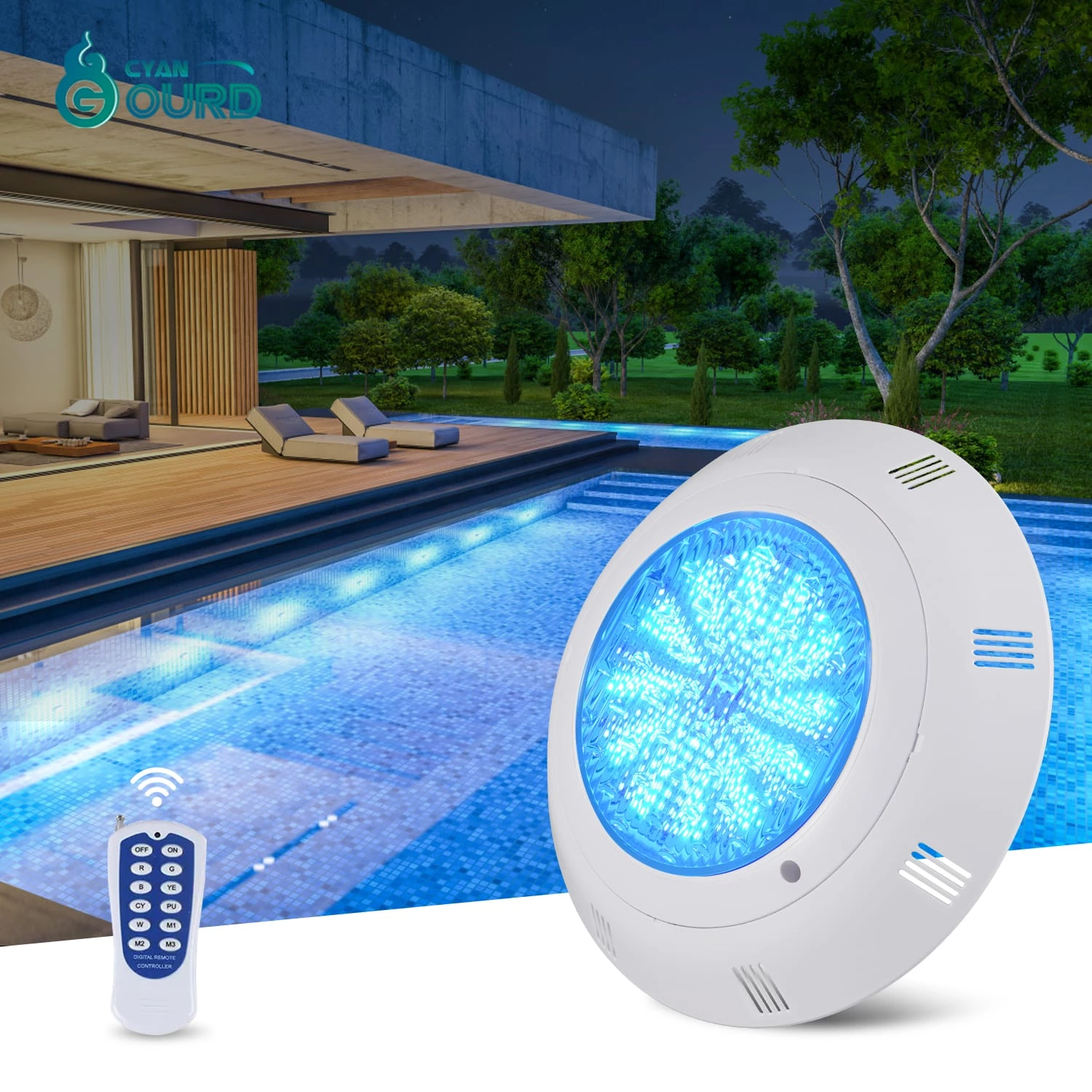
Specifying reliable blue LED pool lights for luxury resorts and commercial water features requires a strict evaluation of structural integrity and material durability. Commercial environments demand continuous operation, high chemical resistance, and minimal maintenance downtime. This guide outlines the critical engineering factors, from waterproof sealing technologies to housing materials, necessary for successful procurement and installation in high-traffic aquatic facilities.
Core Engineering Requirements for Commercial Water Features
Commercial water features operate under demanding conditions that quickly degrade standard residential fixtures. The primary failure point in underwater lighting is water ingress caused by thermal expansion and contraction during extended operating hours. For resort applications, specifying fully resin-filled IP68 structures is recommended over traditional silicone gasket seals. Resin potting eliminates internal air cavities, preventing condensation and ensuring the LED board remains protected even if the outer lens sustains minor physical damage.
Additionally, thermal management is a critical specification factor. Fixtures must efficiently dissipate heat into the surrounding water to maintain the specific 460-470nm blue wavelength without color shifting or lumen depreciation over time. High-power commercial fixtures often utilize aluminum core printed circuit boards (PCBs) within the sealed housing to maximize thermal transfer, ensuring consistent visual impact across large resort pools.
Material Selection: Stainless Steel vs. Polymer Housings
The choice of housing material directly impacts the lifespan of the fixture in chemically treated resort pools. While ABS plastic offers a cost-effective solution with lower tooling costs for standard applications, commercial facilities often require higher structural durability. Specifying a stainless steel pool light—specifically 316L marine-grade—provides high resistance to corrosion in saltwater and heavily chlorinated environments.
The structural rigidity of stainless steel also protects the internal components from physical impacts in crowded resort pools. When evaluating materials, sourcing managers must balance the higher initial unit costs of stainless steel against the long-term reduction in replacement cycles. Furthermore, stainless steel fixtures typically involve stamping or CNC machining processes, which can accommodate lower Minimum Order Quantities (MOQs) for custom architectural designs compared to custom injection-molded polymer housings.
Voltage Systems and Control Protocols
Safety and synchronization are paramount in commercial aquatic environments. Low voltage systems, strictly adhering to 12V or 24V AC/DC standards, are mandatory to comply with international electrical safety codes for underwater installations. For large-scale luxury resorts, integrating commercial pool lights with centralized control systems is often a baseline requirement.
While standard on/off toggling is sufficient for static blue illumination, facilities utilizing dynamic water features may specify DMX512 control protocols. This allows facility managers to synchronize the blue LED fixtures with other architectural lighting. Specifying 24V DC systems rather than 12V AC is increasingly common in commercial projects, as it ensures more consistent voltage delivery and mitigates voltage drop across the long cable runs typical in expansive resort pools.
Structural Comparison for Resort Pool Lighting
Evaluating the structural differences between lighting configurations helps procurement teams align product specifications with project requirements. The following table compares common structural approaches for commercial underwater lighting to support sourcing decisions.
| Structural Design | Waterproof Method | Chemical Resistance | Maintenance Impact |
|---|---|---|---|
| Standard Polymer Niche | Silicone Gasket | Moderate (Chlorine) | High (Requires routine seal checks) |
| 316L Stainless Nicheless | Fully Resin-Filled | High (Saltwater/Chlorine) | Low (Sealed unit, no gasket failure) |
| Surface Mount Polymer | Epoxy Potting | Moderate | Medium (Exposed physical profile) |
| Flush Mount Stainless | Resin + Mechanical Seal | Very High | Low (Protected profile, high durability) |
Installation and Maintenance Considerations
Long-term maintenance is a significant factor in the total cost of ownership for resort pool lighting. Niche installations allow for easier replacement of the light engine without lowering the water level, which is a critical advantage for commercial resorts that cannot afford operational downtime. Conversely, nicheless designs require a smaller core hole in the pool shell, reducing structural complexity during the initial concrete pour but requiring careful cable management.
Procurement teams must also specify adequate factory-sealed cable lengths and appropriate cable jacket materials. TPU (Thermoplastic Polyurethane) cables offer better resistance to pool chemicals than standard PVC. Splicing cables underwater or within the conduit significantly increases the risk of capillary water ingress, leading to premature fixture failure. Specifying custom cable lengths directly from the manufacturer eliminates this installation risk.
Frequently Asked Questions
Q: Why is 316L stainless steel preferred over 304 for commercial pool lights?
A: 316L stainless steel contains molybdenum, which significantly increases its resistance to chloride-induced pitting and corrosion. This makes it essential for saltwater pools and heavily chlorinated commercial water features where 304 stainless would degrade over time.
Q: What is the engineering advantage of resin-filled blue LED pool lights?
A: Resin-filled fixtures eliminate internal air space, making it impossible for water to pool inside the housing even if the outer seal is compromised. This structural design drastically reduces failure rates compared to traditional hollow fixtures relying solely on rubber gaskets.
Q: How does voltage drop affect commercial water feature lighting?
A: In large resort pools, long cable runs can cause a drop in voltage by the time power reaches the furthest fixtures, resulting in dimming or color inconsistency. Specifying 24V systems or using thicker gauge cables helps mitigate this electrical issue.
Q: Can blue LED pool lights be integrated into a resort's central DMX system?
A: Yes, many commercial-grade underwater lights are equipped with DMX512 decoders. This allows the blue LEDs to be controlled, dimmed, or synchronized with the resort's broader architectural lighting network.
Q: What is the typical lead time for manufacturing commercial stainless steel pool lights?
A: Standard production lead times range from 25 to 40 days, depending on the order volume and specific cable length requirements. Custom tooling for unique niche sizes or specialized mounting brackets will add to the initial production timeline.