Русский
 Français
 بالعربية
 Español
Engineering Guide: Specifying Underwater Pool Lights for Commercial Waterparks and Olympic Pools
Specifying high-performance lighting for commercial aquatic facilities requires moving beyond residential-grade assumptions. In our factory, we often encounter the aftermath of premature failures in high-traffic waterparks where improper material selection and inadequate thermal management compromise system integrity. This guide provides the technical framework for MEP engineers and project managers to ensure longevity, safety, and compliance in large-scale aquatic environments.
The Engineering Deficit in Commercial Aquatic Lighting
Residential-grade fixtures fail in commercial settings primarily due to constant hydrostatic pressure and fluctuating chemical concentrations. While residential units are designed for intermittent use, commercial systems face 24/7 exposure. During factory audits, we have identified that standard seals often degrade within months when subjected to the high-pressure water jets and cleaning cycles found in competitive-grade facilities. A robust Led Pool Light must feature high-grade ingress protection that goes beyond standard DIY expectations.
Material Science: 316L Stainless Steel vs. Polymers
The choice between a Stainless Steel Pool Light and high-performance polymer units is a matter of chemical resilience. 316L stainless steel, when properly passivated, provides superior resistance to chloride-induced pitting compared to standard molded housings. Our testing confirms that 316L prevents structural fatigue during long-term submersion in sanitizing solutions that would otherwise brittle-fracture polymer alternatives.
| Feature | 316L Stainless Steel | Specialized Polymer |
|---|---|---|
| Corrosion Resistance | High (Passivated) | Variable (Requires UV add) |
| Thermal Dissipation | Excellent | Moderate |
| Pressure Handling | Superior | High |
Thermal Physics: Managing LED Heat Sinks
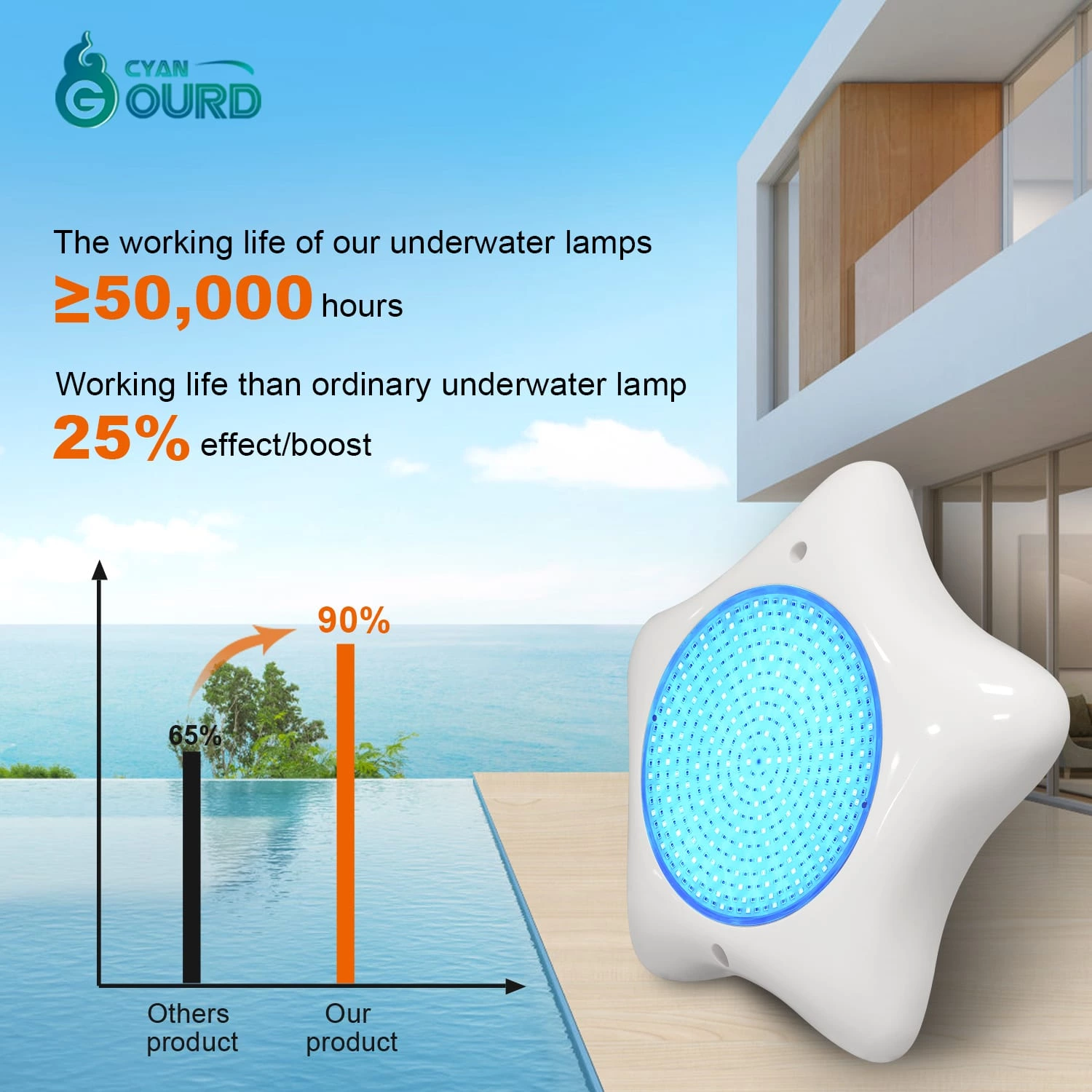
LED lumen maintenance is directly tied to junction temperature. In non-circulating water pockets behind a Nicheless Pool Light, heat buildup can accelerate diode degradation. Our production process incorporates extruded heat-sink housings to manage thermal output, ensuring L70 maintenance over 50,000 hours. For example, our QR55 model utilizes internal thermal conduits to maintain operating stability even when exposed to 35-degree Celsius pool water.
Electrical Distribution Design for Olympic-Scale Installations
Voltage drop is a critical failure point in Olympic pools. When runs exceed 50 meters, the voltage drop significantly reduces lumen output and causes erratic performance. We recommend a star-topology power distribution system, balancing current delivery across all fixtures. Engineers must calculate for a 3-5% maximum voltage drop to maintain consistent color rendering across the entire lane spectrum.
Compliance Frameworks: Navigating IEC 60598-2-18
Adherence to IEC 60598-2-18 is mandatory for public safety. This standard outlines requirements for luminaires for swimming pools and similar applications. Our manufacturing protocol ensures that every unit is subject to hydrostatic pressure tests at 1.5 times the maximum rated depth. Note: Always consult local jurisdictional electrical codes, as these often exceed international safety standards for grounding and bonding protocols.
Frequently Asked Questions
Q: What is the primary difference between residential and commercial pool lighting?
A: Commercial units are engineered for high-pressure durability and continuous operation, utilizing 316L stainless steel and advanced thermal management to mitigate failure in intensive environments.
Q: Why does galvanic corrosion occur in stainless steel fixtures?
A: Galvanic corrosion happens when dissimilar metals are in contact within an electrolyte. Proper earthing protocols and material isolation are required to prevent this phenomenon.
Q: How does the QR55 handle heat management?
A: The QR55 incorporates a specialized extruded heat-sink housing that dissipates diode heat directly into the surrounding water, preventing premature lumen depreciation.
Q: Are commercial lights IP68 rated?
A: While IP68 is a standard, commercial requirements often demand testing beyond this baseline, specifically for deep-water pressure hydrostatic integrity.
Q: How do I calculate voltage drop for my Olympic pool lighting?
A: You must account for wire gauge, cable length, and fixture current draw. Aim for a voltage drop under 5% to ensure consistent lighting performance across all lanes.