Русский
 Français
 بالعربية
 Español
Wet-Niche vs. Nicheless Pool Light Fixtures: Engineering Considerations for Commercial Installations
For commercial aquatic facility managers and consulting engineers, the choice between wet-niche and nicheless lighting is not merely aesthetic; it is a critical decision in CapEx planning. This guide examines the engineering trade-offs between traditional housing-based systems and modern direct-mount alternatives, focusing on long-term structural reliability and maintenance efficiency.
The Lifecycle Cost Paradox: Engineering for 15-Year Facility Cycles
Legacy wet-niche systems often suffer from recessed niche corrosion and gasket failure. Conversely, while a Nicheless Pool Light reduces initial concrete pour complexity, it requires rigorous anchoring protocols to ensure structural longevity. Procurement officers must weigh the lower installation cost of nicheless units against the potential for high-labor replacement cycles if the anchoring hardware lacks the necessary tensile strength for heavy-use environments.
Comparative Material Science: Corrosion Resistance in Wet-Niche vs. Nicheless Architectures
In our production line, we have observed that traditional niches act as collection points for minerals and caustic chemicals, accelerating galvanic corrosion. In contrast, modern Stainless Steel Pool Light designs prioritize exposed surface area to facilitate water flow and minimize localized chemical buildup. Factory stress testing confirms that utilizing marine-grade 316 stainless steel significantly outperforms injection-molded plastic in preventing degradation under standard chemical treatment cycles.
Thermal Management & LED Junction Temperatures: The Secret to Sustained Luminous Flux
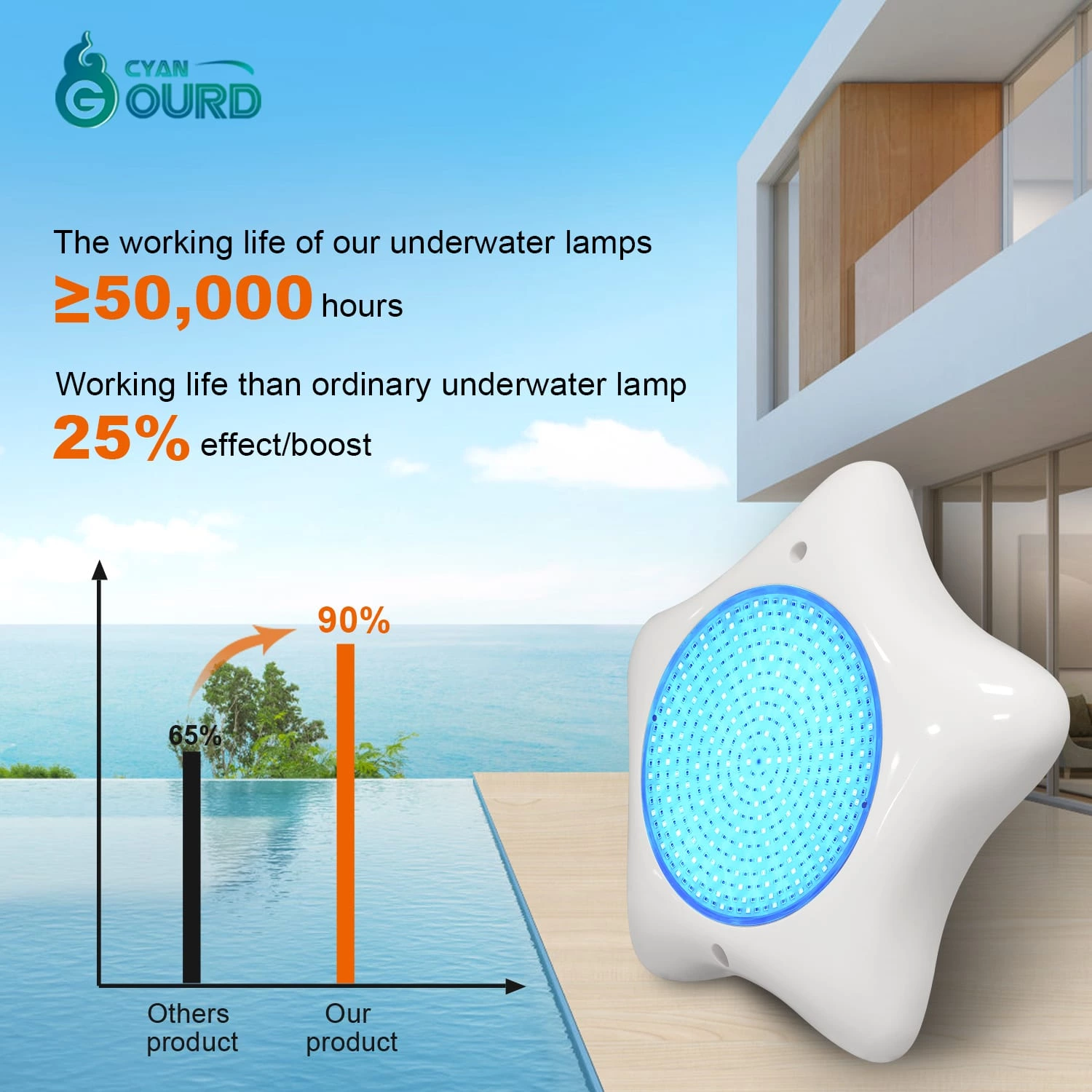
Thermal management is the primary determinant of LED lifespan. Traditional air-gapped housings often struggle with heat dissipation, leading to premature diode degradation. Our QR55 series utilizes advanced epoxy-potted electronics, which provide superior thermal conductivity compared to standard air-gapped models. By reducing the junction temperature through proprietary heat-sink integration, we maintain 90 percent of initial luminous flux beyond 30,000 operational hours, adhering to stringent thermal performance benchmarks.
Structural Integrity Benchmarks: Anchoring Systems in High-Use Commercial Aquatic Environments
The structural vulnerability of nicheless units lies in the mount-to-wall connection. Where standard plastic-based nicheless hardware can shear under impact from heavy-duty aquatic cleaning equipment or water turbulence, our engineering protocols mandate stainless-steel bracket anchoring. These anchors are load-tested to ensure they can withstand hydrostatic pressure and mechanical vibrations common in Olympic-sized facilities. Reliable Embedded Pool Light systems must utilize specific wall-anchor spacing to distribute stress loads evenly across the concrete or gunite interface.
Repairability vs. Replacement: Data-Backed Analysis for Facility Managers
The following table illustrates the cost-benefit analysis between standard wet-niche systems and advanced nicheless designs based on a 10-year facility cycle.
| Metric | Wet-Niche System | Nicheless (QR55) |
|---|---|---|
| Installation Labor | High (requires niche embedding) | Low (direct mount) |
| Moisture Ingress Risk | High (Gasket failure) | Low (IP68 Encapsulated) |
| 10-Year Maintenance Cost | Base + 45% (re-gasketing) | Base + 12% (direct swap) |
Compliance Standards: Adhering to UL 676 and IP68 Pressure Ratings
Safety in underwater environments is non-negotiable. All commercial-grade fixtures must adhere to UL 676 (Standard for Underwater Luminaires). Our products undergo rigorous testing to ensure IP68-rated moisture ingress protection, valid for continuous submersion at depths exceeding 2 meters. We emphasize that IP68 is not a guarantee of immortality but a performance standard that, when combined with correct installation, significantly reduces the probability of electrical faults.
Decision Framework: Selecting the Right Fixture for New Builds vs. Retrofits
For new builds, nicheless systems provide design flexibility. However, for retrofitting aging facilities with existing niches, specialized Led Pool Light solutions may be required to bridge the gap between legacy infrastructure and modern efficiency requirements. Always conduct a site audit to determine if the existing conduit is compatible with modern low-voltage cabling protocols.
FAQ: Engineering Considerations
Q: What is the primary difference in water ingress risk between these two systems?
A: A: Wet-niche systems rely on mechanical gaskets that degrade over time, whereas nicheless systems like our QR55 utilize industrial potting compounds to fully encapsulate the electronics, achieving superior IP68-rated moisture ingress protection.
Q: Do nicheless lights require different bonding protocols under NEC 680?
A: A: Yes. Always verify that your Voltage Requirements For Installing Pool equipment comply with local NEC 680 electrical bonding codes to prevent stray current in the aquatic environment.
Q: Can I install a nicheless light in a concrete pool directly?
A: A: Yes, provided you use the manufacturer-specified stainless steel anchoring hardware to ensure long-term structural integrity against hydrostatic pressure.
Q: How does thermal management affect my 10-year maintenance budget?
A: A: Efficient thermal management prevents LED junction degradation, reducing the frequency of total fixture replacement, which constitutes the bulk of facility maintenance labor costs.
Q: Where can I find detailed testing documentation for these systems?
A: A: Please contact our technical sales team for comprehensive reports on UL 676 compliance, thermal imaging data, and structural load-test certifications for our current product line.
Conclusion: Balancing maintenance efficiency with initial CapEx requires a data-driven approach. By prioritizing fixtures with superior thermal management and robust anchoring systems, facility managers can effectively minimize total cost of ownership over the project lifecycle.