Русский
 Français
 بالعربية
 Español
How Manufacturers Classify Pool Light Types Based On Application And Installation
How Manufacturers Classify Pool Light Types Based On Application And Installation
In the B2B swimming pool lighting industry, precise classification of lighting fixtures is essential for distributors, contractors, and engineers to ensure compatibility with specific project requirements. As a dedicated manufacturer, Cyangourd Lighting categorizes LED underwater lights not just by brightness or color, but primarily by their structural design, installation method, and the type of pool vessel they are intended to serve. Understanding these manufacturing classifications helps procurement officers and pool builders select the correct IP68-rated solutions for concrete, vinyl, or fiberglass applications.
Classification by Installation Method: Surface Mounted vs. Recessed
The primary distinction in our manufacturing catalog is how the fixture attaches to the pool wall. This classification dictates the pre-construction requirements and the aesthetic outcome of the project.
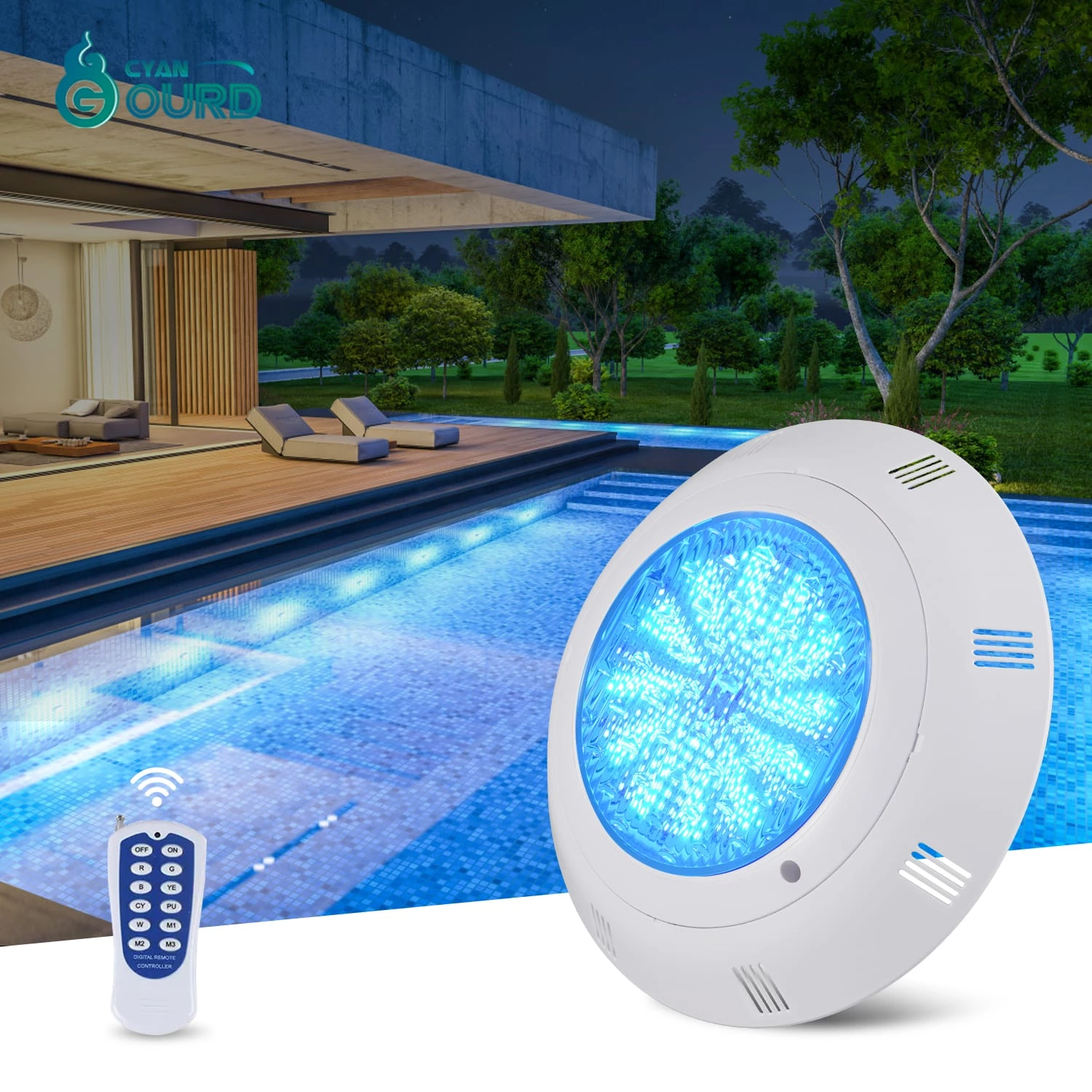
- Surface Mounted Lights: These fixtures are designed to be installed directly onto the flat surface of the pool wall. Manufacturers engineer these with a slim profile (often 20mm to 40mm thick) to minimize protrusion. They are classified as "retrofit-friendly" because they typically require only a bracket and cable pass-through, eliminating the need for a deep wall niche.
- Recessed (Niche) Lights: These units are engineered to sit flush or nearly flush with the pool wall. This category requires a pre-installed housing (niche) embedded within the concrete or pool shell. Recessed lights are often preferred for high-end commercial projects where a streamlined aesthetic is critical.
Categorization by Pool Structure Compatibility
Manufacturers produce distinct product lines based on the material of the pool vessel. The waterproofing mechanisms and mounting hardware differ significantly between concrete and liner pools.
Concrete and Gunite Models: These lights typically feature robust mounting mechanisms that anchor into standard niches or adhere to flat concrete surfaces. The focus here is on thermal management and corrosion resistance, often utilizing 316L stainless steel.
Vinyl Liner and Fiberglass Models: This classification involves specialized hardware. Manufacturers include gaskets, sealing rings, and back-nuts to sandwich the liner or fiberglass shell, ensuring a watertight seal without relying on concrete adhesion. These are often categorized as "liner-compatible" fixtures in wholesale catalogs.
The Distinction Between Integrated Fixtures and PAR56 Bulbs
From a manufacturing and inventory perspective, we separate products into modular components and fully integrated systems.
PAR56 Replacement Bulbs: These are classified as retrofit components designed to fit inside existing legacy niches. They allow for the upgrade of old halogen systems to LED without removing the housing. The waterproofing relies heavily on the existing niche and the bulb's front seal.
Integrated LED Fixtures: These are modern, all-in-one units where the LED board, driver, and housing are sealed together, often using resin-filled technology. Manufacturers classify these as high-durability solutions because they eliminate the risk of water ingress common in two-part housing systems.
Nicheless vs. Standard Niche Classifications
As pool designs evolve, the "Nicheless" category has gained prominence in manufacturing output. This classification refers to lights that install into standard 1.5-inch return fittings rather than large buckets.
Nicheless lights are compact and rely on the water in the pipe for cooling. Standard niche lights are larger, offering higher lumen output, and rely on the surrounding pool water for heat dissipation. Manufacturers clearly distinguish these lines because they dictate the plumbing requirements during the pool's rough-in phase.
Waterproofing Technology: Resin-Filled vs. Gasket Sealed
Finally, manufacturers classify lights based on their internal sealing technology, which directly impacts the IP68 rating and warranty terms.
Resin-Filled (Fully Encapsulated): In this classification, the internal LED components are completely potted in epoxy resin. This creates a solid block that is impervious to water, even if the outer lens cracks. This is the preferred standard for modern wholesale manufacturing due to its near-zero failure rate.
Gasket/O-Ring Sealed: These lights rely on mechanical pressure and rubber seals to keep water out. While serviceable, they are classified differently due to the higher maintenance requirement and risk of seal degradation over time.
Comparison of Pool Light Classifications
| Classification Type | Installation Complexity | Primary Application | Lumen Output Potential |
|---|---|---|---|
| Surface Mounted | Low (Retrofit Friendly) | Existing concrete pools, renovations | High |
| Recessed (PAR56/Integrated) | High (Requires Niche) | New construction, commercial pools | Very High |
| Nicheless (1.5" Fitting) | Medium (Plumbing Dependent) | Steps, spas, shallow ledges | Low to Medium |
| Fountain/Spotlight | Variable (Stand/Bracket) | Water features, fountains | Focused Beam |
Frequently Asked Questions
1. Why do manufacturers distinguish between concrete and vinyl pool lights?
The distinction lies in the mounting hardware. Vinyl and fiberglass pools require a clamping system with gaskets to seal the liner against the light fixture to prevent leaks, whereas concrete lights attach directly to the wall or niche without needing a compression seal.
2. What is the difference between resin-filled and standard LED pool lights?
Resin-filled lights have their internal electronics completely encapsulated in epoxy, eliminating air gaps. This manufacturing method provides superior IP68 waterproofing compared to standard lights that rely solely on rubber O-rings, which can degrade over time.
3. Can surface-mounted lights be used in new construction projects?
Yes, surface-mounted lights are often used in new construction to reduce costs and complexity. They eliminate the need for installing large buckets (niches) in the concrete, requiring only a simple cable conduit.
4. How are nicheless pool lights classified regarding voltage?
Like most professional underwater lighting, nicheless lights are classified as low-voltage safety fixtures, typically operating on AC/DC 12V or 24V. This compliance is mandatory for meeting international safety standards for underwater equipment.
5. Do manufacturers offer different beam angles for different classifications?
Yes. Recessed and surface lights typically feature wide beam angles (120 degrees) for general illumination. Fountain and spot lights are classified separately and often feature narrower optics (15 to 45 degrees) to highlight specific water features.