Русский
 Français
 بالعربية
 Español
Integrating Hardwired LED Pool Lights with Wireless Remote Control Systems
Integrating Hardwired LED Pool Lights with Wireless Remote Control Systems
In commercial aquatic facilities, the reliability of hardwired LED pool lights is non-negotiable. Hardwired connections ensure consistent power delivery and safety, typically operating at low voltage (AC/DC 12V or 24V). However, facility managers often require the flexibility of wireless operation to manage lighting scenes, schedules, and zoning without physically accessing the mechanical room. Integrating hardwired fixtures with wireless remote control systems bridges the gap between robust infrastructure and modern convenience. This guide explores the technical architecture and best practices for implementing wireless control in commercial swimming pool projects.
The Architecture of Wireless Integration
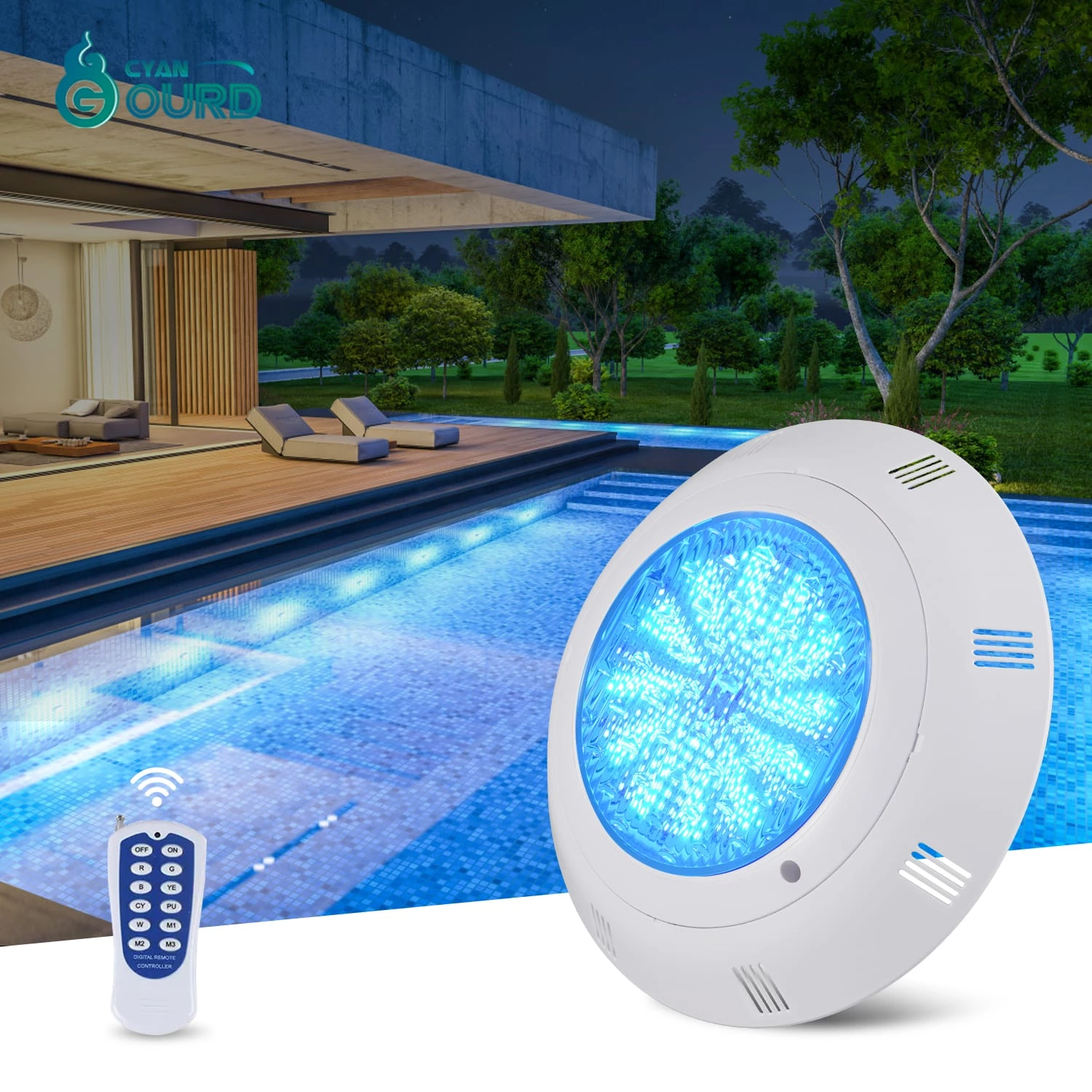
To control hardwired lights wirelessly, an external control unit must be intercepted between the power source (transformer) and the lighting fixtures. The standard architecture involves a step-down transformer converting high voltage (110V/220V) to safe low voltage (12V/24V), followed by a wireless receiver or controller. This receiver interprets signals from a handheld remote, wall panel, or smartphone app and modulates the power output to the lights to change colors or brightness.
For commercial projects, it is critical to ensure that the wireless receiver is rated for the total wattage of the connected LED lights. Overloading a controller can lead to system failure. Additionally, the controller must support the specific signal type (RGB 4-wire or 2-wire power line communication) used by the LED fixtures.
Selecting the Right Control Protocol
Choosing the correct communication protocol is vital for project success. The three primary methods for integrating wireless control into hardwired systems are Radio Frequency (RF), Wi-Fi, and DMX512. Each serves different operational needs within a commercial environment.
| Control Protocol | Signal Range | Integration Complexity | Best Use Case |
|---|---|---|---|
| RF (Radio Frequency) | Medium (20-50 meters) | Low (Plug & Play) | Standard hotel pools, simple retrofits |
| Wi-Fi / App Control | Network Dependent | Medium (Requires Network) | Smart resorts, remote management |
| DMX512 | Long (Wired Backbone) | High (Professional Setup) | Water parks, synchronized music shows |
| Power Line Carrier (PLC) | Limited to Circuit | Medium (Sync Box) | Renovations using existing 2-wire cables |
Installation Best Practices for Signal Stability
In commercial settings, equipment is often housed in mechanical rooms that may be far from the pool or enclosed in metal cabinets. Metal acts as a Faraday cage, blocking RF and Wi-Fi signals. To ensure reliable wireless integration, installers should mount the receiver antenna outside of metal enclosures. If the distance between the control room and the pool deck is significant, signal repeaters or amplifiers may be necessary.
Furthermore, proper waterproofing of the external control box is essential if it is installed outdoors. While the underwater lights are IP68, the control equipment is typically IP65 or IP66 and should be protected from direct exposure to heavy rain or pool chemical splashes.
Synchronizing Multiple Zones
Large commercial projects often feature multiple water bodies, such as a main lap pool, a spa, and a children's splash pad. Managing these as separate zones or synchronizing them as a single entity requires advanced controller capabilities. By using multi-zone RF remotes or DMX controllers, facility managers can assign specific groups of hardwired lights to different channels.
Synchronization ensures that color transitions happen simultaneously across all fixtures. This is achieved by connecting all lights to a central master controller or by using controllers that share a common frequency clock. For hardwired systems, ensuring all transformers are on the same phase or controlled by the same master unit is crucial for perfect sync.
Integration with Building Management Systems (BMS)
For high-end hotels and municipal centers, integrating pool lighting into the central Building Management System (BMS) is a growing trend. This allows lighting to be automated based on time of day or facility usage. Hardwired LED lights can be integrated into BMS via DMX gateways or dry contact relays triggered by the central system. This level of integration removes the need for handheld remotes, which can be lost or damaged, and centralizes control to the facility management office.
Frequently Asked Questions
- 1. Can I retrofit wireless control onto existing hardwired pool lights?
Yes, provided the lights are compatible with the controller's output type (e.g., RGB or RGBW). You simply need to install a compatible wireless receiver between the transformer and the lights.
- 2. What is the maximum distance for RF remote control operation?
Standard RF remotes typically work within 20 to 50 meters in open air. However, obstacles like concrete walls or metal equipment rooms will significantly reduce this range, often requiring signal repeaters.
- 3. Do I need a specific transformer for wireless integration?
The transformer must supply the correct voltage (AC 12V/24V) and sufficient wattage. The wireless controller is usually installed on the low-voltage side, so the transformer itself acts as the power supply for the controller.
- 4. How many hardwired lights can one wireless controller handle?
This depends on the amperage rating of the controller and the wattage of the lights. For example, a 300W controller can handle roughly ten 25W lights. Always leave a 20% safety margin.
- 5. Is Wi-Fi control better than RF for commercial pools?
Wi-Fi offers more features, such as app control and scheduling, but requires a stable network connection. RF is generally more robust for simple on/off and color changing tasks where network stability might be an issue.