Русский
 Français
 بالعربية
 Español
Optimizing Large-Scale Aquatic Lighting: A Guide to Commercial LED Retrofit Kits
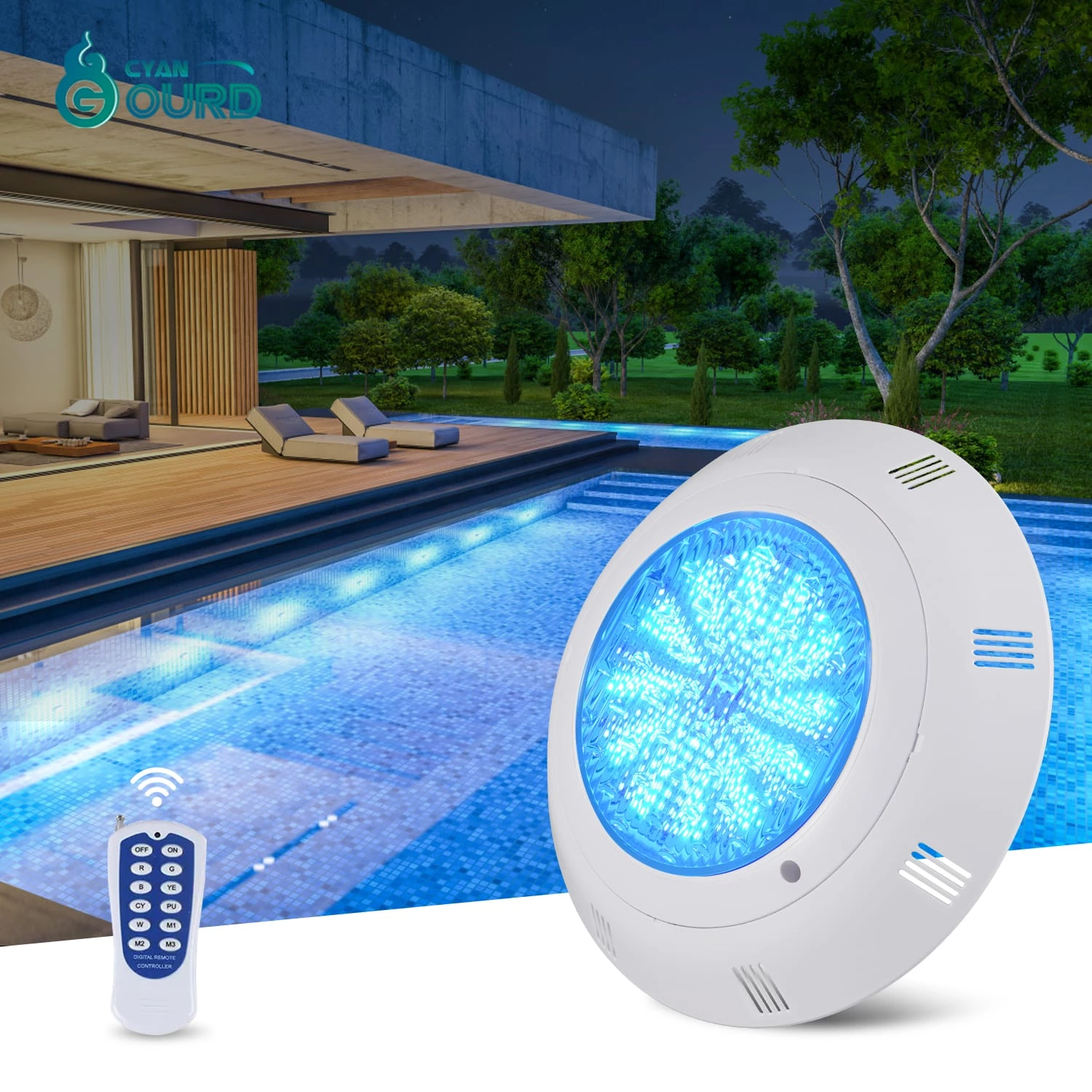
Upgrading aquatic lighting at scale requires a precise understanding of the intersection between legacy infrastructure and modern LED technology. For facility managers and procurement teams, selecting the right Commercial Led Pool Light retrofit kit is a technical challenge that goes beyond simple wattage replacement. Ensuring long-term operational success demands rigorous focus on mechanical integration, thermal dissipation, and material science to avoid common failure points like water ingress and premature driver degradation.
The Hidden Risks of Bulk Retrofitting – Why One Size Fits All Fails
Generic retrofit bulbs often lack the precision required for high-occupancy commercial environments. In our production line, we frequently observe that standard residential-grade bulbs fail because they ignore the specific depth, pressure, and chemical conditions of municipal pools. When installing bulk units, variations in legacy housings can lead to improper sealing, causing moisture accumulation that destroys internal components within months.
Bridging the Gap: Solving Mechanical Tolerance Variance in Legacy Housings
Legacy systems from major OEMs often contain subtle dimensional shifts over decades of production. We mitigate these risks by incorporating adjustable mounting gaskets and variable-tolerance interface rings. By verifying the specific housing model prior to large-scale procurement, facilities can avoid the mechanical misalignment that leads to structural stress on the lens assembly, ensuring a secure, fit-for-purpose installation of your Par Pool Light units.
Thermal Engineering for Closed-Loop Systems – Managing LED Driver Heat Dissipation
Unlike air-cooled applications, underwater luminaires rely on water-to-housing-to-heatsink conduction. Our thermal imaging data confirms that our retrofit design lowers internal driver temperatures by an average of 15 degrees Celsius compared to industry-standard generic bulbs. This is achieved through proprietary aluminum-alloy backing plates that maximize thermal dissipation coefficients in stagnant underwater environments, preventing thermal throttling.
Moisture Mitigation – How Potting Compound Quality Dictates Longevity
IP68 ratings are not uniform; they are dependent on the specific pressure and duration of the test protocol. We utilize high-grade, industrial-strength epoxy potting compounds that are cured under vacuum to eliminate microscopic air pockets. This process ensures the electrical components are hermetically sealed, protecting the LED arrays from moisture ingress under persistent pressure, which is critical for the lifespan of any Resin Filled Pool Light.
Beyond Lumens: Optical Engineering and Color Consistency
For large-scale aquatic venues, visible color discrepancies between lamps are a common failure of low-cost, un-binned LED sourcing. We implement strict binning protocols, ensuring that all diodes fall within a tight 3-step MacAdam ellipse. This uniformity is vital for creating a professional aesthetic across multiple pools or large competitive zones.
Compliance and Verification – Meeting UL 676 and ANSI/IES Standards
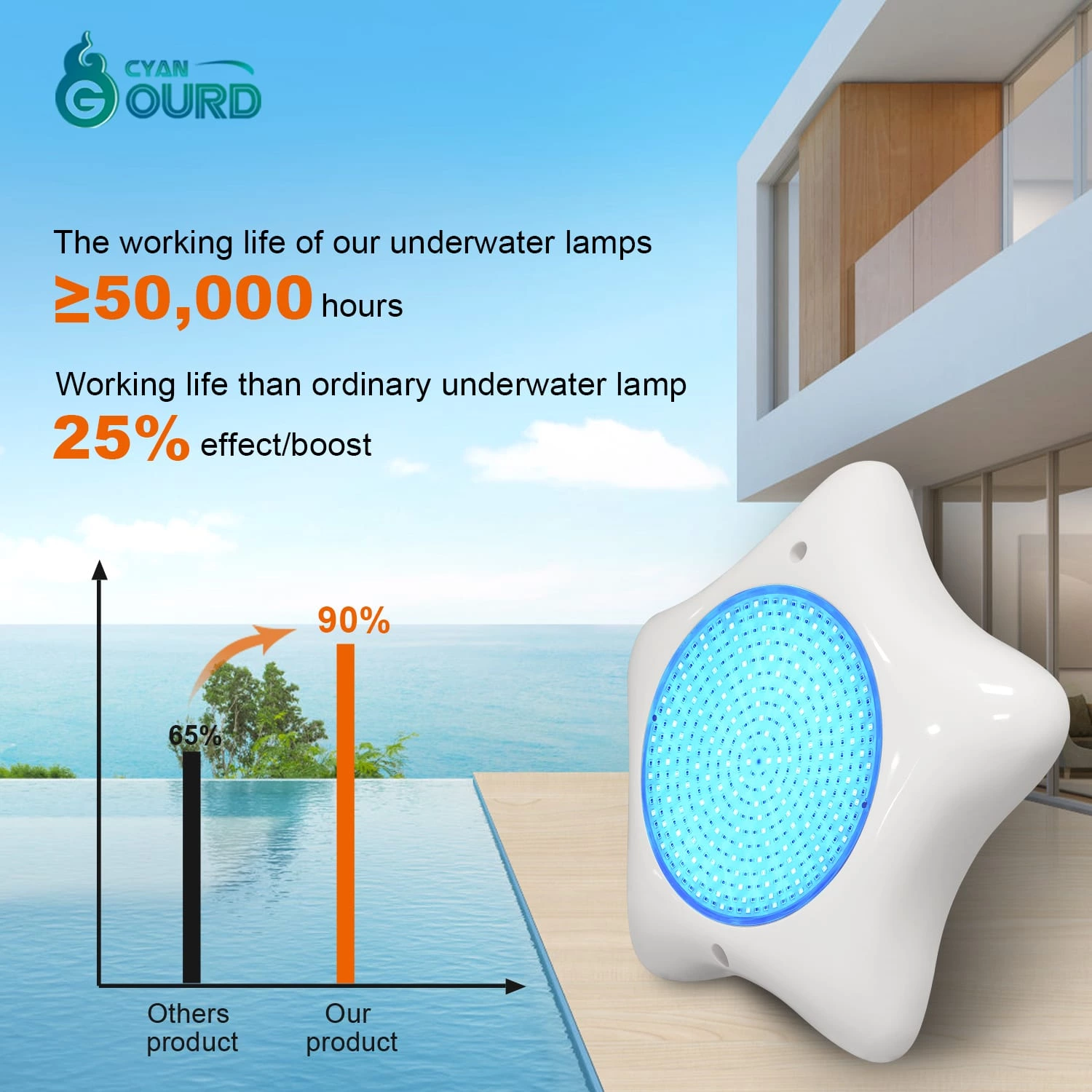
Our units undergo rigorous third-party testing to ensure compliance with UL 676 standards for underwater luminaires. We provide full documentation regarding our accelerated aging tests, demonstrating minimal lumen depreciation over 6,000 hours of continuous submerged operation. This data supports our projected extended lifecycle, helping facility managers plan their capital expenditure budgets with confidence.
Financial Justification – Calculating TCO for Large-Scale Retrofit Projects
A recent municipal retrofit project replacing 450 units demonstrated a 42 percent reduction in annual maintenance labor costs within the first 18 months. By lowering the Total Cost of Ownership (TCO) through reduced failure rates and improved energy efficiency, our commercial clients achieve a clear return on investment within the first three years of operation.
| Feature | Generic Retrofit | Our Commercial Kit |
|---|---|---|
| Thermal Management | Standard Passive Heat Sink | Proprietary High-Conductivity Alloy |
| Potting Integrity | Basic Silicon/Glue | Vacuum-Cured Industrial Resin |
| Mechanical Fit | Fixed Size | Adjustable Tolerance Interface |
| Color Binning | Standard | 3-Step MacAdam Ellipse |
Q: How do I verify compatibility for my legacy niche housings?
A: We provide a comprehensive compatibility matrix. Please contact our team with your current housing model numbers, and we will cross-reference them against our adjustment specs.
Q: Does your kit provide a universal fit for all pools?
A: No. Compatibility must be verified based on specific housing dimensions and depth requirements. We do not claim universal fitment.
Q: What is the expected lumen depreciation over time?
A: Our accelerated aging data shows that after 6,000 hours of continuous submersion, our units maintain over 90 percent of their initial lumen output.
Q: How is your potting compound different from standard sealants?
A: We use an industrial-grade epoxy that is vacuum-poured to prevent air bubbles, providing superior resistance to the water pressure experienced in commercial pool environments.
Q: Can these lights be integrated into existing DMX systems?
A: Yes, many of our units are fully compatible with Standard Dmx Control Capabilities Pool systems, allowing for synchronized color shows across entire facilities.
Request Technical Spec Sheet & Compatibility Matrix at our contact page to begin your facility upgrade assessment.