Русский
 Français
 بالعربية
 Español
How to Source Commercial Pool Lights: A Wholesale Buyer’s Guide to IP68 Standards and Compliance
For procurement managers and commercial contractors, selecting the right lighting is not just about aesthetics; it is a critical engineering decision that dictates long-term maintenance costs. Many industrial projects fail prematurely due to the misconception that residential-grade waterproofing is sufficient for large-scale aquatic facilities, leading to catastrophic water ingress and system failure.
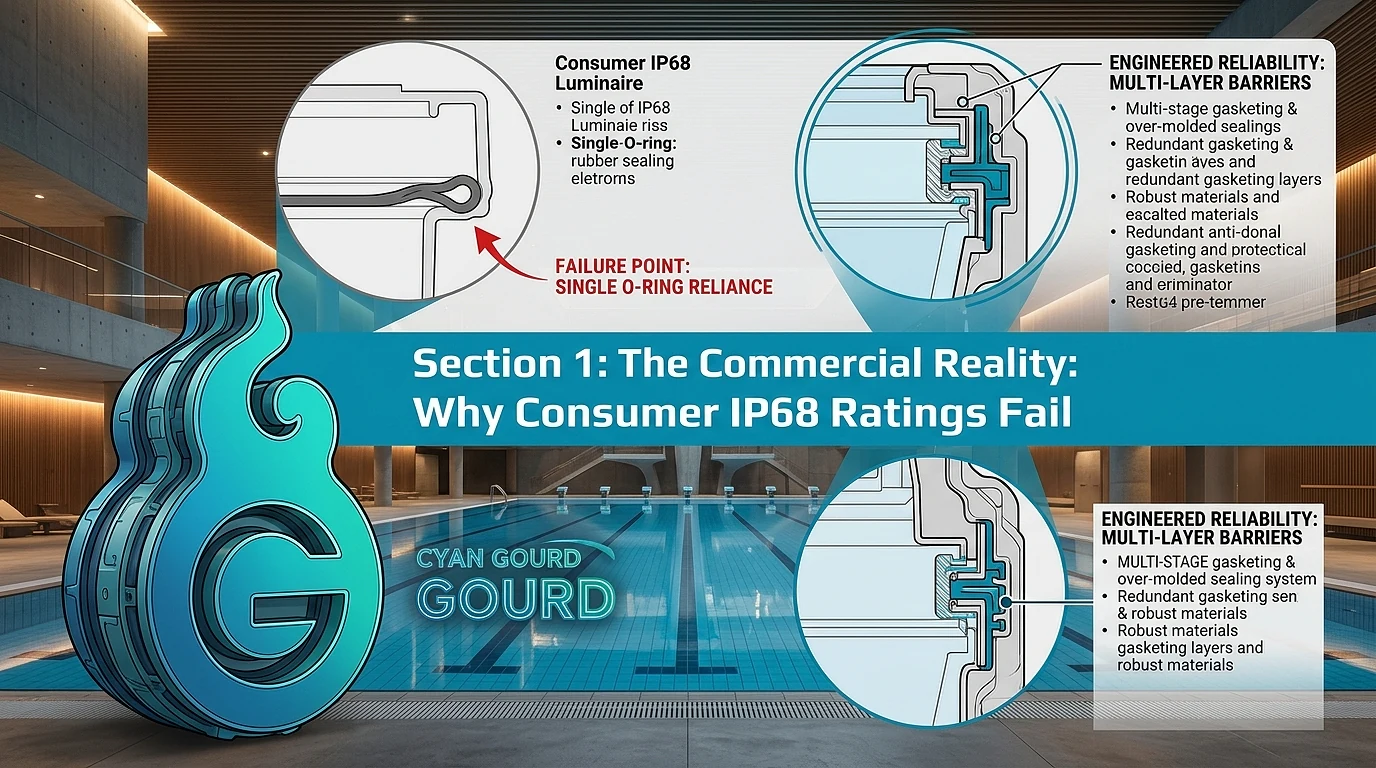
Section 1: The Commercial Reality: Why Consumer IP68 Ratings Fail in Olympic-Sized Applications
In our production line, we consistently observe that consumer-grade luminaires often rely solely on rubber O-rings for water resistance. While these might pass a temporary submersion test, they fail under the persistent hydrostatic pressure of a commercial pool. Commercial environments require specialized engineering, such as an Stainless Steel Pool Light constructed to withstand consistent chlorine exposure and depth-related stress.
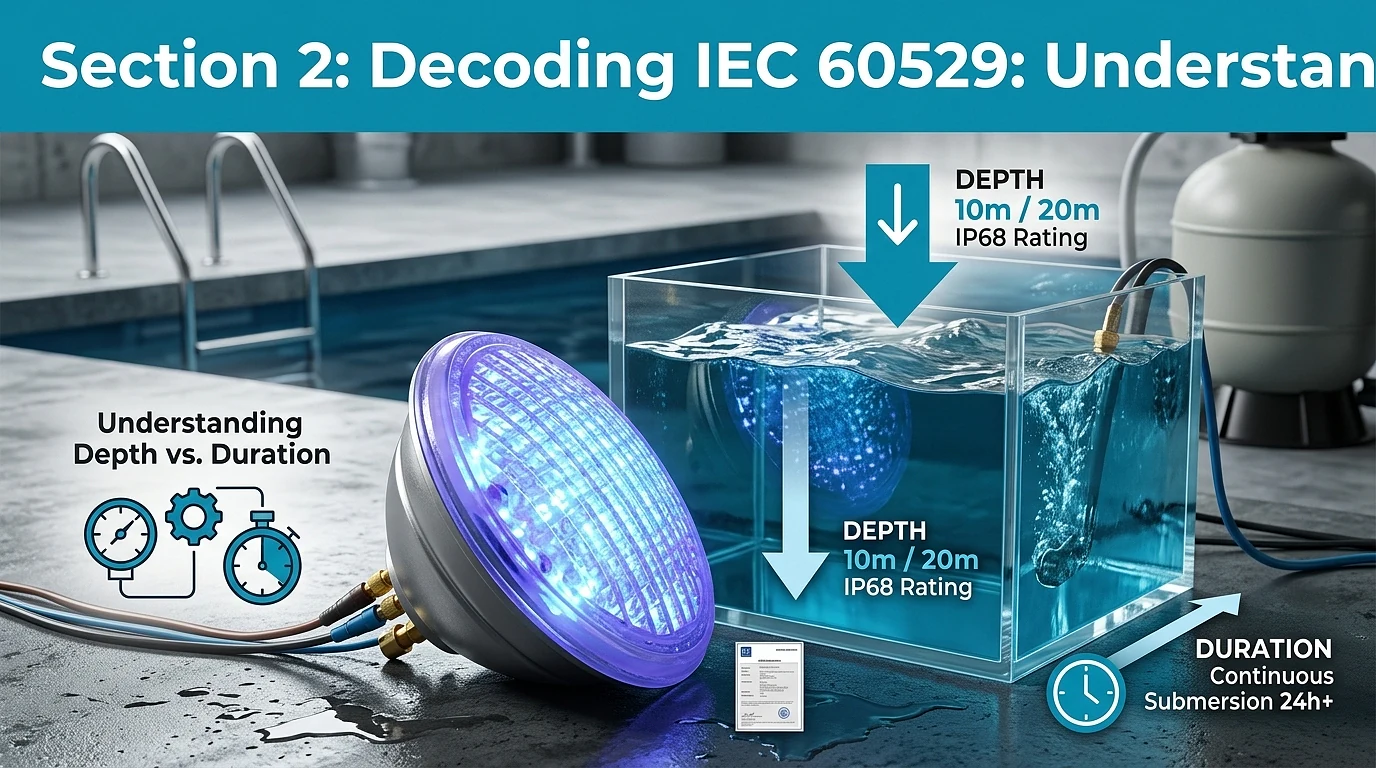
Section 2: Decoding IEC 60529: Understanding Depth vs. Duration in Industrial Environments

The IEC 60529 standard defines the levels of sealing effectiveness of electrical enclosures against intrusion. Simply claiming IP68 is insufficient for commercial procurement; a professional buyer must specify the exact test duration and depth. A unit tested for 30 minutes at 1 meter does not equate to a unit that can survive for 5,000 hours at 3 meters of depth, which is common in professional aquatic centers.
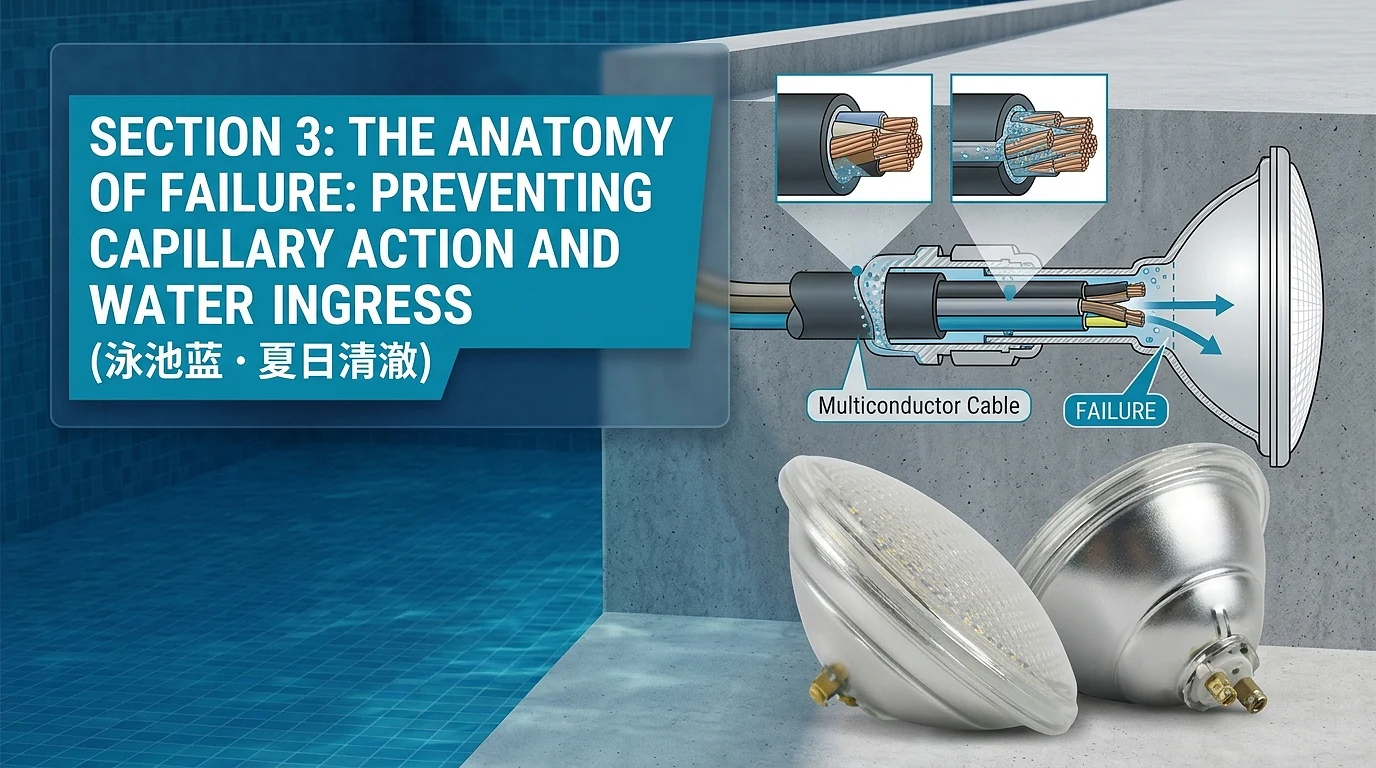
Section 3: The Anatomy of Failure: Preventing Capillary Action and Water Ingress at the Cable Gland
Capillary action is the silent killer of pool lights, where water travels through the cable strands into the electrical housing. During factory audits, we have found that standard compression glands are often bypassed by fluid climbing the interior wire insulation. We utilize advanced resin-potting techniques at the entry point to hermetically seal the cable, effectively stopping water migration before it reaches the diode array.
Section 4: Technical Auditing: How to Verify Your Manufacturer’s IP Testing Logs and Facility Standards
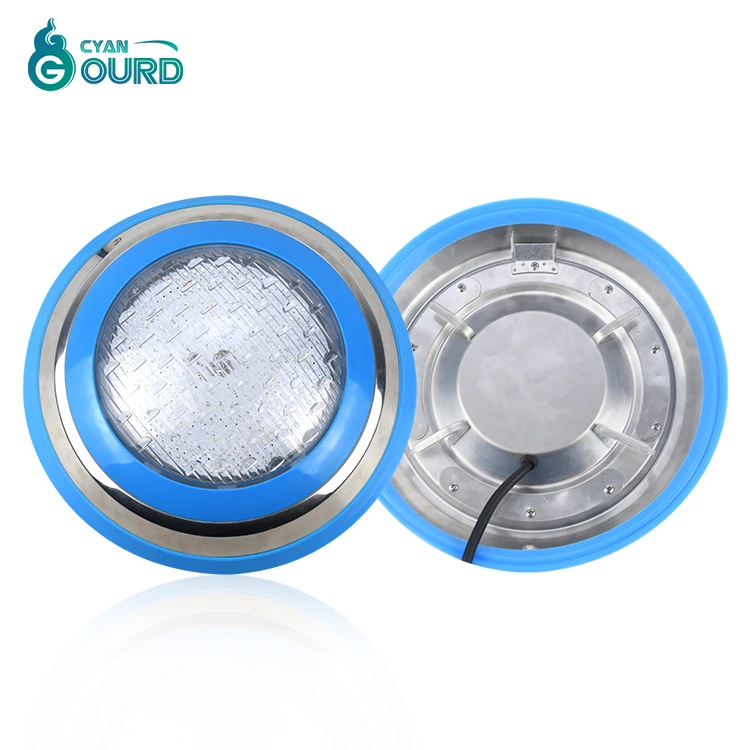
To ensure total reliability, demand verified 24-hour submerged pressure test logs. A reputable Led Pool Light manufacturer should provide raw material certificates, specifically for 316L stainless steel, which is resistant to high-concentration disinfectant chemicals. If a supplier refuses to provide third-party verification for their IP testing, you are assuming an unacceptable risk for your commercial project.
Section 5: Beyond Sealing: Thermal Dissipation and Its Impact on Long-Term Hermetic Integrity
Heat is the primary enemy of seals. When LED diodes overheat, they expand and contract, eventually breaking the bond of even high-quality gaskets. We employ aluminum alloy housings with high thermal conductivity to move heat away from the core, ensuring the integrity of our vacuum-sealed components. This thermal management is essential to achieving 50,000+ hours of lumen maintenance, as documented in our photometric IES files.
| Feature | Residential Standard | Commercial Engineering Grade |
|---|---|---|
| Sealing Method | O-Ring Compression | Resin-Potting + Vacuum Sealing |
| Housing Material | Plastic / Polymer | 316L Stainless Steel |
| Pressure Rating | Shallow Submersion | High-Depth Pressure Tested |
Section 6: Procurement Checklist: What Documentation to Demand Before Placing a Large-Scale Order
Before confirming your order, request the following: 1) IEC 60529 test certification from a recognized lab, 2) Raw material heat numbers for steel, 3) Photometric IES files showing long-term performance, and 4) A copy of the How Pool Light Fixture impacts safety document. This ensures that you are investing in a product that has been rigorously vetted for the specific demands of your project.
Section 7: Conclusion: Selecting a Supplier That Prioritizes Engineering Lifecycle over Initial Cost
The total cost of ownership is defined by the interval between replacements. By prioritizing engineering-grade hermetic integrity, you protect your facility from the high operational failure rates associated with budget lighting. We encourage you to download our Commercial Spec Sheet & IP Testing Verification Guide to assist in your next procurement phase.
Q: What is the difference between IP68 testing for shallow vs. deep-water?
A: Standard IP68 testing confirms protection against continuous immersion, but commercial depth ratings require specific pressure testing that accounts for the hydrostatic force at 3 meters or more, which far exceeds standard shallow-water test conditions.
Q: Which electrical standards are mandatory for commercial pool lights?
A: Commercial luminaires must generally adhere to UL 2108 for low-voltage lighting systems or the equivalent EN standards for safety in underwater environments to ensure human safety.
Q: How do material choices like 316L stainless steel affect costs?
A: While 316L stainless steel has a higher initial cost than polymers, it provides superior resistance to chloride-induced corrosion, drastically reducing the frequency of unit replacement and long-term maintenance labor.
Q: What documentation should a manufacturer provide?
A: You should require signed testing logs, third-party certification reports (UL/TÜV), and batch-specific material certificates (Heat Numbers) to confirm compliance.
Q: How do I verify a factory’s IP testing?
A: Always ask for the report from an independent, third-party laboratory. If the testing is performed in-house, request a copy of the calibration certificate for the pressure-testing chamber used during the verification process.