Русский
 Français
 بالعربية
 Español
Sourcing Swimming Pool Lights: The B2B Guide to OEM/ODM Manufacturing Capabilities
For procurement managers and aquatic engineering firms, the reliability of underwater lighting is a critical factor in long-term facility maintenance. Sourcing a professional swimming pool light OEM manufacturer requires moving beyond surface-level specifications to evaluate structural integrity, material science, and rigorous compliance documentation.
The B2B Procurement Risk - Why Off-the-Shelf Fails in Commercial Aquatics
Many commercial pool failures originate from white-label catalog products that are designed for residential aesthetics rather than high-usage commercial environments. These generic units often suffer from ingress at cable glands and rapid chemical erosion of the housing. In our experience, the failure to account for water chemistry and thermal dissipation leads to warranty claims that far exceed the initial cost savings of cheap, mass-produced fixtures.
Decoding OEM vs. ODM - Strategic Paths for Custom Pool Lighting Projects
When selecting a Led Pool Light partner, it is vital to distinguish between ODM (Original Design Manufacturer) and OEM (Original Equipment Manufacturer) pathways. ODM models allow for minor branding adjustments on existing molds, whereas OEM projects involve custom-engineered housings tailored to specific installation niches or specialized structural requirements. Strategic projects for high-end hotel construction often demand the latter to ensure seamless integration.
Engineering for Longevity: Material Science in High-Chemical Environments
A professional Nicheless Pool Light requires specific materials to combat harsh sanitization chemicals. Unlike standard molded ABS plastic, our engineering processes prioritize CNC-machined components where applicable to ensure dimensional accuracy. Understanding The Impact Of Material Pool longevity is the first step in reducing facility downtime.
| Feature Comparison | Standard Catalog/ODM | Custom OEM Engineered |
|---|---|---|
| Housing Material | Standard ABS Plastic | 316L Stainless Steel/Engineered Polymer |
| LED Binning | Batch variance > 5 SDCM | Strict < 3 SDCM control |
| Thermal Management | Passive plastic casing | Thermal-conductive potting compounds |
Technical Benchmarks: LED Binning, Driver Integrity, and Thermal Stability
In our production line, we enforce strict quality checkpoints. For instance, our QR55 model utilizes advanced thermal-conductive potting materials to ensure the heat generated by the LED array is efficiently dissipated through the housing. Furthermore, we maintain LED binning tolerances of less than 3 MacAdam ellipses (SDCM), ensuring that lighting installations remain uniform in color temperature across large commercial pool basins.
Compliance as a Barrier to Entry - Understanding IEC 60598-2-18
Compliance with IEC 60598-2-18 is mandatory for any fixture intended for permanent immersion in swimming pools. This standard dictates specific electrical insulation and ingress protection protocols. Our factory regularly provides third-party verified lab reports confirming our IP68/IP69K ratings, which are essential for navigating customs and safety inspections in international commercial markets.
Factory Floor Transparency - How to Audit Your Manufacturing Partner
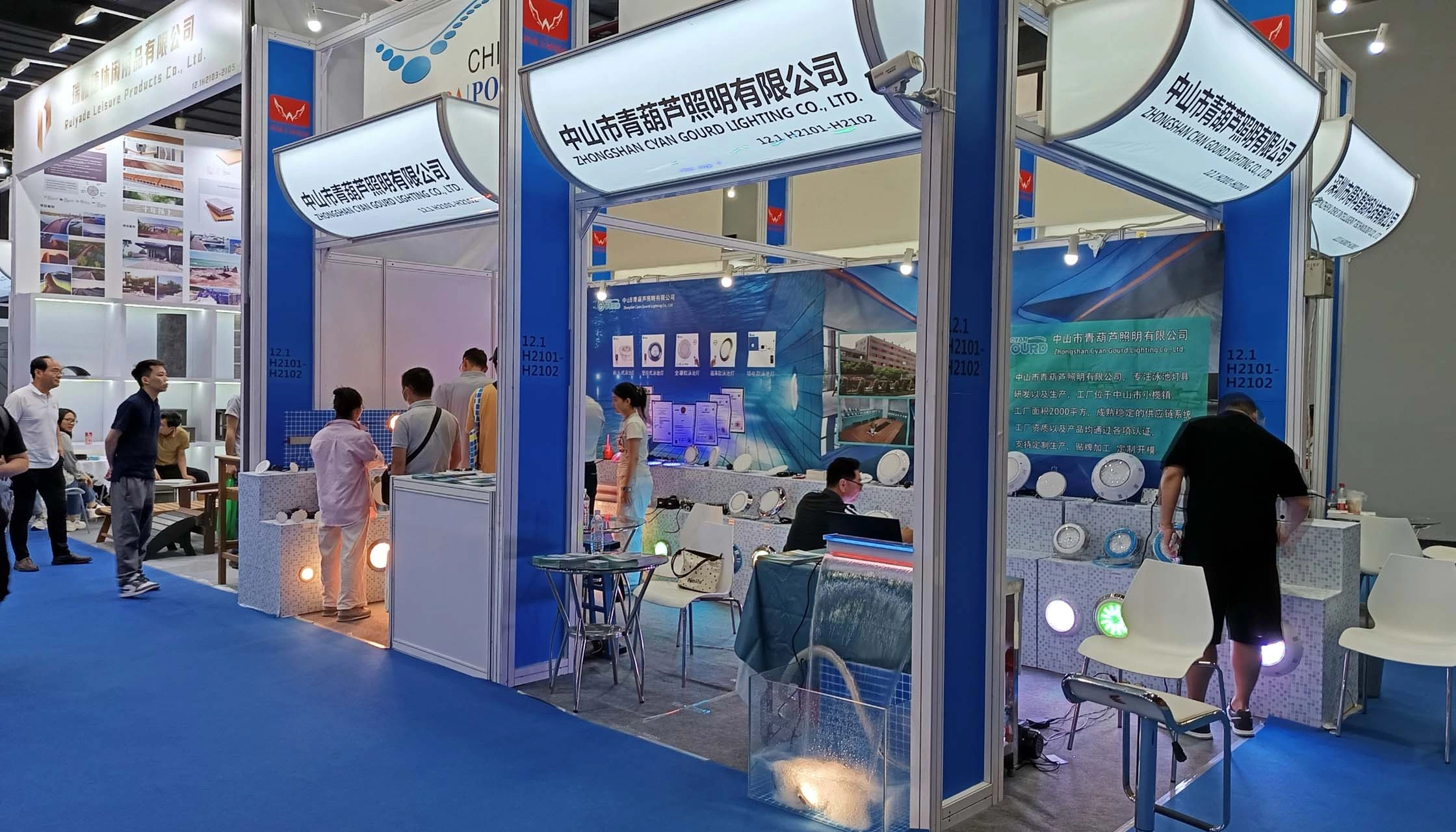
Auditing a manufacturer involves assessing more than just capacity. Procurement teams should request documentation on automated assembly line processes and the results of individual unit water-pressure testing. A factory that can prove its quality control through standardized audit documentation is better positioned to support the long-term asset ROI of your construction projects.
Conclusion: Partnering for Long-Term Asset ROI
Choosing a manufacturing partner is about mitigating risk and ensuring the longevity of aquatic assets. By focusing on engineering capabilities rather than generic catalog features, procurement managers can ensure that their Stainless Steel Pool Light or specialized underwater fixtures meet the rigorous demands of the commercial sector. Contact us to request our full technical spec sheets and formal factory audit documentation for your next project.
Q: What is the primary advantage of choosing a bespoke OEM solution over a white-label product?
A: Bespoke OEM solutions allow for optimized thermal management, material selection matched to site-specific water chemistry, and precise mechanical fitting, drastically reducing the rate of premature component failure.
Q: Why is MacAdam ellipse binning important for commercial projects?
A: MacAdam ellipses (SDCM) measure color consistency. A rating of <3 SDCM ensures that every LED light in a massive pool installation emits the exact same hue, preventing visual spotting or inconsistent lighting aesthetics.
Q: How do you verify the IP68/IP69K rating of your fixtures?
A: We subject our fixtures to 3rd-party certified laboratory testing, involving deep-water immersion and high-pressure steam jet cleaning simulation to ensure total hermetic sealing of the internal electronics.
Q: What documentation should procurement managers request from a factory?
A: Always request IEC 60598-2-18 compliance certificates, IP68/IP69K test reports, RoHS/REACH compliance files, and evidence of LED binning control.
Q: How does the QR55 handle heat management?
A: The QR55 utilizes professional-grade thermal-conductive potting compounds that encapsulate the LED board, transferring heat directly to the exterior housing to prevent localized overheating of the diode junctions.