Русский
 Français
 بالعربية
 Español
Specifying LED Pool Lights for Inground Pool Projects: A Technical Guide for Landscape Architects
Specifying high-performance underwater lighting requires a shift from aesthetic-first design to engineering-focused integration. For commercial landscape architects, the transition from residential to public aquatic projects necessitates a rigorous approach to system reliability, regulatory compliance, and long-term maintenance protocols.
The Role of Lighting in Aquatic Architecture: Beyond Aesthetics
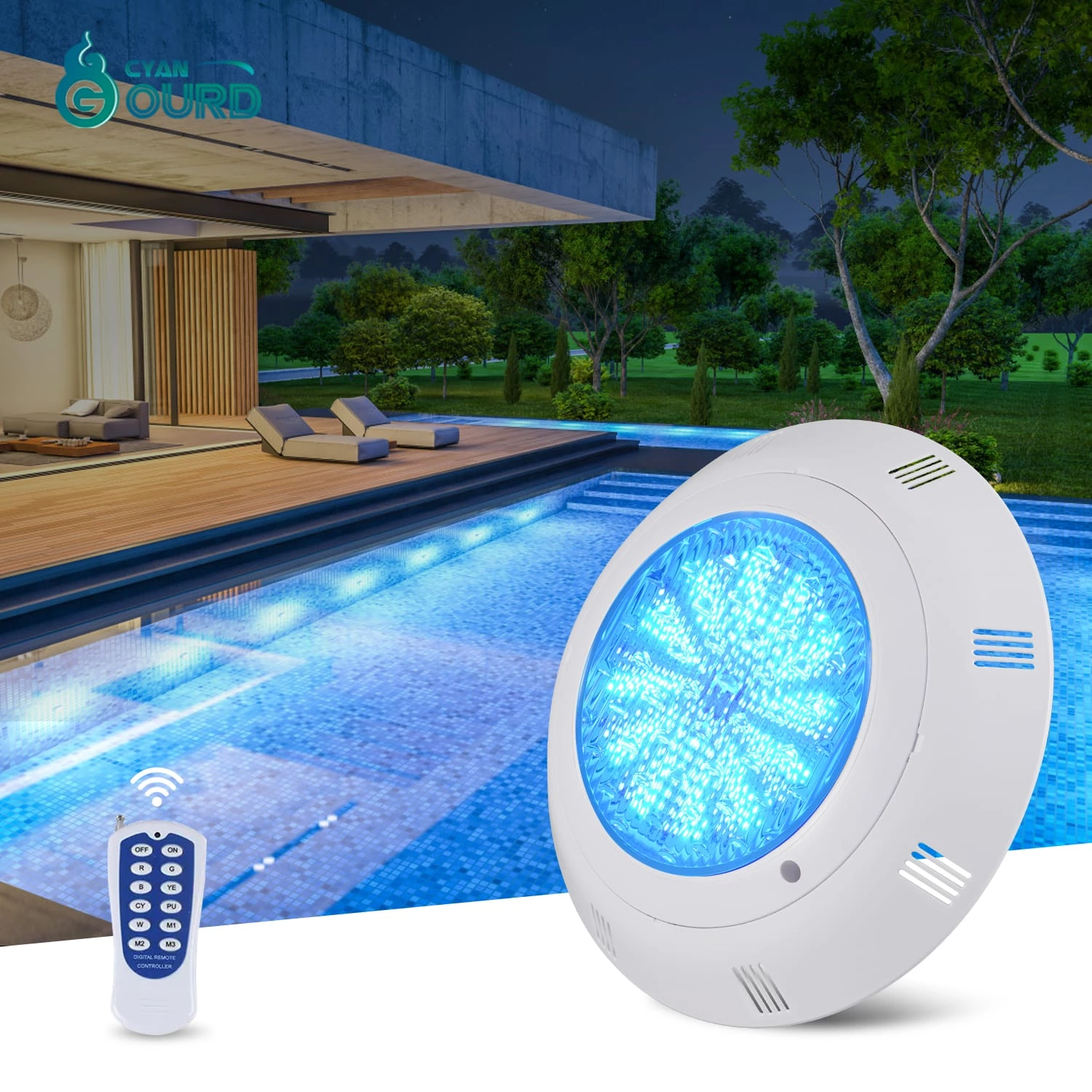
Lighting in commercial pool environments serves as both a safety necessity and a branding tool. While designers often prioritize beam spread and color temperature, the actual utility of an Led Pool Light depends on the balance between optical performance and structural longevity. In our production line, we observe that specifying fixtures based on raw lumen output without considering thermal dissipation often leads to early diode failure. Architects must evaluate the material integrity, such as the use of UV-stabilized polycarbonate, to ensure the Nicheless Pool Light maintains clarity and structural resilience under constant water pressure.
Navigating Regulatory Compliance (UL 676 & IEC 60598-2-18) for Public Safety
Public aquatic facilities are subject to stringent safety codes. Compliance with UL 676 and IEC 60598-2-18 is non-negotiable, as these standards govern the essential insulation and water-tightness required for underwater immersion. During factory testing, we subject our Stainless Steel Pool Light models to immersion tests exceeding 3 meters to confirm IP68 ratings. Architects should demand documentation of these certifications, ensuring that the luminaires provide the necessary electrical isolation to prevent current leakage in shared-use municipal environments.
Mitigating Voltage Drop in Large-Scale Installations: A Technical Framework
In large-scale commercial pools, long wire runs often result in voltage drop, leading to color shifting or dimming in fixtures at the end of the circuit. The following table illustrates the required wire gauge to maintain operational efficiency over distance.
| Wire Distance (m) | 12AWG Gauge | 10AWG Gauge |
|---|---|---|
| Up to 20m | Acceptable | Recommended |
| 20m - 50m | Significant Drop | Acceptable |
Optical Engineering for Uniformity: Managing Beam Angles and Chromaticity
Achieving a uniform wash of light across large aquatic surfaces requires precise LED binning. Our engineering team utilizes strict chromaticity controls to ensure that every Embedded Pool Light in a batch emits the identical color temperature. For example, our QR-55 model utilizes SMD 3535 LEDs housed in a φ55mm compact frame, providing a consistent 3W/6W/9W output that facilitates high-uniformity arrays across varied geometric pool shell designs.
Integration Strategies: Connecting High-Output LEDs with Automated Control Systems
Modern commercial pools rely on centralized automation. Compatibility must be verified at the driver protocol level—be it DMX or low-voltage switching—to ensure smooth dimming and scene transitions. It is critical to consult with manufacturers on the specific control protocols supported, as incorrect driver-to-automation matching can cause flickering or catastrophic failure of the LEDs.
Quality Control Protocols: The Importance of Potting Compounds and Thermal Cycling
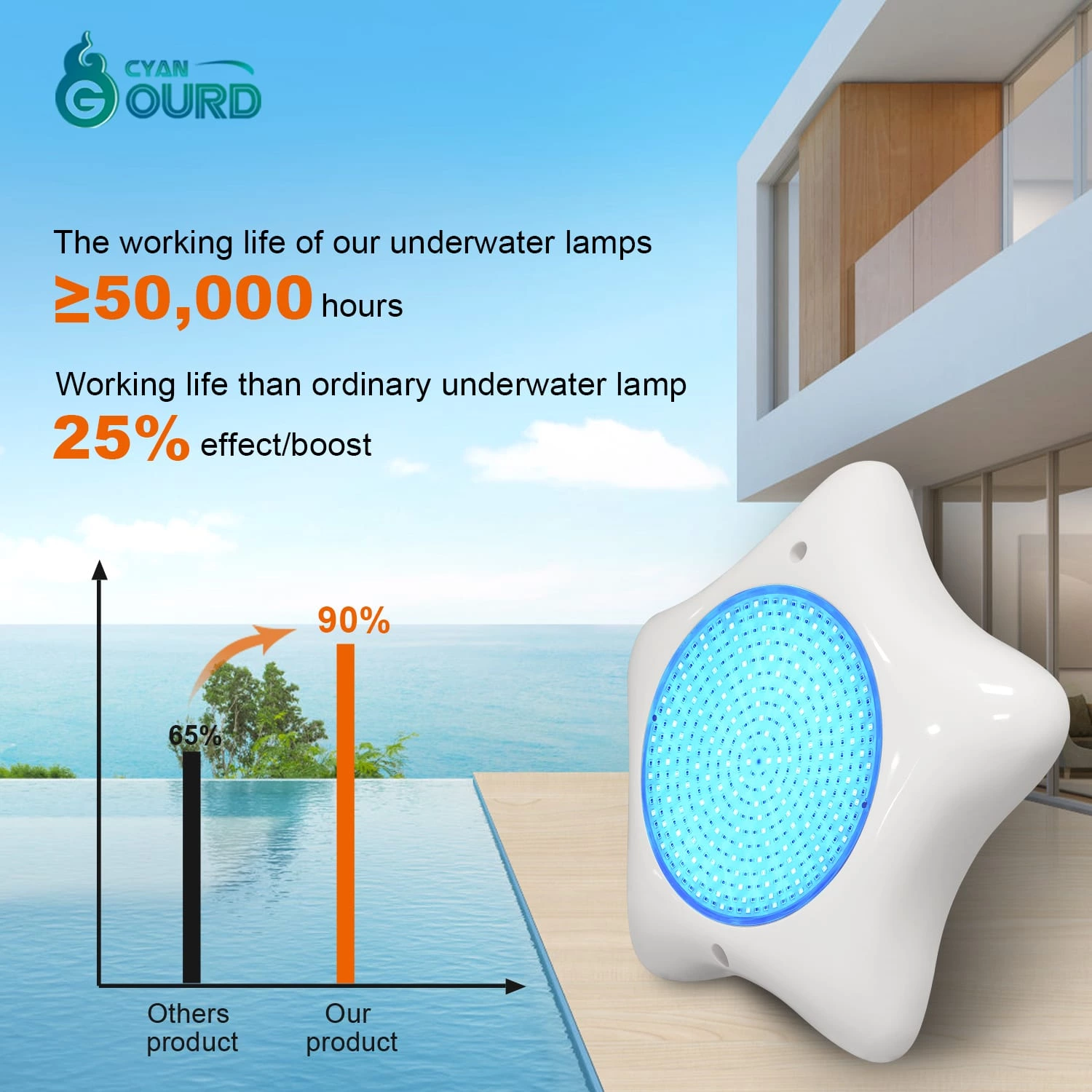
Reliability hinges on internal protection. Our factory applies industrial-grade potting compounds to isolate components from moisture, a process refined through thousands of production hours. Thermal cycling tests verify that our housings withstand the stress of rapid temperature changes post-immersion, maintaining L70 lumen maintenance benchmarks that guarantee long-term performance under sustained thermal loads.
Specification Checklist: Ensuring Long-Term Reliability for Your End-Client
Q: Why is potting compound necessary for pool lighting?
A: It prevents water ingress and internal condensation, which are primary causes of electrical shorting in underwater environments.
Q: What is the benefit of batch-consistent chromaticity?
A: It ensures that all lights in a large pool project exhibit the exact same color output, preventing patchy, unprofessional aesthetic outcomes.
Q: How does L70 lumen maintenance impact project lifecycle?
A: It provides a quantifiable metric for when the fixture will reach 70% of its initial brightness, essential for long-term maintenance planning.
Q: Are nicheless fixtures as durable as embedded ones?
A: Yes, when utilizing high-grade ABS and PC materials, nicheless fixtures provide robust performance with easier installation profiles.
Q: Why verify voltage drop for runs exceeding 30 meters?
A: Undersized wiring over long distances causes resistance, resulting in dimming and inconsistent color across the fixture array.
Download Technical Specification Pack (Includes CAD files and Photometric Data)