Русский
 Français
 بالعربية
 Español
What are the stability advantages of hardwired nicheless pool lights compared to battery-operated wireless alternatives in commercial pools?
Stability Advantages of Hardwired Nicheless Pool Lights vs. Battery-Operated Alternatives
In the realm of commercial swimming pool lighting, stability and reliability are paramount. For hotels, resorts, and municipal aquatic centers, lighting failures or maintenance downtime can disrupt operations and negatively impact guest experiences. While battery-operated wireless lights offer a quick fix for residential retrofits, hardwired nicheless LED pool lights remain the superior choice for commercial applications. As a dedicated manufacturer of wholesale LED swimming pool lights, we analyze the critical stability advantages of hardwired systems, focusing on power consistency, signal integrity, and structural durability.
1. Continuous Power Supply and Voltage Consistency
The primary stability advantage of hardwired nicheless lights is the connection to a constant power source. Commercial pools require lighting that operates at peak brightness for extended periods. Hardwired systems utilize transformers to convert high voltage to a safe AC/DC 12V or 24V output, ensuring the LEDs receive a steady current.
In contrast, battery-operated units suffer from voltage drop as the battery depletes, leading to dimming lights and inconsistent color rendering. For commercial facilities, the liability of unlit areas due to dead batteries is unacceptable. Hardwired systems eliminate the risk of power exhaustion during evening events or night swimming sessions.
2. Superior Signal Synchronization and Control
Commercial lighting projects often involve complex color-changing sequences or integration with building automation systems. Hardwired lights transmit control signals (such as DMX512 or PLC) directly through the power cord or dedicated data lines. This physical connection guarantees that every light in the pool changes color simultaneously and responds instantly to controller commands.
Wireless battery lights rely on Radio Frequency (RF) or Bluetooth signals, which struggle to penetrate water effectively. This often results in "laggy" synchronization or lights that fail to receive the signal entirely, creating a disjointed visual effect. Hardwired stability ensures professional-grade aesthetics essential for high-end commercial environments.
3. Structural Integrity and Waterproofing (IP68)
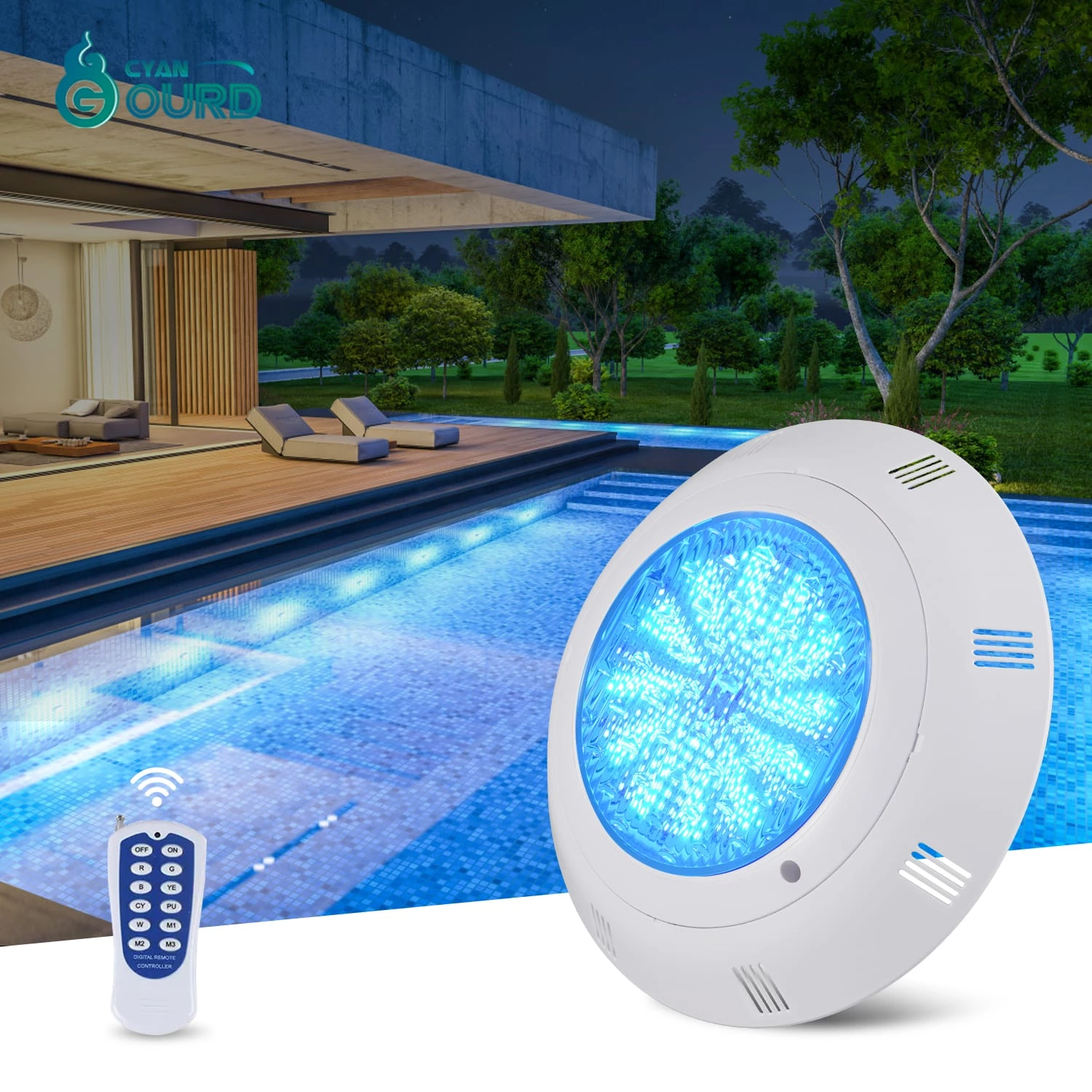
Waterproofing is the single most critical factor in the longevity of underwater lighting. Hardwired nicheless lights manufactured by Cyangourd Lighting typically feature a fully resin-filled structure. Because there is no need to access the internal components to change batteries, the unit can be permanently sealed to achieve a robust IP68 rating.
Battery-operated lights require frequent opening and closing for charging or battery replacement. This mechanical action wears down O-rings and gaskets over time, significantly increasing the risk of water ingress. In a commercial setting where lights are submerged 24/7, the permanent seal of a hardwired fixture offers unmatched structural stability.
4. Maintenance Efficiency and Operational Continuity
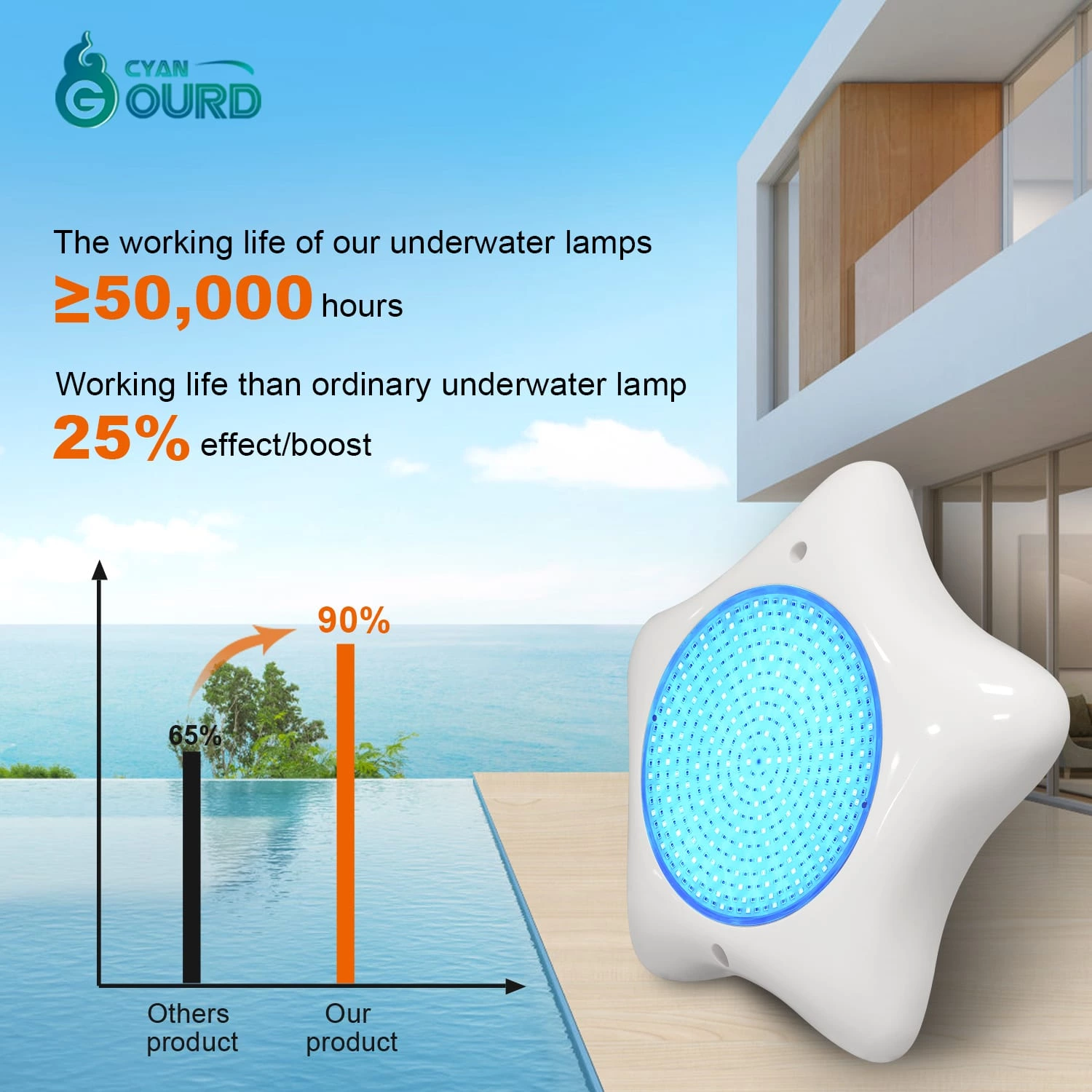
For facility managers, labor costs and downtime are major concerns. Hardwired nicheless lights are "install and forget" solutions. Once installed, they do not require daily or weekly attention. High-quality LED chips and efficient heat dissipation designs (using materials like 316L stainless steel) ensure lifespans exceeding 50,000 hours.
Conversely, battery units require staff to physically remove lights, charge them, and reinstall them regularly. This not only incurs high labor costs but also increases the likelihood of installation errors or damage to the fixture. Hardwired systems provide the operational continuity required for commercial pools.
5. Thermal Management and Material Durability
Hardwired lights are designed to dissipate heat effectively through the surrounding water and their metal housing. Since they do not house volatile lithium-ion batteries, they are less sensitive to thermal fluctuations and safer for long-term storage and use. Battery components can degrade in extreme temperatures, affecting performance.
Furthermore, commercial hardwired lights often utilize 304 or 316L stainless steel bodies, which offer superior resistance to corrosion from chlorine and saltwater compared to the plastic casings frequently used in consumer-grade battery lights.
Comparison: Hardwired vs. Battery-Operated for Commercial Use
| Feature | Hardwired Nicheless LED | Battery-Operated Wireless |
|---|---|---|
| Power Stability | Constant 12V/24V input; no dimming. | Voltage drops as battery drains; frequent recharging needed. |
| Waterproof Rating | Permanent IP68 (Resin-filled). | Compromised by opening/closing for charging. |
| Signal Control | Wired sync (DMX/PLC); 100% reliable. | Wireless (RF/Bluetooth); poor water penetration. |
| Maintenance | Low; no daily intervention required. | High; labor-intensive charging cycles. |
| Material | Typically 316L Stainless Steel. | Often Plastic/ABS. |
Frequently Asked Questions
1. Why are hardwired lights considered safer for commercial pools?Hardwired lights operate on low-voltage transformers (AC/DC 12V or 24V), which are inherently safe for swimmers. The stability of the wired connection ensures that safety grounding and electrical protections remain intact, unlike portable units that may be tampered with by guests.
2. Can hardwired nicheless lights be retrofitted into existing pools?Yes, nicheless lights are designed for easy mounting on flat surfaces or inside standard conduit pipes. While they require running a cable to a power source, their slim profile makes them an excellent upgrade for older pools needing stable, modern LED illumination.
3. How does the resin-filled structure improve stability?A fully resin-filled light eliminates air voids inside the fixture. This prevents water condensation and ensures complete waterproofing (IP68). It also protects internal electronic components from vibration and thermal shock, significantly extending the product's lifespan.
4. Do hardwired lights require a specific type of controller?Hardwired lights can be controlled via simple on/off switches, remote controls, or advanced DMX systems. The wired connection allows for versatile integration with commercial pool automation systems, ensuring stable synchronization across multiple fixtures.
5. What is the lifespan difference between hardwired and battery lights?Hardwired LED lights typically last over 50,000 hours due to efficient heat management and constant power. Battery-operated lights are limited by the battery's cycle life (often 500-1000 charges) and the degradation of seals from frequent opening, leading to a much shorter operational life.