Русский
 Français
 بالعربية
 Español
Why Traditional Pool Light Bulb Replacement Is Being Replaced by Integrated LED Designs
Why Traditional Pool Light Bulb Replacement Is Being Replaced by Integrated LED Designs
The swimming pool lighting industry is undergoing a significant technological shift. For decades, the standard solution for underwater illumination involved placing a replaceable bulb—initially incandescent, later LED—inside a waterproof housing or niche. However, as manufacturing capabilities advance, distributors and contractors are increasingly favoring fully integrated LED designs. This transition is driven by the need for higher reliability, superior waterproofing standards, and better thermal management in commercial and residential applications.
Superior Waterproofing: The Resin-Filled Advantage
The primary failure point of traditional bulb replacement systems is water ingress. Traditional setups rely on a mechanical seal—typically a rubber gasket compressed by a face ring—to keep water out of the niche where the bulb sits. Over time, these gaskets degrade due to chemical exposure and thermal expansion, leading to leaks that damage the bulb and the socket.
Integrated LED designs address this vulnerability through resin-filled technology. In these fixtures, the internal LED components and drivers are completely encapsulated in a transparent, high-grade resin. This creates a solid-state unit that achieves a permanent IP68 waterproof rating. Even if the outer casing is compromised, the internal electronics remain protected from water, significantly reducing warranty claims for wholesalers and installers.
Optimized Thermal Management and Heat Dissipation
Heat is the enemy of LED longevity. In a traditional retrofit bulb scenario, the LED bulb is suspended inside an air-filled niche. Air is a poor conductor of heat, causing the internal temperature of the bulb to rise, which accelerates lumen depreciation and driver failure.
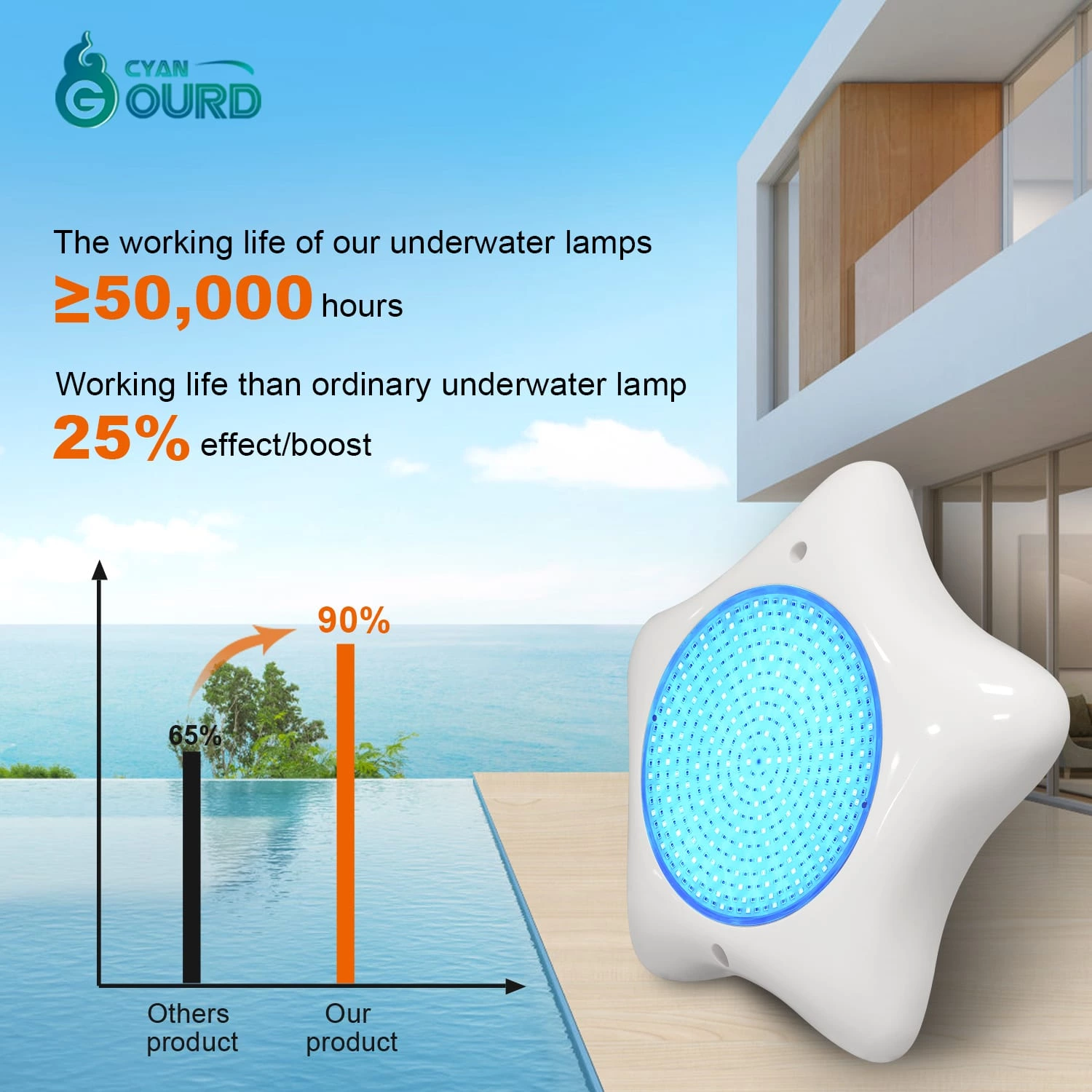
Integrated LED fixtures are engineered to utilize the surrounding pool water as a heat sink. The design allows for direct thermal transfer from the PCB (Printed Circuit Board) through the housing material—often 316L stainless steel or thermally conductive plastics—directly into the water. This efficient heat dissipation ensures the LEDs operate within optimal temperature ranges, extending the operational lifespan to 50,000 hours or more.
Structural Durability and Material Selection
Integrated designs allow manufacturers to use more robust materials that are resistant to corrosion and physical impact. While replacement bulbs are often housed in fragile glass or thin plastic, integrated fixtures frequently utilize 304 or 316L stainless steel bodies combined with UV-resistant PC (Polycarbonate) covers.
For B2B buyers supplying coastal regions or saltwater pools, the material integrity of an integrated unit offers a distinct advantage. The seamless construction eliminates crevices where corrosion often begins in multi-part traditional assemblies.
Installation Efficiency and Slim Profiles
Modern pool aesthetics favor minimalism. Traditional niches are bulky and require deep excavation during construction. Integrated LED lights, particularly surface-mounted or ultra-thin wall-mounted models, offer a sleek profile that protrudes minimally into the pool.
For contractors, integrated flat lights simplify the installation process. Many models are designed to mount directly onto the pool wall using a cross-bracket system, eliminating the need for a deep niche bucket. This reduces labor time and structural complexity during the pool building or renovation phase.
Comparison: Traditional Bulb Replacement vs. Integrated LED Fixture
| Feature / Criteria | Traditional Bulb Replacement (E27/PAR56) | Integrated LED Fixture |
|---|---|---|
| Waterproofing Method | Gasket and face ring seal (Mechanical) | Resin-filled encapsulation (Solid-state) |
| Heat Dissipation | Limited (Air gap insulation) | Excellent (Direct water cooling) |
| IP Rating Reliability | Prone to failure over time | Permanent IP68 rating |
| Profile Thickness | Bulky, requires deep niche | Slim, ultra-thin options available |
| Maintenance | Frequent bulb/gasket changes | Zero maintenance until end of life |
Frequently Asked Questions
- 1. Can integrated LED lights replace existing PAR56 niches?
Yes, many integrated LED lights are designed as retrofit solutions. They can be mounted over existing niches or adapted to fit standard PAR56 housings, allowing for an upgrade without extensive structural modification.
- 2. Why is resin-filled technology superior for B2B projects?
Resin-filled lights eliminate the air cavity inside the fixture, making water ingress impossible. This reliability reduces after-sales service costs and liability for contractors and distributors.
- 3. Do integrated LED lights require a specific voltage?
Most integrated professional pool lights operate on low voltage, typically AC/DC 12V or 24V, to ensure swimmer safety and compliance with international electrical standards.
- 4. How does the lifespan of integrated LEDs compare to replaceable bulbs?
Due to superior heat management and moisture protection, integrated LEDs often last significantly longer, typically rated for 50,000+ hours, whereas replaceable bulbs in sealed niches often fail prematurely due to overheating.
- 5. Are integrated LED lights compatible with modern control systems?
Yes, integrated fixtures often feature advanced drivers compatible with DMX512, WiFi, or remote control systems, offering smoother color transitions and synchronization compared to standard replacement bulbs.