Русский
 Français
 بالعربية
 Español
How Pool Light Structure Impacts Maintenance Frequency and Replacement Costs
How Pool Light Structure Impacts Maintenance Frequency and Replacement Costs
For distributors, contractors, and pool professionals, the total cost of ownership (TCO) of LED swimming pool lights extends far beyond the initial procurement price. The structural integrity and engineering design of a lighting fixture are the primary determinants of its lifespan, maintenance frequency, and long-term replacement costs. A poorly designed structure often leads to water ingress, corrosion, and thermal failure, resulting in expensive warranty claims and labor-intensive callbacks. Understanding the correlation between structural build quality—such as resin-filled waterproofing versus mechanical sealing—and operational longevity is essential for selecting products that maximize profitability and client satisfaction.
1. Waterproof Sealing Technology: Resin-Filled vs. Mechanical Gaskets
The most critical structural factor influencing maintenance frequency is the method of waterproofing. Traditional pool lights often rely on mechanical seals, such as rubber O-rings or silicone gaskets, to protect internal components. Over time, these materials degrade due to exposure to chlorinated water, heat cycles, and pressure changes, eventually leading to leaks. This necessitates frequent maintenance checks and gasket replacements to prevent catastrophic failure.
In contrast, modern fully resin-filled (potted) LED lights eliminate the air void inside the fixture. By encapsulating the PCB and LEDs in a solid block of transparent epoxy or resin, the structure achieves a permanent IP68 rating. This design removes the risk of condensation and water ingress caused by seal degradation, significantly reducing the need for maintenance and lowering the likelihood of early replacement.
2. Housing Material Durability: 316L Stainless Steel vs. Plastic
The external housing structure plays a vital role in protecting the light from the harsh chemical environment of a swimming pool. While ABS plastic housings are cost-effective initially, they can become brittle and discolored over time due to UV exposure and chemical interaction, leading to structural cracking. Once the housing cracks, the integrity of the light is compromised, requiring immediate replacement.
For commercial projects or saltwater pools, 316L stainless steel structures offer superior resistance to pitting and corrosion compared to 304 stainless steel or plastic. Investing in high-grade stainless steel fixtures reduces the frequency of cosmetic and structural failures, thereby minimizing the labor costs associated with draining pools or hiring divers for replacements.
3. Thermal Management Structure and LED Lifespan
Heat is the enemy of LED longevity. The internal structure of a pool light must be designed to dissipate heat effectively, even when submerged. Fixtures with poor thermal management allow heat to build up on the circuit board, causing rapid lumen depreciation and premature driver failure. This leads to a cycle of frequent replacements that erodes distributor margins.
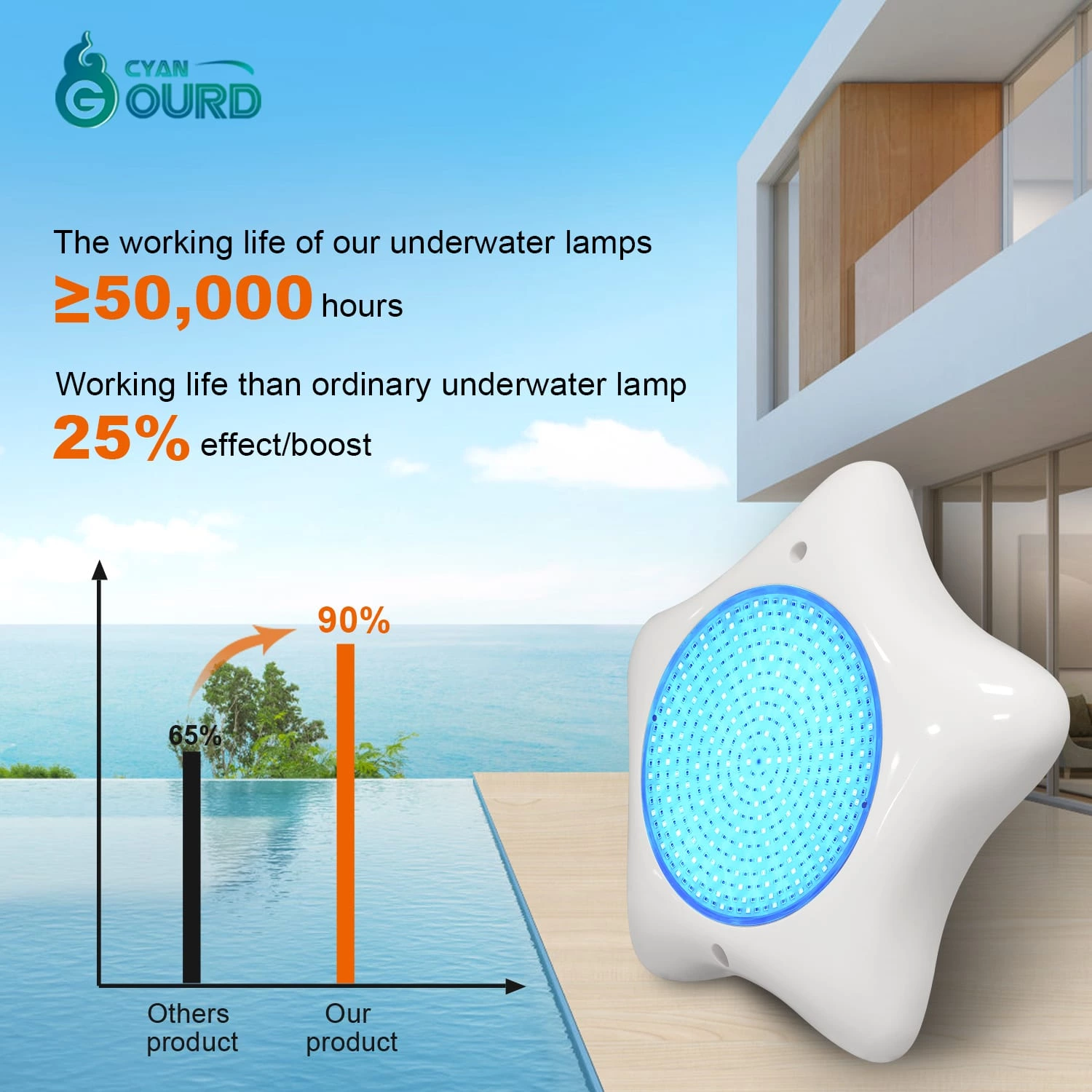
High-quality structural designs utilize aluminum substrates or specific heat-conductive housing designs to transfer heat away from the LED chips into the surrounding water. A robust thermal structure ensures the light operates within safe temperature ranges, extending the operational life to 50,000 hours or more and drastically cutting replacement frequency.
4. Lens Material and Impact Resistance
The front cover or lens is the first line of defense against physical impact and water pressure. Glass lenses, common in older PAR56 styles, are prone to shattering if struck by pool cleaning equipment or subjected to thermal shock. A broken lens requires immediate and often expensive emergency maintenance to prevent electrical hazards.
Modern structural designs favor Polycarbonate (PC) covers, which offer high impact resistance and UV stability. PC covers are virtually unbreakable under normal pool conditions, eliminating maintenance costs related to accidental breakage. For B2B buyers, specifying PC-covered lights reduces liability and warranty claims related to physical damage.
5. Cable Gland Design and Water Ingress Prevention
A frequently overlooked structural weak point is the cable entry point. If the cable gland is not integrated securely into the housing or lacks proper sealing, water can wick up the cable and enter the fixture (capillary action). This structural flaw is a leading cause of failure in lower-quality lights.
Advanced manufacturing techniques involve molding the cable directly into the resin or using high-compression waterproof glands. Ensuring the cable connection is structurally sound prevents water ingress at the connection point, ensuring that the light remains operational for years without requiring cable re-termination or fixture replacement.
Comparison: Structural Designs and Cost Implications
| Structural Feature | Maintenance Frequency | Risk of Water Ingress | Long-Term Replacement Cost |
|---|---|---|---|
| Resin-Filled (Fully Potted) | Extremely Low (Zero Maintenance) | Negligible | Low (Long lifespan) |
| O-Ring / Gasket Seal | High (Requires periodic seal checks) | High (Seal degradation) | High (Frequent repairs) |
| 316L Stainless Steel Housing | Low (Corrosion resistant) | Low | Low (Durable investment) |
| Plastic (ABS) Housing | Medium (Prone to cracking) | Medium | Medium/High (Shorter lifespan) |
Frequently Asked Questions
-
1. How does a resin-filled structure reduce maintenance costs compared to O-ring seals?
Resin-filled structures completely eliminate air voids and mechanical seals, creating a solid, waterproof unit. This prevents leaks caused by worn-out O-rings, removing the need for periodic seal replacement and significantly lowering labor costs for maintenance.
-
2. Is 316L stainless steel worth the extra cost for pool light structures?
Yes, especially for saltwater pools or commercial applications. 316L stainless steel provides superior corrosion resistance compared to 304 steel or plastic, preventing structural failure and rust staining, which reduces long-term replacement expenses.
-
3. Why is heat dissipation important for the structural design of LED pool lights?
Effective thermal structure prevents the LED chips and drivers from overheating. Poor heat dissipation leads to rapid dimming and electronic failure, forcing premature replacement of the entire fixture.
-
4. Can structural damage to the cable gland be repaired?
Generally, no. If water enters through a compromised cable gland, it often damages the internal electronics permanently. High-quality lights use integrated molding to prevent this, whereas cheaper lights with weak glands often require full replacement upon failure.
-
5. How does the lens material impact replacement frequency?
Polycarbonate (PC) lenses are impact-resistant and do not shatter like glass. Using PC reduces the risk of accidental breakage during pool maintenance or use, thereby lowering the frequency of emergency replacements.