Русский
 Français
 بالعربية
 Español
Minimizing Downtime: A Facility Manager’s Guide to Commercial Pool Lighting Maintenance
For facility operations managers, the recurring cycle of bulb replacement in underwater housings represents a significant drain on labor resources and facility uptime. Moving beyond reactive maintenance requires a shift toward Led Pool Light systems engineered for longevity and reliability. By standardizing on factory-sealed units, facilities can transition from frequent, component-level repairs to a strategic lifecycle management model.
The Hidden Costs of Reactive Maintenance: Why 'Bulb Replacement' is a Failing Strategy in Commercial Aquatics
Reactive maintenance, characterized by replacing individual bulbs after failure, introduces systemic risks. Every time a legacy housing is opened, the integrity of the original seal is compromised. In our production line, we frequently observe that even minor imperfections in gasket seating during field repairs lead to catastrophic water ingress. This manual intervention approach is labor-intensive, often requiring multiple staff to drain or lower water levels, leading to extended operational downtime.
Engineering Failures: The Physics of Thermal Dissipation and Seal Integrity in Underwater Housings
The failure of standard LED aftermarket bulbs often stems from inadequate thermal management. Unlike specialized units like our Nicheless Pool Light (QR-55 model), which features a compact φ55*H110mm architecture with optimized heat dissipation for its 3W/6W/9W SMD 3535 light source, standard replacement bulbs lack the internal heat sinking required for high-intensity aquatic environments. Poor heat dissipation results in premature junction temperature spikes, accelerating lumen depreciation and damaging electrical components.
Standardizing Your Infrastructure: Moving from Modular Replacements to Holistic Unit Upgrades
Adopting an Embedded Pool Light or similar factory-sealed fixture eliminates the variables of manual assembly. Factory-sealed units are tested to IP68 standards, ensuring complete protection against water immersion. Unlike modular housings where the seal is only as good as the technician installing the bulb, these units are validated through rigorous environmental stress screening (ESS) to ensure the housing, cable entry, and lens remain impermeable for their operational lifespan.
| Metric | Reactive Bulb Replacement | Factory-Sealed LED Fixture |
|---|---|---|
| Ingress Protection | Variable (Seal-dependent) | IP68 Tested & Certified |
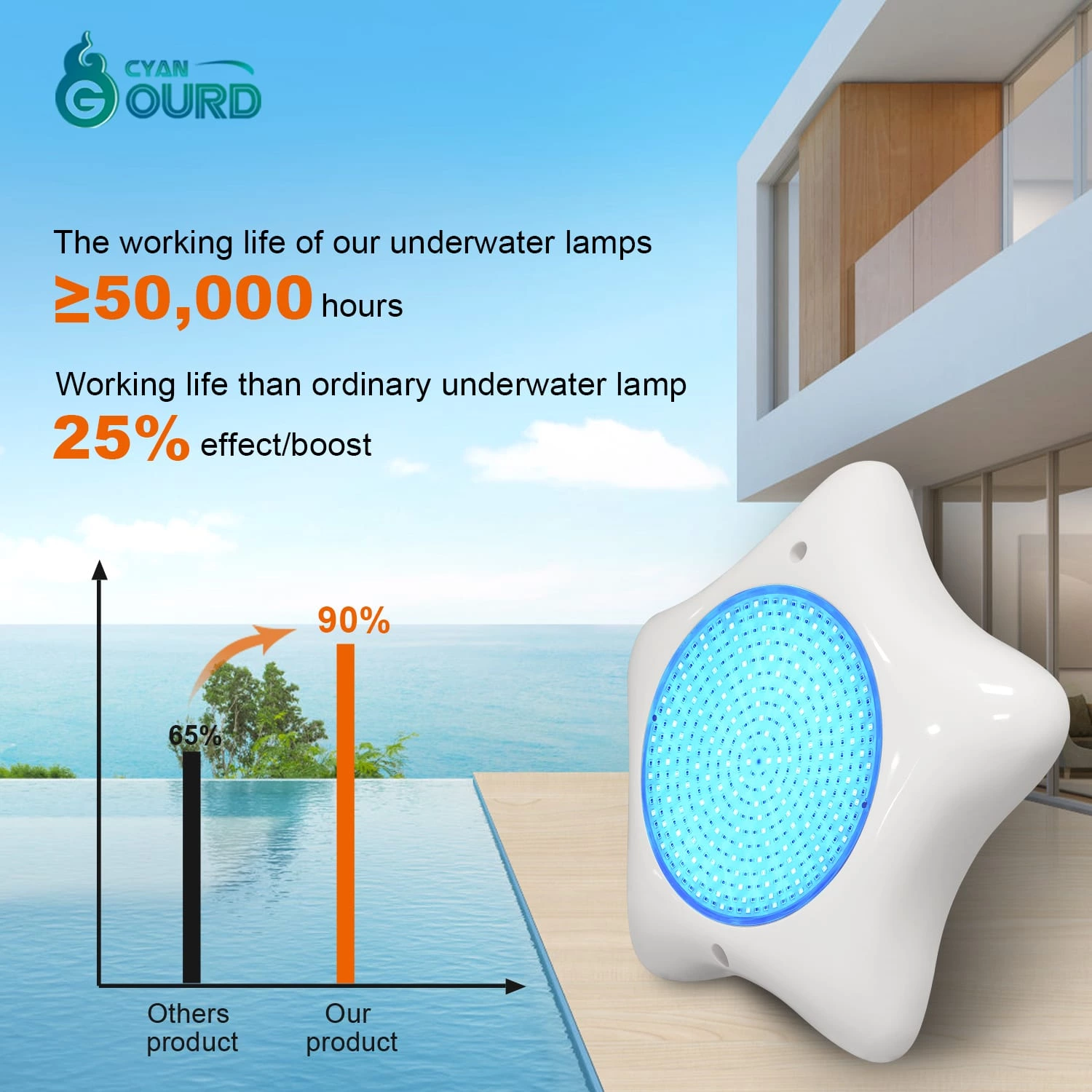
| MTBF (Hours) | 2,000 - 5,000 | 50,000+ |
| Maintenance Effort | High (Manual Re-sealing) | Low (Plug-and-play) |
Technical Protocol: Best Practices for High-Volume Aquatic Lighting Installation
For large-scale aquatic facility deployment, alignment is critical. Our manufacturing protocols focus on gasket seating consistency, which minimizes the force required to create a perfect seal during installation. When installing stainless steel fixtures like the Stainless Steel Pool Light series, ensure that NEMA enclosure compliance is verified for the specific chemical concentration of your facility, as excessive chlorine or saline can degrade non-compliant housing materials over time.
Asset Management: Calculating Total Cost of Ownership (TCO) for Factory-Sealed LED Fixtures
The TCO calculation for factory-sealed units accounts for the dramatic reduction in Mean Time Between Failures (MTBF). By evaluating the cumulative cost of labor, emergency procurement, and revenue loss from pool closure, facilities often find that the initial investment in high-quality, sealed-unit architecture pays for itself within the first 24 months of operation. Focus procurement on L70 lumen depreciation metrics, which define the point at which the light output reaches 70% of its initial value, to ensure performance alignment with service schedules.
Compliance and Safety: Navigating Electrical Codes for Wet-Niche Installations
All commercial lighting must adhere to strict international standards such as IEC 60598, which governs luminaires for pool and fountain applications. Compliance with low-voltage safety protocols is non-negotiable in wet-niche installations. Avoid the assumption that legacy housings can be safely converted with generic LED bulbs; electrical mismatching can cause overheating at the base contact, posing significant safety and fire risks.
Future-Proofing: How to Evaluate LED Lifecycle and Lumen Depreciation during Procurement
Procurement directors should demand independent testing reports. Verify IP68 testing documentation that confirms depth and duration of submersion endurance. By auditing the manufacturing process—specifically the injection molding and vacuum sealing stages—buyers can ensure the products selected will withstand the constant pressure and chemical exposure characteristic of municipal and commercial swimming pools.
Q: What is the expected MTBF for industrial-grade LED pool lighting?
A: Industrial-grade factory-sealed units typically exhibit an MTBF of 50,000 hours or more, significantly outperforming modular bulb systems that often fail within 5,000 hours due to moisture ingress.
Q: How do replacement cycles differ between retrofitting versus replacing entire fixtures?
A: Retrofitting legacy housings requires high-frequency seal maintenance and carries a high failure rate. Replacing with integrated fixtures provides a reliable, long-cycle maintenance schedule of several years between service events.
Q: What are the electrical compatibility risks of using non-OEM bulbs?
A: Non-OEM bulbs often have improper heat dissipation and base materials that do not match the thermal properties of the original housing, leading to electrical arcing and seal degradation.
Q: How does chemical exposure impact fixture longevity?
A: Harsh chemicals like chlorine and salt water accelerate corrosion of seals and housing materials. Selecting fixtures with appropriate NEMA-compliant materials is essential for extending service life.
Q: What is the recommended preventative maintenance schedule?
A: We recommend annual visual inspections and testing of GFCI/RCD circuits, with full fixture integrity checks occurring every 24 to 36 months to ensure continued water tightness.