Русский
 Français
 بالعربية
 Español
Pool Light Control and Power Systems Explained: Switches, Transformers, and Safety Design
Pool Light Control and Power Systems Explained: Switches, Transformers, and Safety Design
For commercial pool contractors and lighting distributors, understanding the electrical ecosystem of underwater lighting is just as critical as selecting the fixture itself. A robust pool lighting system relies on the seamless integration of three core components: the LED fixture, the power supply (transformer), and the control mechanism. This guide analyzes the technical requirements for low-voltage safety, transformer sizing, and advanced control protocols suitable for large-scale aquatic projects.
The Critical Role of Low Voltage Safety in Aquatic Environments
Safety is the paramount concern in swimming pool lighting design. While older systems utilized high-voltage lines, modern international safety standards mandate the use of low-voltage systems—typically 12V or 24V—to eliminate the risk of fatal electric shock. In a manufacturing context, this requires strict adherence to isolation protocols.
The transition from mains voltage (110V/220V) to safe low voltage (12V/24V) occurs at the transformer, which must be located at a safe distance from the water's edge. For LED pool lights, AC12V is the industry standard for general replacement lamps due to its compatibility with existing magnetic transformers, while DC12V or DC24V is often preferred for precision DMX control systems to ensure signal stability and prevent flickering.
Transformer Selection: AC vs. DC and Load Calculation
Selecting the correct transformer is essential for the longevity of LED pool lights. Manufacturers produce lights compatible with specific current types, and mismatching them can lead to immediate failure or control issues.
- Toroidal (Magnetic) Transformers: These are heavy, durable, and typically output AC voltage. They are highly reliable for standard RGB synchronization systems that use on/off power cycling to change colors.
- Electronic Switching Power Supplies: These convert power to DC voltage. They are lighter and more efficient, making them ideal for DMX512 systems or external controllers that require constant voltage.
Sizing Rule: When calculating the load for a project, distributors must factor in a safety margin. It is industry standard to utilize only 80% of the transformer's rated capacity. For example, if the total wattage of the pool lights is 80W, the transformer should be rated for at least 100W to prevent overheating and voltage drops.
Control Systems: From Simple Switches to DMX Integration
The method of control dictates the user experience and the complexity of the installation. For wholesale buyers, offering a range of control options allows for flexibility across residential and commercial applications.
Synchronized Switch Control: The most cost-effective method involves using the main power switch to cycle through color modes. This requires lights with built-in memory and synchronization chips.
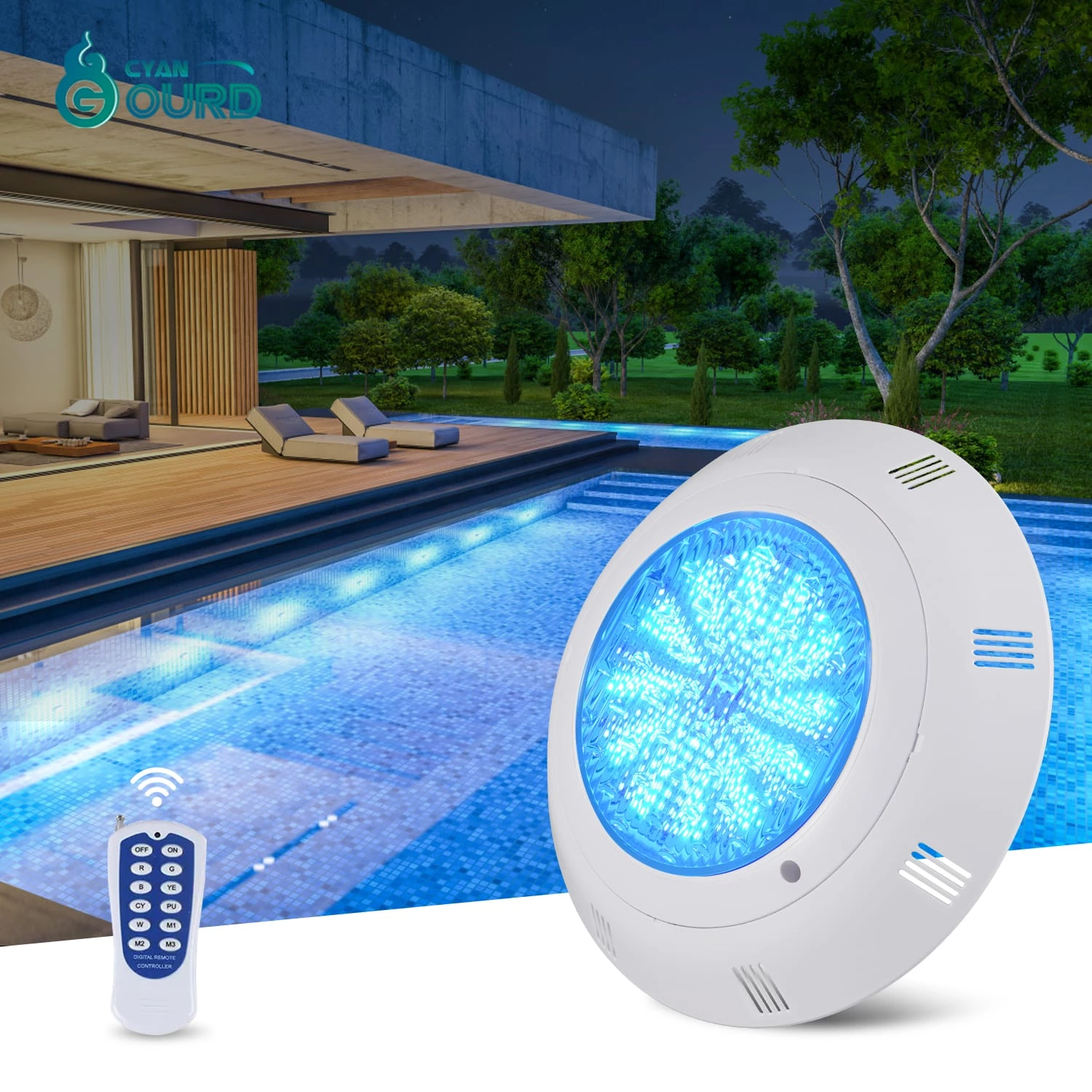
Remote & WiFi Control: External controllers placed between the transformer and the lights allow for RF remote or Smartphone App control. This requires specific wiring configurations (often 4-wire or 5-wire for RGB/RGBW) compared to the standard 2-wire setup.
DMX512 Systems: For hotel pools and water features, DMX512 offers individual addressability, allowing for complex light shows and integration with building automation systems.
Comparison of Pool Light Control Architectures
| Control Method | Wiring Requirement | System Complexity | Ideal Application |
|---|---|---|---|
| ON/OFF Switch Sync | 2-Wire (AC) | Low | Residential retrofits, budget projects |
| External RF Remote | 2-Wire or 4-Wire | Medium | Mid-range residential pools |
| WiFi / App Control | Requires Controller Box | Medium-High | Smart home integration |
| DMX512 | 4-Wire or 5-Wire (Data) | High | Commercial resorts, musical fountains |
Structural Safety: IP68 Ratings and Resin-Filled Technology
Beyond the electrical supply, the physical design of the light fixture ensures the safety of the power system. If water breaches the housing, it can cause short circuits that damage the transformer or controller.
Top-tier manufacturers utilize fully resin-filled LED modules. In this design, the internal PCBA (Printed Circuit Board Assembly) is completely encapsulated in transparent epoxy resin. This creates a solid block that is impervious to water, even if the outer lens is cracked. This IP68-rated construction is critical for reducing warranty claims and ensuring long-term electrical safety in chlorinated or saltwater environments.
Managing Voltage Drop in Long Cable Runs
A common issue in large commercial installations is voltage drop. Because pool lights operate at low voltage (12V), the current is higher, leading to significant resistance over long cable distances. If the wire gauge is too thin or the run is too long, the voltage reaching the light may drop below 10V, causing dimming or color inconsistency.
Installers must calculate the appropriate wire gauge (AWG) based on the distance from the transformer to the junction box. For runs exceeding 30 meters, increasing the output voltage at the transformer (e.g., to 13V or 14V) or using thicker cabling is necessary to ensure the fixture receives the required power.
Frequently Asked Questions
1. Can I connect 12V LED pool lights directly to a 120V or 220V power source?
No. Connecting a low-voltage 12V light directly to mains voltage will instantly destroy the LED fixture and poses a severe safety hazard. A step-down transformer is always required.
2. What is the difference between AC and DC transformers for pool lights?
AC transformers output alternating current and are typically used for 2-wire lights with internal synchronization. DC transformers output direct current and are generally required for external controllers, DMX systems, or specific RGB setups to ensure smooth color transitions.
3. How many pool lights can I connect to one transformer?
This depends on the total wattage. You should sum the wattage of all lights and ensure it does not exceed 80% of the transformer's rating. For example, a 300W transformer can safely power up to 240W of lighting.
4. Why are my pool lights flickering or dimming?
Flickering often indicates a voltage drop issue caused by long cable runs or insufficient wire gauge. It can also result from using an incompatible transformer (e.g., using an electronic halogen transformer for LEDs).
5. Do resin-filled pool lights require a specific type of niche?
Resin-filled lights are available in various form factors, including PAR56 bulbs for standard niches and ultra-thin surface-mounted models. The resin technology relates to the internal waterproofing, not the external mounting compatibility.